
As artificial intelligence becomes more common in the workplace, one of the most important questions is not only what the technology can do, but how prepared people are to understand it. AI is already changing how companies communicate, organise information, respond to customers, and manage repetitive tasks. For many workers, the challenge is not that AI exists. The challenge is that it often arrives before they have had time to understand its implications.
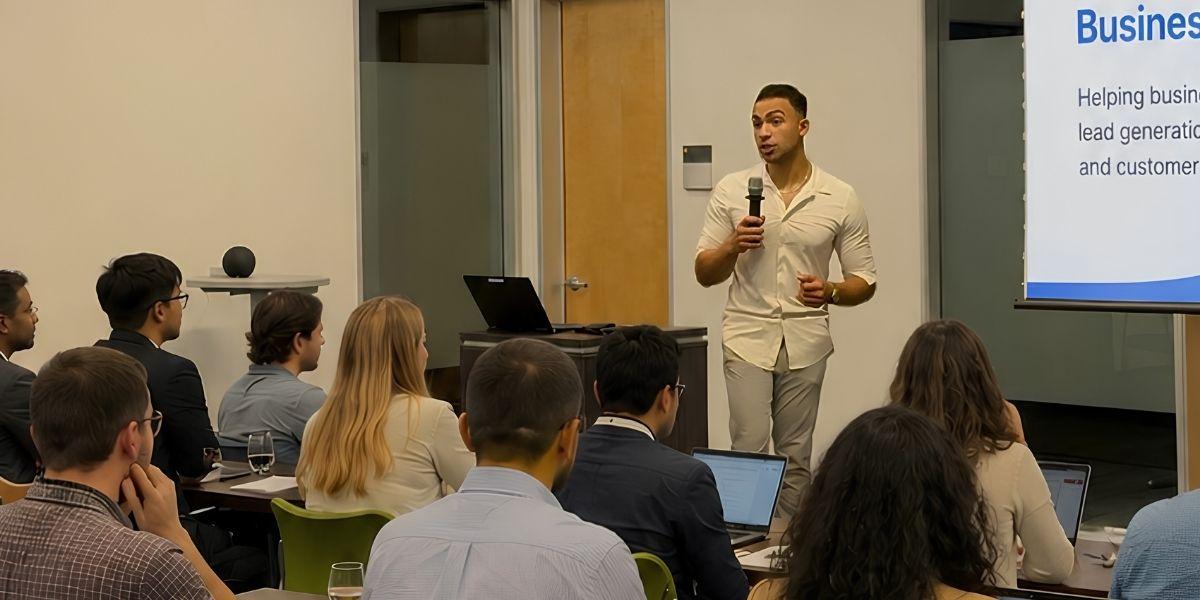
Taha Ramzi, founder of AI Exelion, brings a personal perspective to that issue. Earlier in his career, he experienced the effects of automation directly when an AI system replaced work he had been doing. That moment became a defining part of his relationship with technology. It showed him that artificial intelligence is not a distant subject reserved for engineers or executives. It is increasingly part of ordinary working life.
Ramzi’s story reflects a wider shift happening across the economy. Many people are now trying to make sense of AI from a practical standpoint. They may not need to become software developers, but they do need to understand how automation affects their roles, their industries, and the companies they interact with. In this environment, AI literacy is becoming a basic form of professional awareness.
AI literacy does not mean mastering every technical detail. It means understanding what these systems are designed to do, where they are useful, where they can fail, and how human judgment remains necessary. It also means recognising that AI is not a single tool, but a broad category of systems that can be applied in many different ways. Some tools assist with writing or research. Others help with scheduling, communication, analysis, customer support, or internal workflows.
For workers, this knowledge can reduce fear. People are often most anxious about technology when it feels invisible or unpredictable. Clearer understanding can make the subject less intimidating. It allows people to ask better questions: What part of this task is being automated? What still requires human oversight? How should accuracy be checked? What happens when the system makes a mistake? How can technology support the work rather than replace human responsibility altogether?
For businesses, AI literacy is equally important. A company that adopts automation without understanding it can create confusion for employees and customers. Poorly implemented systems may produce inconsistent communication, unclear accountability, or overreliance on tools that are not suited to the task. Responsible adoption requires leaders and teams to understand both the possibilities and the limitations of the technology.
Ramzi’s company, AI Exelion, operates in this practical space. Its work focuses on applying AI to operational problems for local businesses, where the impact of communication and responsiveness can be significant. This kind of work highlights an important point: AI does not have to be abstract or futuristic to matter. It can affect everyday interactions between a business and the people it serves.
The local business context is especially relevant because smaller companies often do not have large technical departments. They may understand their customers and services very well, but still need help translating that knowledge into modern systems. AI literacy, in this sense, is not only about individual workers. It is also about helping organisations make better decisions about the tools they choose and the processes they change.
Ramzi’s personal background gives this conversation a human dimension. Having experienced displacement himself, he understands why people may feel uncertain about automation. At the same time, his work suggests that the answer is not to ignore AI or treat it only as a threat. The more useful response is to build understanding, ask practical questions, and approach the technology with both openness and caution.
That balanced view is becoming increasingly necessary. Public discussion about artificial intelligence often swings between hype and fear. Some portray AI as a solution to nearly every problem. Others describe it mainly as a force of disruption. The reality is more complicated. AI can improve certain workflows, but it can also create new risks. It can support people, but it can also unsettle roles. It can make businesses more responsive, but only when implemented with care.
The next stage of AI adoption will likely require more than technical advancement. It will require better public understanding. Workers will need to know how to adapt. Business owners will need to know how to evaluate tools responsibly. Customers will need to know when they are interacting with automated systems. Educators, employers, and technology providers will all have a role in making the transition clearer.
Taha Ramzi’s story is one example of why that matters. His path from being affected by automation to working directly with AI reflects the broader transition many people may face in different forms. The lesson is not that everyone must become a technologist. The lesson is that AI is becoming too important to remain misunderstood.
As the workplace continues to evolve, AI literacy may become one of the defining skills of the modern era. It can help people respond to change with more confidence, help businesses adopt technology more responsibly, and help society have a more realistic conversation about what automation means. Ramzi’s work sits within that larger conversation, pointing toward a future where understanding AI is not optional, but part of being prepared for the world of work.