
By: Natalie Johnson
Change management has a problem it rarely admits. Organizations spend billions every year on transformation initiatives, and most of them still stall. Not because resistance was ignored, but because it was underestimated, and by the time it showed up, the plan had no way to account for it.
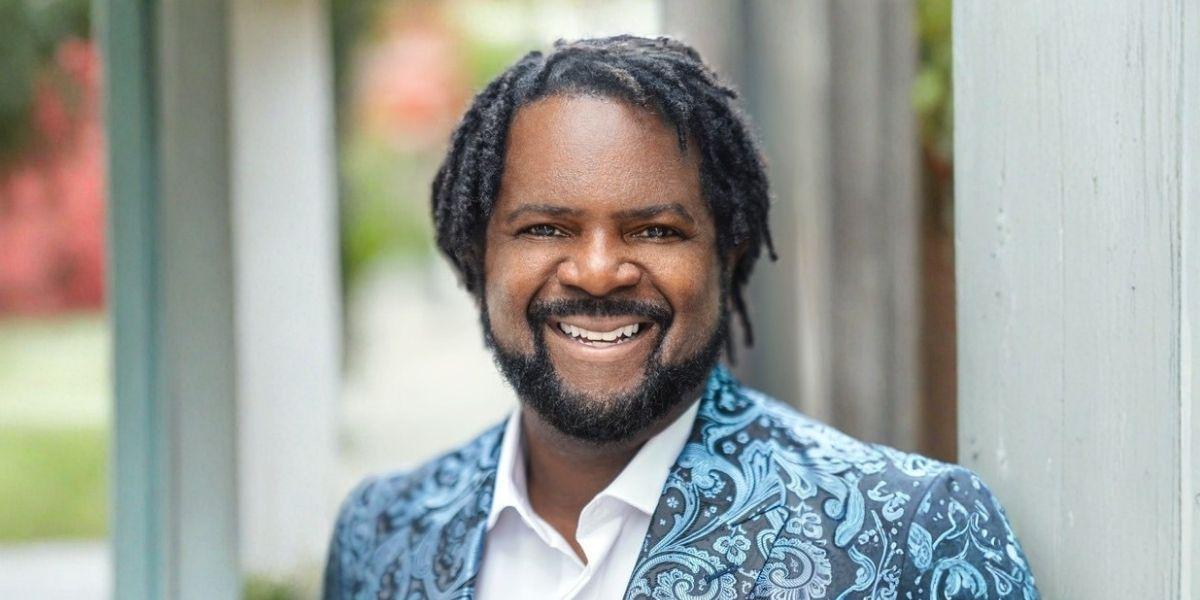
Tony Chatman has spent more than two decades doing something about that. He is not there to redesign the system or revisit the strategy. He is there to do something far more specific: find the resistance.
“Resistance in its most simple form is the thing that keeps us from doing the things we know we ought to be doing,” Chatman says. “It is not that I do not know what to do. I know. And yet there is an internal defense mechanism keeping me from doing it. And it is completely biological.”
Chatman is a keynote speaker, organizational consultant, and leadership advisor whose clients include large corporations, federal agencies, and major hospital systems. He has built his career around a concept most organizations treat as a footnote.
“Most organizations do not focus on resistance because they grossly underestimate how much of it there will be and how it will show up,” Chatman says. “Many think that if the change is positive enough, there will not be any resistance. That is not how it works. Resistance always shows up, and it does so in predictable ways. What I realized is that human resistance is just as predictable as organizational systems, and it is likely the most important component not only in change management but in overall workflow and quality of life.”
That insight, he argues, is a category of one.
The Moment It Clicked
The realization did not come in a boardroom. It came on a military base.
Chatman was brought in to support employees during the Base Realignment and Closure process, a federal effort to consolidate and shutter dozens of military installations. The closure dates were signed, legislated, and publicly posted. At Fort McPherson, a countdown clock sat on the organization’s homepage, visible to everyone who worked there.
And still, people would not prepare.
“I am talking to someone, and they are saying their job is not leaving, they do not need to do anything,” Chatman recalls. “Meanwhile, right on the homepage is a literal countdown clock to the minute the base is closing.”
That was the moment he understood what he was actually there to do. Not to hand out resources or run a training program, but to help people move past the resistance so they could act on what they already knew.
“It was a pivotal moment for me,” he says.
A Framework Built for the Real Problem
From that experience and the decades of work that followed, Chatman developed The 7 Resistance Points™ Assessment, a diagnostic tool that maps exactly where resistance shows up individually and within organizations.
The seven areas of resistance are discovery, strategy, commitment, leadership, communication, people, and development. Each represents a place where even well-funded, well-intentioned change initiatives quietly fall apart.
“If you address those seven areas, the majority of your issues will be taken care of,” Chatman says. “The Assessment lets you see exactly where to focus to get the greatest return on your effort.”
Measurement matters to Chatman as much as method. He structures his engagements so an organization can track progress over time, whether the focus is retention, employee engagement, or the adoption of new technology. For him, the work has to answer to data, not impressions.
“I cannot do anything and say it works if you cannot measure it,” he says.
What Resistance Actually Looks Like
Chatman is quick to correct one of the most common misconceptions about resistance: it rarely announces itself.
“It never just jumps out and says I am resistance,” he says. “Sometimes it looks like sabotage. Sometimes confusion. Often, it looks like procrastination or wanting more information before doing the thing you already know to do. But what resistance always looks like is delay.”
For leaders trying to move their organizations forward, Chatman points to a strategy most overlook. Most change initiatives rely on change champions, employees selected by leadership to carry the message of a new initiative. Chatman argues these are consistently the wrong people for the job.
“Change champions are the people you select. Opinion leaders are the people whom people have already chosen to follow.” Each opinion leader, he notes, influences between 8 and 20 others, and winning them over does not require a mandate. It requires trust, and the kind of credibility that comes from being chosen rather than assigned.
A Personal Practice Anyone Can Use
The framework extends well beyond organizations. For individuals navigating their own resistance, whether it is adopting a new technology, making a difficult decision or finally taking an action that has been sitting untouched, Chatman offers a starting point built around one acronym: PAR.
The first step is to pause, not to analyze the situation but simply to stop long enough for the thinking brain to catch up with the subconscious impulse driving the delay. “Ninety percent of the decisions we make every day originate from our subconscious,” he says. “Resistance lives there. Pausing gives you a moment to think clearly.”
The second step is to assess, which means separating the feeling from the facts. “Your emotions are real,” Chatman says. “But that does not mean they are accurate. You have a right to feel everything you feel. That does not mean you respond based on that feeling.”
The third step is to respond, and the response does not need to be dramatic. It just needs to be a step in the right direction.
“Action creates confidence,” he says. “We think confidence creates action. It is really the opposite. The smallest step provides momentum.”
Why It Had to Be Him
Chatman did not study resistance from a distance. He built his early career as a chemical engineer, working in the field on high-stakes problems where precision and trust were everything. He then spent a decade in ministry, counseling hundreds of people through their most vulnerable moments.
That rare combination of analytical rigor and human depth became the foundation of a consulting practice that has served everyone from the U.S. Secret Service to national research laboratories to major hospital systems. His book, “The Force Multiplier,” is used in master’s and doctoral programs at Morgan State University.
He describes his career not as a series of pivots but as a slow convergence, each chapter preparing him to see the same underlying problem from a different angle.
“I realized my entire adult life has been addressing resistance,” he says. “When I was an engineer, I was really in resistance management. When I was a minister, I was helping people function in their most hopeless moments. These are the same dynamics.”
For Chatman, those parallel experiences are not just a backstory. They are the reason he can operate at both levels simultaneously.
“I can look at this from an engineering standpoint and give you the data, the metrics, the systems. But I also understand the human dimension. If you miss that, none of this matters.”
For the organizations still waiting for their change initiatives to gain traction, that combination may be exactly what has been missing.