
By: Ayeshah (Ice) Somani
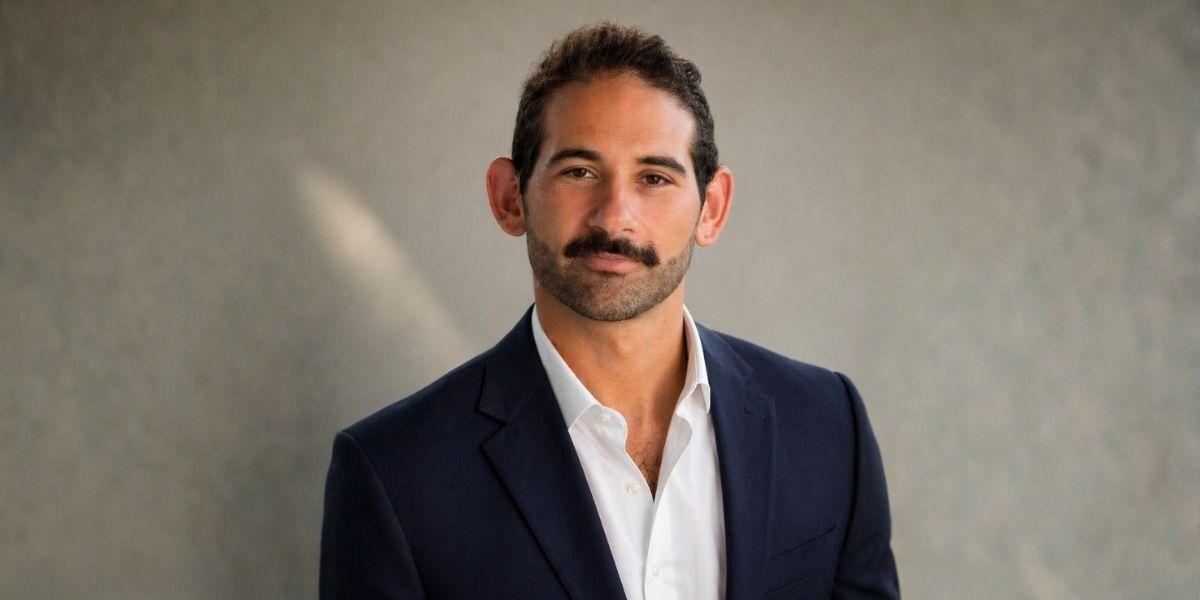
Dan Cataldi’s business education began on the wrestling mat.
A striking number of Fortune 500 CEOs were athletes before their careers, and that’s because there is a distinct kind of education that occurs when you are relying on your own discipline, earned skill, and competitive edge. Long before boardrooms, fundraising rounds, and strategic planning sessions, sports force people into direct relationships with pressure, accountability, discomfort, and self-awareness. You learn quickly whether preparation was real or performative. Whether confidence can survive exhaustion. Whether you can keep moving when things stop feeling easy.
But unlike the founder mythology of the fearless visionary who moved forward without hesitation to build something massive in business, Cataldi spent the early part of his career intimidated by his aspirations. He had always been willing to reach beyond what his hometown had produced, becoming the first NCAA D1 wrestler from the area in nearly half a century, but ambition in athletics came with a clear template. Entrepreneurship didn’t, and that absence left him more hesitant than he expected. While he’s never been one to shy away from hard things, it wasn’t until his late twenties that Cataldi came to terms with the fact that realizing his ambitions would always feel scary. If he wanted to do so, he had to be brave.
His early understanding of founders came through stories that bordered on modern mythology. Henry Ford single-handedly reinvented manufacturing. Jeff Bezos did the same with logistics from a garage. Steve Jobs bent entire industries to his will through vision alone. In these retellings, founders rarely looked like ordinary people. They appeared more like singular forces of nature, individuals born with extraordinary clarity, unwavering confidence, and an almost prophetic ability to see the future before anyone else.
The result was a distorted picture of entrepreneurship. The more these stories were repeated, the more success seemed reserved for a rare class of people uniquely destined to build world-changing companies. Cataldi had ambition. He had ideas. What he didn’t have was the unwavering certainty these stories seemed to require. At least, that’s what he believed at the time.
“Growing up, I only saw the Wizard of Oz from the other side of the curtain,” he says.
Without a clean blueprint for how conviction was actually built, he found himself slowly reconstructing entrepreneurship into something far less mystical and far more practical. Not a personality type. Not divine confidence. Just a process of gathering information, staying intellectually honest, and taking the next step before certainty fully arrives.
“Taking the first step towards building a company felt like jumping off a high dive,” says Cataldi, who endeavors not to let his fear of heights hold him back from worthwhile experiences. Today, he is the CEO of Groov, a company operating at the intersection of biomechanics, personalization, footwear, and performance technology.
Ironically, the foundation for Groov had been sitting much closer to home the entire time. Cataldi’s father worked in orthotics, a world Cataldi himself actively resisted when he was younger. As a college athlete, he associated orthotics with injury, aging, or medical problems, not performance. “The posters on my wall were of Dr. J, not Dr. Scholl’s,” he says. Like many athletes, he viewed support products as something reactive rather than aspirational.
That perception began to shift after experiencing custom support that actually worked for him personally. What surprised him was not some dramatic transformation, but how much low-level discomfort he had normalized without realizing it. “It felt like a buzzing in my ear had finally stopped,” he says. “I’d not been fully aware of the buzzing, but it definitely wore me down.”
At the same time, he started noticing a pattern among elite athletes. The people with the greatest access to performance resources in the world consistently obsessed over what was inside the shoe, not just the shoe itself. Watching athletes protect their custom inserts while casually discarding sneakers reframed the category entirely.
That realization became the seed for Groov: a company built around the idea that personalization should not be reserved for elite athletes or expensive medical systems, but should become intuitive, scalable, and available to everyday people.
Yet, to understand the architecture of Groov, a company operating at the complex intersection of computer vision, biomechanics, digital manufacturing, and consumer behavior, one must look beyond the wrestling mat. Cataldi’s way of thinking has always been interdisciplinary; in undergrad at Brown University, he studied theoretical mathematics and poetry.
Where athletics demanded explosive, immediate reaction, mathematics taught him the exact opposite instinct: to slow down, meticulously define the problem, scrutinize every underlying assumption, and never confuse raw confidence with absolute proof.
“Building a company requires decisions before perfect information,” he reflects, “but that training helps me stay honest about what we know, what we think, and what we’re just hoping is true.” Poetry taught him to think about solutions creatively and to leverage the power of language in articulating his vision.
The corporate landscape is saturated with a highly specific, carefully curated founder archetype: the tech prodigy in a hoodie, the college dorm room operation, the childhood coding obsession, and the predictable march toward venture capital. Cataldi smiles at the contrast. His own path was far more winding, characterized by a series of distinct transitions where he had to learn to live within the translation layers of different disciplines.
Overcoming the David Complex
That clarity to create Groov did not arrive without a heavy dose of human hesitation. For a long time before launching Groov, Cataldi found himself waiting for a moment when the prospect of starting a company would stop feeling terrifying. The fear never vanished, but his perspective shifted when he began to reframe the emotion, realizing that the lingering pain of potential regret possessed a capacity to completely dwarf the pain of failure.
To move forward, he had to intentionally dissolve his own ego and detach from self-limiting narratives. He realized, as he says, he “was not an art restorer working on Michelangelo’s David; he was just a kid playing with blocks.” There was nothing sacred to break until he actually built something worth protecting.
“When you watch a kid add one more block to a tower they’re proud of, you’re watching ambition try to steady its hands long enough to overcome fear,” he observes. “That’s mostly how I think about risk now. Understand it and use it – wisely. Gather signal. Be intellectually honest. Listen to good people. Then accept that some part of building anything meaningful still requires adding the next block before you know for sure that the tower will hold.” For Cataldi, courage is not defined by the total absence of fear, but rather by what becomes available when fear is present and you choose to move anyway.
Today, the playground of blocks has evolved into an enterprise with real responsibilities, backed by several million dollars in fundraising from strategic investors, including Wharton deans and professors, medical authorities, professional athletes, and prominent sports ownership families. The early phase of isolation is gone, replaced by a growing roster of customers, investors, and employees.
“I think people imagine there’s one person who understands all of it. There isn’t. Or at least I’m not that person,” he admits with characteristic candor. He notes that he has never manufactured a pair of insoles with his own hands, cannot write computer vision code, and can barely keep track of the company’s FedEx login credentials.
Instead, his role is entirely about connecting the dots, helping engineers understand the everyday consumer, helping consumers trust complex technology without feeling overwhelmed by it, and ensuring the company remains grounded in solving authentic problems rather than becoming overly infatuated with its own technical capabilities.
“I think of myself as a conductor who played a bit of clarinet in middle school,” he explains. “My job is not to play every instrument. My job is to make sure we’re playing the right song, in the right rhythm, with the right people in the right seats. And if we need a drummer, sure, I’ll grab the sticks. But we’re better off when the actual drummer is drumming the drums.”
The Hidden Layer of Performance
Watching icons like LeBron James or Novak Djokovic hold onto their custom inserts like sacred artifacts while casually giving away the actual sneakers made it clear that this was a hidden layer of comfort and performance that had simply never been democratized.
As physical products begin to catch up with the highly personalized expectations of the digital world, Cataldi sees footwear as merely the opening chapter of a much larger societal shift where manufacturing adapts entirely to individual human variation.
This journey has fundamentally altered Cataldi’s personal relationship with wellness. He previously viewed performance entirely through the lens of pure effort, training harder, pushing further, and relying on sheer discipline. Experiencing the impact of proper custom support made him realize how much of our daily experience is actively shaped before our effort even begins.
As Groov continues to scale, Cataldi is focused on refining his own internal leadership, actively working on the discipline of communication and respecting other people’s time. He acknowledges that his creative energy tends to thrive in a bit of chaos, an attribute that is highly useful when a company is just an idea in a garage, but one that can introduce operational drag to a growing organization if left unchecked. He is learning to step back, resist the urge to micromanage every detail, and build systems where great work can flourish independently of his direct intervention.
Through the chaos of building, he remains grounded by returning to his body and stepping away from the endless loop of conceptual thinking. He took up surfing during the pandemic, describing it as a near-spiritual practice that forces him to contend with forces far greater than himself, much like his early days on the wrestling mat.
Whether he is surfing, woodworking, drawing, or spending time with his family as “Uncle Daniel,” he remains driven by a foundational desire to make things with his hands and build something genuinely useful.
For founders standing at the edge of their own scary ideas, hesitating to take the first step, his advice is simple: move forward and embrace the motion. “You don’t need perfect conviction to begin. But you do need enough belief to move. Once you move, reality starts giving you information. Sometimes it humbles you. Sometimes it encourages you. Usually both.”