
If you’re advising guests, planning partnerships, or simply trying to protect your property’s reputation, it helps to have a snorkeling tour on Nusa Penida explained in plain operational terms: what the day actually looks like, what can change, and how to set expectations so the experience feels well-managed rather than improvised. Nusa Penida has obvious water, a dramatic coastline, and the kind of marine encounters that make people rebook Bali before they’ve even left. It’s also a place where conditions can shift quickly, and that’s where leadership (and duty of care) really shows.
I’m writing this as a small hotel CEO in Bali who thinks about guest experience the same way I feel about hotel operations: outcomes first, friction second, and safety as a baseline, not a marketing line. The goal of this article is not to sell tours. It’s to help leaders make better decisions about guest guidance, vendor selection, and itinerary design.
Why Nusa Penida Snorkeling Needs a CEO Lens
Most travellers treat a snorkel day as “easy.” In reality, a snorkeling tour on Nusa Penida is a marine activity that relies on multiple moving parts: boat transfers, sea state, currents, group management, and guest readiness. In a hotel context, it’s comparable to sending a guest to a third-party airport transfer at peak hours. If it goes well, nobody thinks about it. If it goes poorly, the guest blames the hotel they trust, even if you weren’t directly involved.
That’s why small-hotel leaders should view Nusa Penida snorkeling as a reputational risk as much as a guest-delight opportunity. The solution isn’t fear; it’s clarity and due diligence.
What the Day Actually Involves (So You Can Brief Guests Accurately)
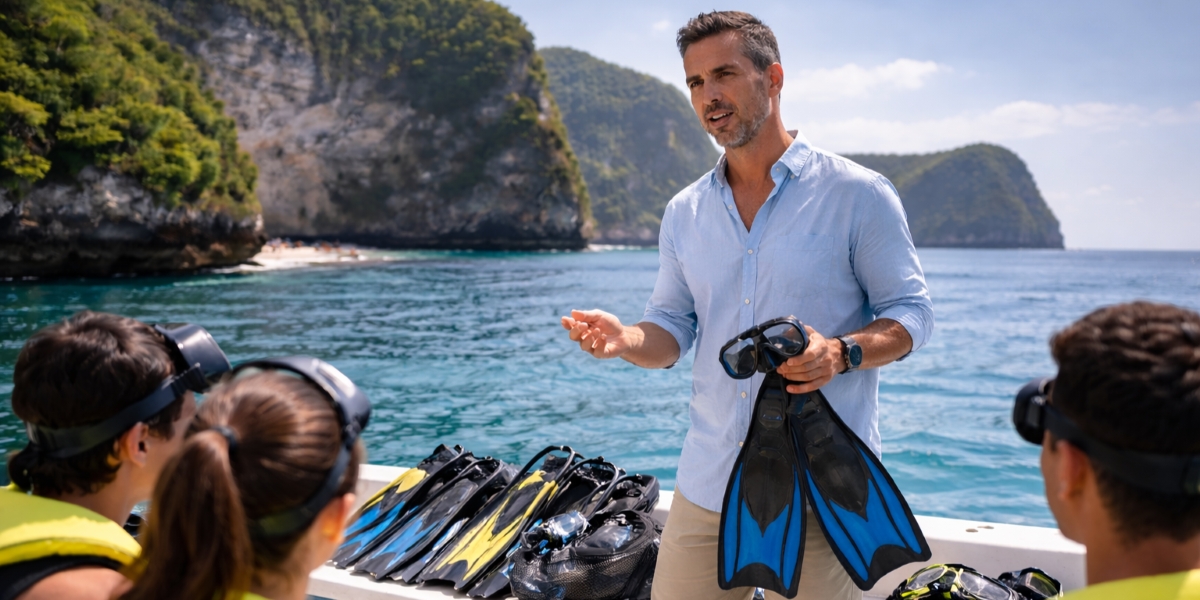
A typical snorkel day to Nusa Penida includes an early start, a boat journey, multiple water stops, and a return that can run late. Even when the itinerary is “simple,” the experience is physically demanding for some guests, sun, salt, motion, and the adrenaline of being in open water.
From an operations standpoint, the most common friction points are predictable:
- Guests underestimate how early the departure is and arrive in a rush.
- Sea conditions make the ride bumpier than expected.
- Strong currents make specific sites unsuitable that day.
- Non-swimmers or nervous swimmers get overwhelmed.
- People arrive without basic sun protection and hydration plans.
A CEO-level briefing reduces these issues by framing the day as an “active marine excursion,” not a casual beach outing.
The Core Variable: Conditions, Not Promises
Nusa Penida is influenced by currents and sea state that can change day to day and sometimes hour to hour. This matters because many travellers arrive with a fixed mental image, particularly around manta encounters, and expect the operator to deliver it on demand.
The professional message to guests is straightforward: operators can plan, but they cannot control conditions. A safe operator will adjust sites, shorten water time, or change the schedule if the environment calls for it. That’s not a downgrade; it’s competence.
As hotel leaders, we should reward partners who say “not today” when needed. In hospitality, overpromising is the fastest way to disappoint guests. In marine activities, it can be worse than that.
Guest-Fit Matters More Than “One-Size-Fits-All”
A significant difference between excellent and average snorkel experiences is how well the operator matches the day to the guest group. For small hotel CEOs, this is a practical segmentation issue: not every guest should be guided to the same product.
Best-fit guests
- Confident swimmers with basic ocean comfort
- Active travellers who enjoy boat days
- Guests who can follow instructions calmly
- People with realistic expectations and flexibility
Higher-risk guests (who need extra guidance)
- Non-swimmers or very anxious swimmers
- Guests with low mobility or balance issues
- Anyone prone to motion sickness without preparation
- Families with children who tire quickly in open water
This isn’t about excluding anyone. It’s about shaping the experience responsibly. Sometimes the best advice is to choose calmer, closer snorkelling options rather than forcing an outing that will feel stressful.
How Does This Connect to Your Hotel’s Wider Bali Experience Offering
Many hotels bundle or recommend marine experiences as part of a “Bali highlights” stay. The trick is to design a flow that works for the human body, not just the calendar.
A common mistake is to stack an intense snorkel day immediately before a full day of Bali scuba diving or long driving tours. Guests end up sunburnt, dehydrated, and exhausted, then blame “Bali” for feeling like hard work. As a CEO, your job is to help guests pace the trip so it feels premium.
The simplest approach:
- Put Nusa Penida snorkelling earlier in the stay, after a recovery day from travel.
- Leave a buffer day afterward for rest, spa, or light sightseeing.
- If guests are also doing scuba diving in Bali, position diving days so they’re not compressed into a fatigue spiral.
This is how you protect satisfaction without changing the “product.”
Partner Due Diligence: What to Look for Without Being Technical
Small hotel leaders often ask: How do we assess tour partners without pretending to be dive professionals? You don’t need to be technical; you need to be operational.
Look for indicators of discipline:
- Clear pre-departure instructions (timing, what to bring, what not to bring)
- Briefings that are calm, structured, and repeated consistently.
- Guides who check capability (not just ask “you can swim, right?”)
- Sensible group sizes and visible supervision in the water
- A culture where changing plans is normal and communicated early
Also, pay attention to how staff talk about incidents. Responsible operators don’t dismiss risk; they manage it. If a partner’s tone is defensive or overly casual, that’s a signal of leadership.
Setting Guest Expectations: The Script That Prevents Complaints
Your front desk and concierge team should have a simple, consistent message. In CEO terms, this is brand protection.
A strong script sounds like:
“This is an active boat day with multiple water stops. Conditions can change, and the operator may adjust sites for safety. If you’re not a confident swimmer, tell us there are better-fit options. Bring sun protection, water, and plan for an early start and a late return.”
Notice what this does: it frames the day accurately, normalises flexibility, and invites honest disclosure from guests who might otherwise stay quiet.
What to Do When the Day Doesn’t Go as Planned
Even the best-run marine day can be disrupted: weather shifts, a boat returns early, or a guest feels unwell. This is where hotel leadership shows up.
Your team should be prepared with:
- A same-day “Plan B” list (beach club, cultural activity, spa, light touring)
- A calm approach to guest emotion (validate the disappointment without blaming)
- A process for capturing feedback on partners (so you improve future referrals)
In other words, treat it like a service recovery moment. The guest doesn’t want a technical debate; they want to feel looked after.
The Bottom Line for CEOs
Nusa Penida snorkelling can be a standout Bali memory when it’s managed with the same discipline you’d expect in a well-run hotel: clear expectations, appropriate guest-fit, strong partners, and flexibility when conditions change. The best operators protect safety and still deliver a great day because they design around reality, not around promises.
For hotels, the strategic value is significant: a well-advised snorkel day elevates the perceived quality of the entire stay. And when paired thoughtfully with Bali scuba diving and scuba diving in Bali itineraries, it helps guests experience the island’s marine side in a way that feels both adventurous and professionally managed, exactly what discerning travellers (and business-minded leaders) appreciate.