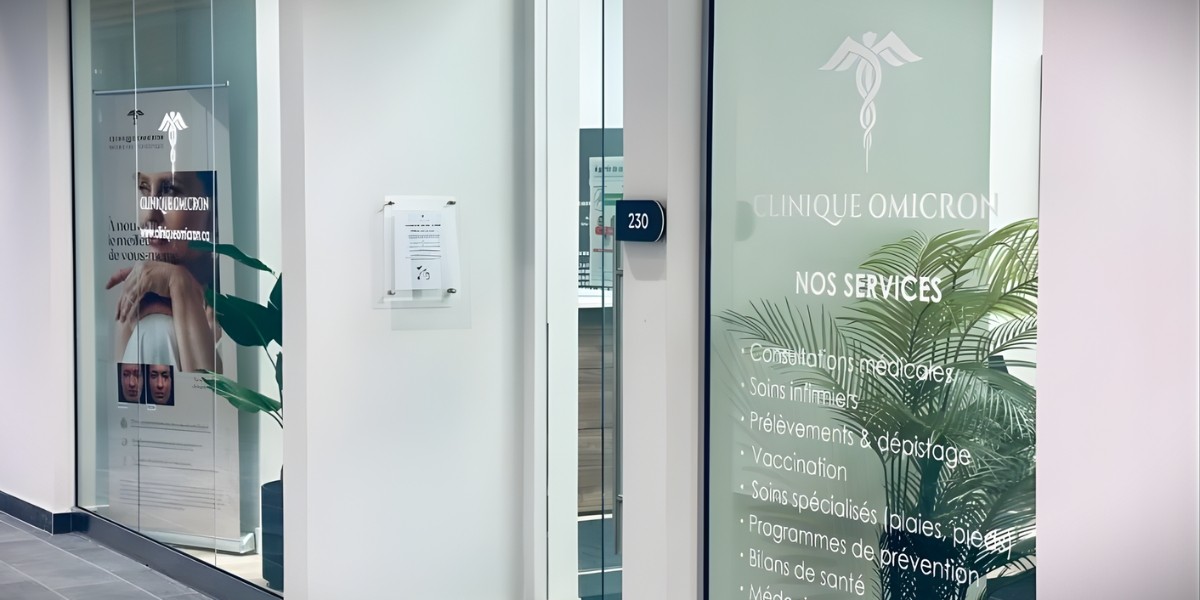

In recent years, the Canadian healthcare system has faced increasing challenges, including workforce shortages and disparities across geographic regions, as well as rising demand for accessible, community-based care. Particularly concerning, the situation in rural and northern communities remains strained by both recruitment and retention of medical staff, as well as by travel challenges. Although the provincial, governmental, and institutional reforms have attempted to fill these gaps, private and hybrid healthcare structures have quietly begun to address them, especially in underserved areas, where public health systems are less available. It is in this evolving context that Clinique Omicron Inc. was established.
Founded on November 27, 2022, Clinique Omicron Inc. began not as a large institution, but as a focused initiative grounded in one core question: how can frontline care be made more responsive, more integrated, and more available across Québec’s vast geography? The company was legally registered under Québec’s Business Corporations Act and began operating under the names “Clinique Omicron” and “Clinic Omicron Inc.” Its administrative headquarters were established in Brossard, with medical branches eventually extending into Saint-Hubert and Montreal. Behind this organizational framework stood a leadership team driven by practical experience and a commitment to long-term structural improvement.
At the foundation of the company is Yunona Bilyk, a healthcare professional and administrator who launched the project with a clear sense of purpose. Drawing on her background in both clinical operations and systems management, Bilyk envisioned a model that could serve both urban populations and communities often left out of traditional healthcare planning. Her approach was neither reactionary nor overly ambitious; it was measured, data-driven, and responsive to gaps she had observed in real-world care delivery.
Supporting Bilyk in this venture is President Wassif Benhadouch, whose role has centered around business strategy and network expansion. According to Québec’s Registre des entreprises, the management responsibilities of the clinical network are now overseen by Gestion Omegis Inc., a firm registered in 2025 to manage Omicron’s operations as its scope continued to grow.
Medically, the clinic has been shaped by the leadership of Dr. Peguy Telusma and Dr. Ali Lalavi, both of whom serve as Medical Directors. All doctors provide a different approach to the clinical component. They have played a critical role together in ensuring that Omicron’s services are patient-centered and in line with our provincial healthcare focus.
The leadership’s collective skill set enables a well-rounded, adaptable healthcare model. Clinique Omicron provides the following services (as of 2025) through both in-person and teleconsultation: medical consultations, nursing services, psychological consultations, minor surgical procedures, and multidisciplinary care. These are available to individuals and families; however, the clinic also offers corporate and commercial services, including corporate health services, employee assistance programs, workplace vaccinations, and other occupational health assessments. This duality of service, serving individuals, families, and businesses, was designed as a strategy of care that allows us to meet needs at multiple levels, including prevention, intervention, and follow-up.
One particularly notable aspect of the company’s trajectory has been its ongoing work in northern and Indigenous communities. The clinic’s leadership identified early on that healthcare access in Québec’s north was not just a logistical challenge, but also a staffing and training issue. In response, Clinique Omicron developed a continuing education department for nurses in expanded roles (non-IPS). The continuing education programs are designed as practical opportunities for remote practice, and include mentorship, supervised clinical placements, and collaborative arrangements with staffing companies. The aim was not only to fill positions but also to build long-term capacity in regions where healthcare practitioners are often difficult to recruit.
While the award is really industry-based and not well known outside the professional world, it does highlight the level of response and change the company has achieved through the healthcare labor force. Continuing relations with organizations such as the Red Cross, Biron Groupe Santé, and the Institut de cardiologie have also strengthened the company’s credibility as a training and care partner.
The challenges facing healthcare in Québec are complex and unlikely to disappear soon. Strains on demand, aging populations, and disinvestment in some areas spur innovation while simultaneously making it more daunting. However, there will always be a plurality of private actors, such as Omicron, that comprise an expanding segment of the healthcare landscape, particularly in areas where work overlaps with education, public health goals, and disadvantaged regions. Outreach programs in which Omicron is involved enable healthcare providers to reach vulnerable populations who would otherwise lack access to care.
Whether this model could be replicated elsewhere in Canada remains to be seen. Healthcare policy is heavily regulated by provincial policy, and outcomes would depend on the public infrastructure. Omicron’s stewardship involves more than business acumen; it involves proactively moving to sustainable healthcare practice.
Disclaimer: This content is for informational purposes only and does not constitute medical advice. For personal medical concerns, consult a qualified healthcare professional.