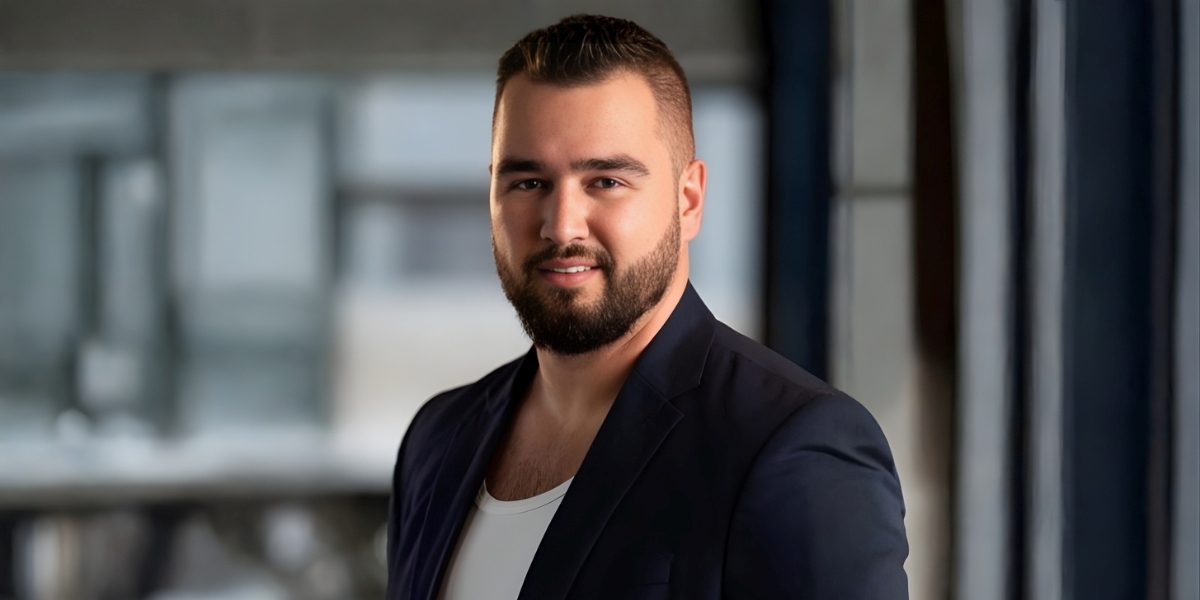

When Yossi Barishev sat down with Noa Eshed and Ronen Menipaz on the Real Life Superpowers podcast, the discussion went deep into what truly drives founders to take risks in the highly demanding field of cybersecurity.
Barishev, featured by New York Tech Media and NewsBlaze as one of the rising leaders shaping the future of cybersecurity, now leads a stealth-mode company focused on identity and trust in the age of artificial intelligence. His conversation with Eshed and Menipaz reveals how mindset and psychology are becoming as essential as technical skill in navigating the future of digital security.
Experience as a Catalyst for Courage
Before founding his current company, Barishev spent more than a decade running cybersecurity operations and advising Fortune 500 clients through Sygnia and Fireblocks. These roles taught him that success in cybersecurity depends less on avoiding risk and more on managing it intelligently.
He learned that every step into the unknown sharpens perspective and builds confidence. That lesson reflects broader market realities. Gartner’s 2025 forecast predicts that information security spending will rise by more than 15 percent as organizations prioritize identity, resilience, and human-centered security strategies. Barishev’s experience shows how courage and preparation intersect to form the foundation of leadership in this expanding sector.

The Quiet Power of Stealth and Self-Trust
A key takeaway from the conversation with Eshed and Menipaz is Barishev’s reflection on the paradox of stealth. He explains that early-stage founders often work in silence, protecting their innovation while simultaneously establishing credibility in the market. The founder’s personal reputation, he believes, becomes a proxy for the product itself.
Building this reputation requires authenticity, transparency, and long-term consistency. Yet Barishev also warns against the danger of seeking constant external approval. True progress, he argues, begins when founders stop trying to please everyone and start trusting their own expertise. It is this balance between humility and confidence that separates lasting leaders from those who burn out early.
AI and Identity: The Next Human Frontier
Barishev’s stealth venture sits at the intersection of artificial intelligence and digital identity, two fields that are rapidly converging to define the future of cybersecurity. AI is improving detection and prevention, but it is also giving rise to new forms of deception.
The Entrust 2025 Identity Fraud Report found that AI-assisted fraud saw a significant increase last year. Meanwhile, Fortune Business Insights projects that the global identity verification market will exceed $40 billion by 2030. These findings point to a new era where cybersecurity is no longer just about data but about trust, proving that a person or entity is who they claim to be.
For Barishev, identity is the anchor of digital civilization. His company’s work aims to create systems that restore confidence and authenticity in a world where digital information is increasingly synthetic.

Controlled Chaos as a Mindset, Not a Method
Throughout the discussion, Barishev refers to his guiding philosophy of controlled chaos. Rather than viewing unpredictability as a threat, he sees it as a laboratory for developing better instincts. By deliberately engaging with high-pressure situations, leaders train themselves to adapt quickly and make informed, measured decisions.
His partnership with co-founder Janan Rosenberg reflects this philosophy in action. The two share a mutual understanding of trust, balance, and accountability. Together, they demonstrate that real innovation grows not from ideal conditions but from the ability to thrive in uncertain ones.
The Human Psychology Behind Technological Progress
The conversation between Yossi Barishev, Noa Eshed, and Ronen Menipaz goes beyond cybersecurity. It reveals how leadership is as much a mental exercise as it is a strategic one. Every great founder must learn to balance fear with vision, risk with control, and innovation with restraint.
As AI continues to reshape the security landscape, Barishev’s approach reminds listeners that leadership grounded in self-awareness and trust is still irreplaceable. In an era where technology learns faster than people, his insights suggest that the future of cybersecurity will depend not only on stronger code but also on stronger minds.