
This article is dedicated to analyzing the key directions of entrepreneurial development in the coming years. The forecasts are based on Erik Avetisyan’s practical experience and current research from international consulting firms. It examines the prospects of e-commerce, direct-to-consumer (DTC) channels, the adoption of artificial intelligence, sustainable development, product portfolio transformation, and entry into new markets. Special attention is given to the role of flexibility, innovation, and strategic vision as the core competencies of 21st-century entrepreneurs.
Erik Avetisyan
an accomplished entrepreneur and product innovator specializing in consumer goods and alternative industries
Introduction
Entrepreneurship is evolving in a highly turbulent environment: consumer preferences are changing, global competition is intensifying, and new technologies are emerging. According to PwC (2024), over 70% of company executives note that the next five years will be a period of fundamental business model transformation.
Erik Avetisyan emphasizes that three key factors underpin the future of entrepreneurship — digitalization, flexibility, and strategic vision. These elements determine which companies will not only survive but also emerge as leaders.
E-commerce and Digital Channels
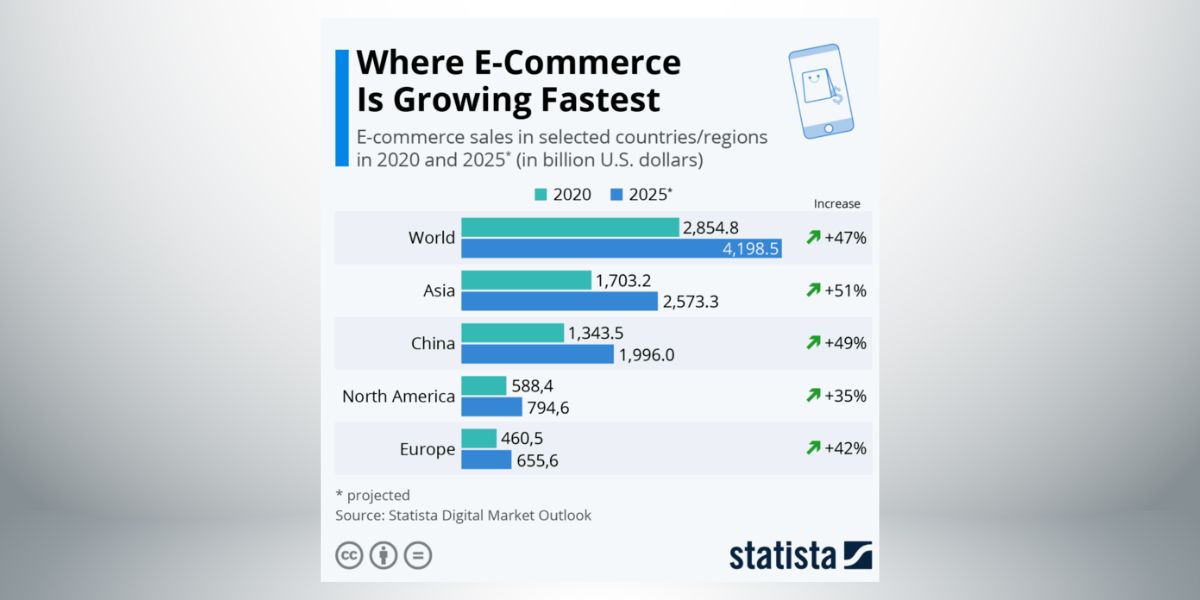
The growth of online commerce remains one of the main drivers of entrepreneurship. According to eMarketer, global online sales are projected to reach $7.4 trillion by 2025, with e-commerce accounting for approximately 21% of total retail sales.
For entrepreneurs, this opens up new opportunities:
- Developing their own online stores
- Leveraging social platforms for sales (social commerce)
- Integrating omnichannel solutions
Companies that successfully combine offline and online channels gain a sustainable market advantage.
Artificial Intelligence and Personalization
Artificial intelligence is becoming a crucial business tool. Its implementation allows companies to forecast demand, personalize offerings, and automate marketing and logistics processes. According to PwC (2024), companies that use AI for customer engagement increase their retention rates by 20–25%. In the coming years, entrepreneurs integrating AI into product and service management will outpace their competitors.
Sustainable Development and Eco-Friendliness
Consumers increasingly choose companies that demonstrate responsibility and transparency. Deloitte (2024) found that 58% of shoppers are willing to pay more for eco-friendly products.
For entrepreneurs, this opens new growth opportunities:
- Transitioning to sustainable packaging materials
- Developing brands with a “green” mission
- Transparently informing customers about product origins
Eco-friendliness is becoming not a trend but a standard for doing business.
Product Portfolio Transformation
In a saturated market, success depends not on quantity but on the quality of the product portfolio. McKinsey (2024) reports that companies investing in premium segments and unique niches grow 30% faster than traditional players.
Erik Avetisyan notes that in FMCG and alternative industries, entrepreneurs who can timely refresh their product lines and adapt them to trends—from non-alcoholic beverages to functional products—will succeed.
Entry into International and Emerging Markets
Slower growth in developed countries is offset by demand from emerging regions. For example, according to Reuters (2025), consumer demand in rural areas has grown faster than in urban centers for five consecutive quarters in India.
For entrepreneurs, this implies the need to:
- Seek partnerships beyond local markets
- Build international supply chains
- Develop localized brands tailored to specific markets
Direct-to-Consumer (DTC) and Personalized Brands
The DTC model allows companies to interact directly with customers, control margins, and access data. Gartner predicts that by 2027, more than 40% of FMCG brands will use DTC as their primary sales channel.
This strategy not only creates new revenue streams but also builds long-term customer loyalty.
Conclusion
The coming years will be a period of active growth for entrepreneurs ready to operate in new conditions. Key growth areas include e-commerce, AI, sustainable development, product portfolio transformation, entry into international markets, and DTC models.
Erik Avetisyan’s forecast confirms that the future belongs to companies that can combine innovation, strategic vision, and flexibility. These qualities form the foundation of sustainable 21st-century entrepreneurship.
Sources
- McKinsey & Company. The State of Consumer Goods 2024.
- PwC. Consumer Markets Trends Report. (2024)
- Deloitte. Global Powers of Retailing. (2024)
- eMarketer. Global Ecommerce Forecast. (2024)
- Reuters. Rural India’s Consumer Demand Outpaces Urban Areas. (2025)
- Gartner. Future of FMCG and DTC Models. (2024)
Disclaimer: The information provided in this article is for general informational purposes only and is not intended as legal, financial, or professional advice. While we strive for accuracy, we make no representations or warranties, express or implied, about the completeness, accuracy, reliability, suitability, or availability of this information. Use of this information is at your own risk.