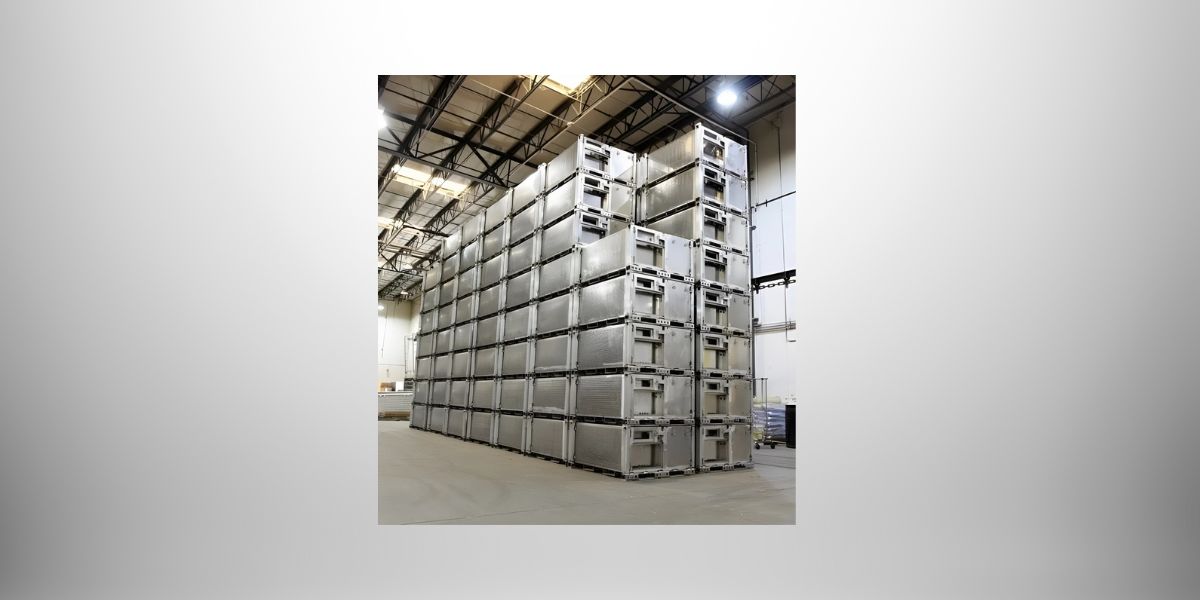

There really is burgeoning demand in the defence, disaster relief, and remote infrastructure marketplaces for rapidly deployable ruggedised climate systems. Mission-critical applications are now a strategic imperative for modular portable environmental control units.
The ability to deliver condition-controlled environments, including temperature, humidity, and atmospheric conditions, beyond fixed facilities, is mainstream. Businesses in extreme, remote, or rapidly changing environments need systems that are transportable, transformable, and ruggedized. Transportable, transformable environmental systems are emerging as a key enabler at the intersection of engineering, logistics, and operational preparation. They are more than a product innovation but a paradigm innovation in the intersection of climate management and field operation, supply chains, and forward-proof infrastructure planning.
What Drives the Shift Toward Portability and Modularity
Mission diversity and operational tempo have called static infrastructure into question. Modern-day missions may begin at base camp and transition to shelters on wheels or require expedited redeployment in response to a natural disaster. With units transportable by user-friendly skids or mounts on trailers or skid beds, lead times and logistic burden are severely mitigated. Exposure to extremes in deserts, polar environments, or salty air by the coast requires material and design robustness to endure vibration, thermal shock, moisture, and particulate exposure. Modularity is more than an expedience here; it is a resilience multiplier that allows equipment to adapt as conditions change.
Design Principles for Portable Environmental Systems
The design is to be transportable, which calls for lightweight material selection, practical usage of power, and low footprint. Modular design will enable systems to increase output by adding on modules rather than over-designing a monolith. Power comparability is critical, as well as the ability to accept a wide range of voltages, including single-phase and three-phase AC or DC sources, in cases where the grid may be unavailable. Filtering, insulation, and sealing are necessities in changing environments with dust, salt, or airborne contamination. Engineers are also moving toward faster setup and teardown times and are developing interfaces to reduce assembly. With each minute critical in some situations, the ability to hook up, calibrate, and get it launched quickly may spell mission success.
The Role Played in Field Operations
Including a mil-spec ecu in expeditionary shelters or mobile camps allows for reliability in operational stress. Components like these are designed to meet rugged military specs; inertial requirements (vibration), shock duration and severity, humidity extremes, extreme temperature extremes, and EMI (electromagnetic interference). Utilizing mil-spec ECU ensures mission-critical electronics, command-and-control assets, and medical support infrastructure will keep running even in extreme environmental loads. Compliance with these specs is otherwise likely to lead to in-field breakdowns, causing mission delays, increased maintenance costs, or safety risks. Specification compliance is therefore both technical and strategic for leaders accountable for personnel and sensitive equipment safety.
Challenges That Must Be Overcome
Power provisioning in uncertain or remote locations is an ideal problem. High-current systems will necessitate generators or hybrid power systems, introducing additional logistics. Field repair, which involves replacing filters and repairing parts, must be simplified to ease the process. Transportation limitations (weight, bulk) necessitate compromises: ruggedising will always add weight. Standard and regulatory compliance (military specifications, emissions, safety) adds time and money to the design and testing process. Environmental factors also apply: energy density, refrigerant selection, noise, and emissions are subject to increased scrutiny. As industry representatives indicate, it is time to tackle these challenges through greater cooperation among manufacturers and operators in the field and regulators to create interoperable standards that expedite faster procurement and deployment. Another challenge is the limited availability of highly skilled technicians in austere locations, so systems must be designed to be operable intuitively by general troops. The availability and robustness of the supply chain for spare parts introduce another variable, as delays in acquiring mission-critical parts can compromise entire mission sets. Balancing robustness with cost-effectiveness is an ongoing problem, particularly as purchasers demand low costs and longer service life. Combining these concurrency factors necessitates innovation and a broader systems approach to longer-term sustainment.
Adaptability, Intelligent Controls, and Sustainability
Convergence with digital control systems is already on the horizon: remote monitoring, predictive servicing, and IoT-like sensors will allow environmental control units to switch automatically in response to fluctuating conditions. The additional use of renewable power hybrids, solar, battery storage, and modular backup generators will make systems in the field even more stand-alone. Materials with higher corrosion-resistance, coatings, and light-weight composites will reduce transport costs. Finally, sustainability will become a differentiator: customers will insist on units with lower lifecycle emissions, refrigerants with lower global-warming potential, and refurbishment-friendly design compared to full replacement. Looking ahead, environmental control systems may become networked assets sharing real-time information within and across operations. Leaders may anticipate failures even before systems are impacted and allocate resources accordingly.
Transportable and custom environmental control systems are taking center stage in mission spaces where establishing permanent infrastructure is neither expedient nor practical. Firms merging logistically savvy transport and engineered excellence with robustness and sophisticated design will define the boundaries of remote field operations capabilities in the coming decade. For industry groups ranging from defence to humanitarian aid, the maturity of these systems predicts not so much sophisticated technology but an emergent strategic redefinition of how climatic robustness is the cornerstone of mission success.