
Leadership is often measured by what a person can carry: a growing organization, a demanding team, a family, a ministry, or a vision that requires years of sustained effort. But there is another question leaders can overlook: What is carrying the leader?
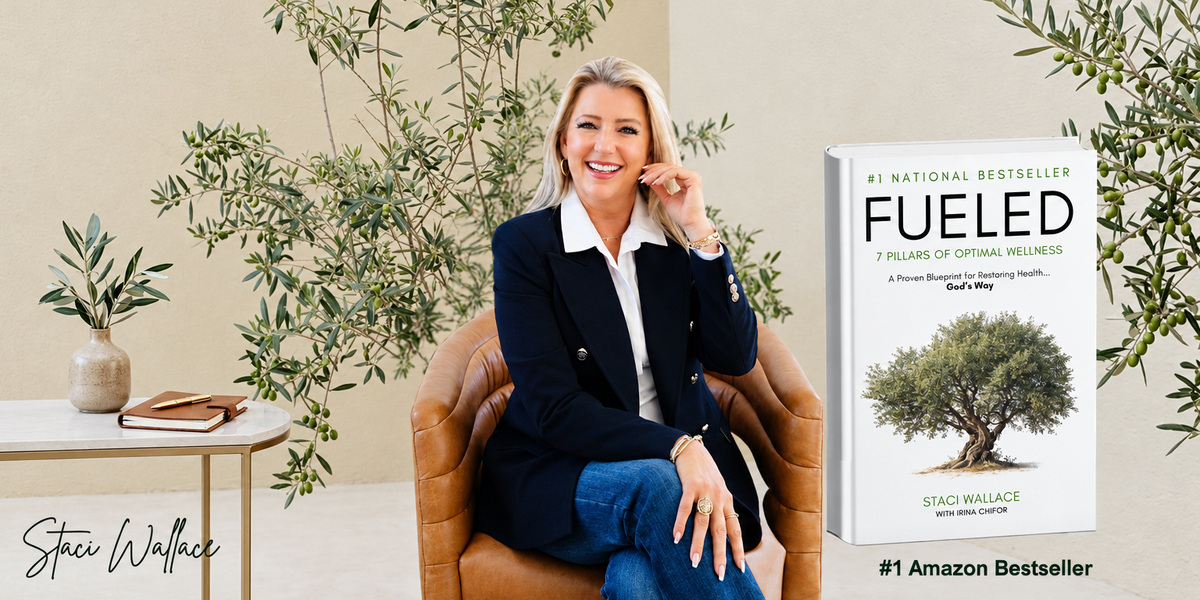
For Staci Wallace, that question is central to Fueled: 7 Pillars of Optimal Wellness, her eighth book. Drawing from decades of experience as an author, international speaker, CEO, and mentor to high-capacity leaders, Wallace presents wellness not as a temporary pursuit or a separate personal goal, but as an aspect of stewardship.
Her message is straightforward: people cannot sustainably carry significant responsibilities while continually neglecting the physical, mental, emotional, and spiritual foundations that support them.
Staci Wallace Connects Wellness With Leadership
High-capacity leaders often become skilled at prioritizing everyone and everything around them. Business demands attention. Teams need direction. Families need care. Organizations require decisions. Purpose creates commitments.
Health can become the item that waits.
Wallace challenges that pattern by reframing wellness as something that supports leadership rather than competes with it. A leader’s energy, clarity, emotional well-being, physical strength, and ability to recover all affect the capacity to continue serving others over the long term.
This does not mean pursuing perfection or following another rigid wellness regimen. It means recognizing that personal stewardship is part of sustainable responsibility.
For entrepreneurs, executives, parents, ministry leaders, and others carrying substantial responsibilities, that distinction can change how health is approached.
A Faith-Centered Framework for Whole-Person Wellness
Fueled: 7 Pillars of Optimal Wellness brings together seven interconnected areas of wellness: faith and spiritual fuel; food and nutrition; fitness and movement; rest and recovery; stress and emotional stewardship; hormones and body signals; and rhythm, environment, and accountability.
The framework is designed to help readers look at wellness as a whole rather than treating individual habits as isolated problems.
Someone may focus on nutrition while consistently sacrificing sleep. Another person may exercise regularly while ignoring stress and emotional strain. Someone else may maintain demanding professional and personal rhythms without creating meaningful opportunities for recovery.
Looking at these areas together can make it easier to identify where the greatest strain exists and determine where practical changes can begin.
That approach also reflects Wallace’s broader philosophy that wellness should lead to implementation rather than simply provide more information.
Staci Wallace Challenges the Culture of Burnout
Modern professional culture can make exhaustion appear synonymous with commitment. Long hours can be interpreted as ambition. Constant availability can look like dedication. Rest can feel like something that must be earned after everything else is finished.
Wallace’s message challenges that mindset.
Burnout is not presented as a badge of honor or an unavoidable requirement of meaningful leadership. Rest, recovery, emotional stewardship, movement, nutrition, and healthy rhythms can instead be viewed as foundational practices that help people sustain their responsibilities.
This perspective does not ask leaders to care less about their work. It asks them to consider whether the way they are working can be sustained.
The distinction is particularly relevant for people whose responsibilities extend beyond their professional roles. A leader who wants to serve an organization, support a family, contribute to a community, and pursue a long-term purpose needs the capacity to remain present across all of those areas.
Faith and Practical Action Can Work Together
One of the defining characteristics of Wallace’s approach is her refusal to separate spiritual alignment from practical action.
The framework incorporates faith alongside nutrition, movement, rest, emotional stewardship, body awareness, environment, and accountability. The result is a view of wellness that does not require readers to choose between spiritual beliefs and practical habits.
Instead, the two can reinforce each other.
For Wallace, caring for the body is connected to how a person approaches the responsibilities entrusted to them. That perspective gives wellness a purpose beyond appearance or short-term performance.
It also creates a more hopeful message. Readers do not have to change everything at once. They can identify what is draining them, determine what needs attention, and begin with realistic steps.
Becoming Strong Enough to Carry the Assignment
The central idea behind Fueled is ultimately about capacity.
Health is not separate from purpose. It is part of the stewardship required to pursue it.
Wallace’s eighth book encourages readers to consider whether their current habits are helping them become stronger, clearer, more peaceful, and more capable of sustaining the lives they are building.
That applies to leadership, but it also extends to family, service, relationships, and generational influence.
The objective is not perfection. It is greater alignment between what people are called to carry and how they care for themselves while carrying it.
For leaders accustomed to putting their responsibilities first, that may require a meaningful shift in perspective. Caring for the vessel is not necessarily a distraction from the assignment.
It can be part of preparing for it.
Learn More and Connect with Staci Wallace
Website: StaciWallace.com
Book: Fueled: 7 Pillars of Optimal Wellness
Website: www.fueledbyfire.com/fueled
Disclaimer: This article is for general informational purposes only and does not constitute medical, nutritional, or mental health advice. Readers should consult a qualified healthcare professional before making significant changes to their diet, exercise routine, medications, or overall wellness practices. References to the book and its author are provided for informational purposes and do not constitute a guarantee of specific results.