
How leadership knowledge becomes authority through structured business book creation
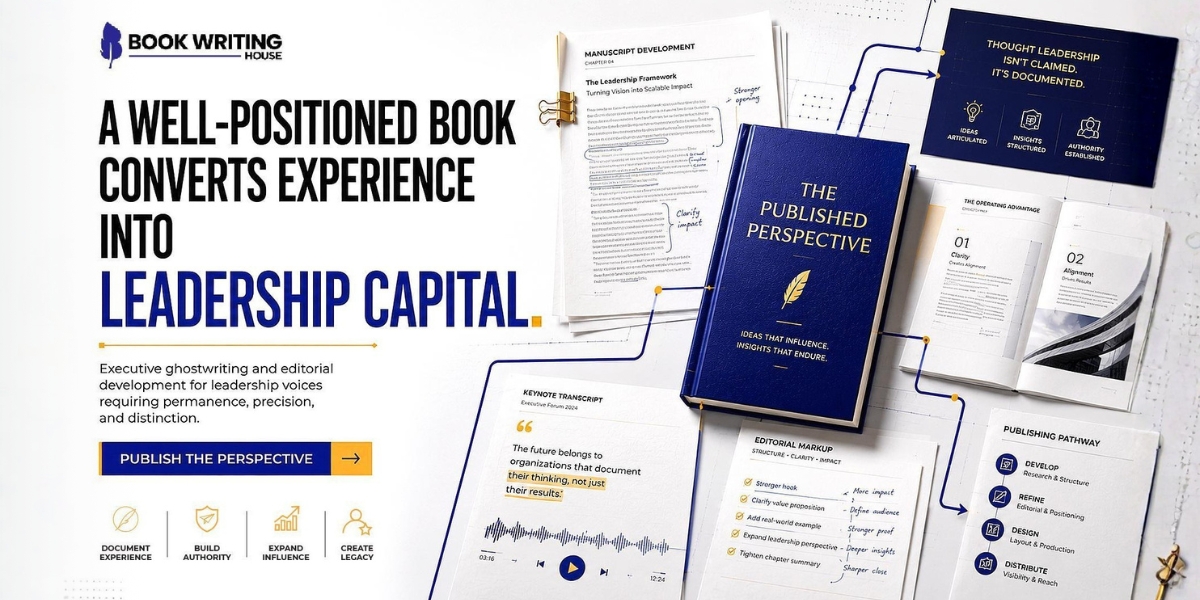
In executive circles, authority is no longer built only through titles, board seats, keynote appearances, or company revenue. Increasingly, it is built through the ability to communicate a clear philosophy, one that captures how a leader thinks, decides, solves problems, and sees the future of an industry. For many CEOs and founders, that philosophy is too valuable to remain scattered across interviews, LinkedIn posts, pitch decks, internal memos, and conference panels. It needs a stronger container. That container is often a book.
A well-developed business book can do more than tell a professional story. It can turn experience into intellectual property, convert lessons into frameworks, and give a leader a platform that continues working long after a meeting ends. For executives who already have credibility, the right book can help organize that credibility into a sharper public message. For emerging leaders, it can become a serious step toward visibility, trust, and long-term brand authority.
The CEO Book Is Becoming a Strategic Asset
For years, many leaders treated books as personal milestones, something to write after retirement, after a major exit, or after decades of public recognition. That mindset is shifting. In today’s reputation-driven market, a business book can support speaking opportunities, investor conversations, client trust, recruitment, media positioning, and internal culture. It gives the market a structured way to understand not only what a leader has achieved, but why their thinking matters.
The most effective executive books are rarely simple autobiographies. They are part story, part strategy, and part leadership philosophy. They explain the journey and also draw lessons from it. They show readers how a decision-maker thinks under pressure, how they approach uncertainty, what they have learned from failure, and what principles guide their next chapter. That is why the writing process must go deeper than recording career highlights. It must uncover the real operating system behind the leader.
Why Many Leaders Need a Writing Partner
Most CEOs are not short on ideas. They are short on uninterrupted time, editorial distance, and a repeatable process for turning lived experience into a compelling manuscript. A leader may have years of insight, but those insights often live in fragments: a founder story told during investor meetings, a management principle shared with employees, a market prediction presented at a conference, or a hard-earned lesson explained privately to clients.
This is where a professional writing partner becomes valuable. Through structured interviews, research, outlining, drafting, and revision, a ghostwriter can help transform fragmented expertise into a book that reads like the leader’s while sounding like a polished publication. For business professionals, the goal is not to outsource the voice. The goal is to protect it, clarify it, and shape it into a book readers can follow.
Book Writing House supports authors and professionals through professional ghostwriting services designed to help turn ideas, experiences, and subject-matter knowledge into structured manuscripts. For executives and entrepreneurs, that support can be especially useful when the book needs to balance personal credibility with practical business value.
The Difference Between a Story and a Leadership Platform
A CEO may have an inspiring story, but a strong business book needs more than inspiration. It needs a point of view. Readers want to know what the author believes, what problem they are helping solve, and what framework they bring to the conversation. Without that strategic center, even an impressive life story can feel unfocused.
This is where development editing becomes essential. Development editing looks at the big picture of a manuscript: structure, argument, pacing, audience fit, chapter flow, clarity of message, and the strength of the book’s central promise. For a leader, this stage is where raw authority becomes organized thought leadership. It helps ensure that the manuscript is not simply a collection of stories, but a coherent reading experience with a clear business purpose.
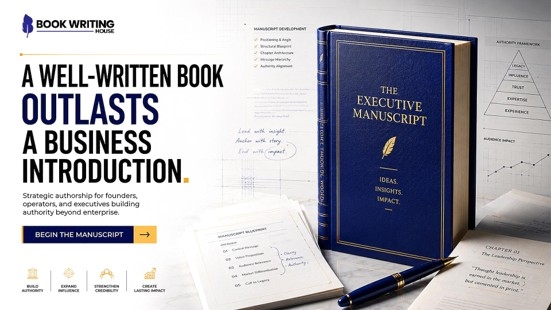
Through development editing, a manuscript can be refined. Hence, the author’s message is easier to understand, the chapters build logically, and the reader can see the connection between the leader’s experience and the practical value being offered. For executives, this can be the difference between a book that introduces them and a book that positions them.
Authority Requires Authenticity
In a crowded content market, authority cannot rely on polished language alone. Readers are increasingly quick to sense when a message feels generic, overproduced, or disconnected from real experience. The strongest leadership books are specific. They carry the author’s judgment, vocabulary, priorities, tensions, and lessons. They reflect the complexity of real business decisions rather than offering slogans that could belong to anyone.
That is why the collaboration between an executive and a writing team should be built on discovery. The writer must listen for voice, not just collect information. The editor must protect the reader’s experience while preserving the author’s perspective. The final manuscript should feel sharper than a transcript, but still unmistakably connected to the person whose name appears on the cover.
A Book Can Extend a Leader’s Influence
The value of a CEO book is often measured beyond sales. A book can serve as a conversation starter before a sales call, a credibility tool after a keynote, a trust-builder for prospective clients, a resource for teams, and a foundation for articles, interviews, podcast topics, newsletters, workshops, and executive branding campaigns. When developed correctly, it becomes a source asset that can feed a broader visibility strategy.
For consultants, agency owners, coaches, founders, and professional service leaders, this matters because trust is often created before the first direct conversation. A potential client may read a chapter, listen to a podcast interview about the book, or discover a framework in the author’s content. By the time they reach out, the book has already helped shape perception.
Turning Expertise Into a Book Requires a Process
The leaders most prepared to write a book are not always the ones with the most free time. They are the ones with a clear reason for writing. Before a manuscript begins, a CEO should understand the audience, the core message, the transformation promised to the reader, and the role the book will play in the broader business or personal brand. From there, the right writing and editing process can help convert scattered ideas into a structured asset.
That process typically begins with discovery and outlining, moves into drafting and voice development, and then enters deeper editorial refinement. The goal is not just to finish pages. The goal is to create a book that reflects the leader’s standards, respects the reader’s time, and supports the author’s long-term authority.
The Next Chapter of Executive Authority
Modern leadership is increasingly public, narrative-driven, and trust-based. CEOs are expected to do more than run companies. They are expected to explain their thinking, articulate values, guide conversations, and show the market why their perspective matters. A book gives that perspective permanence.
For leaders with a message worth sharing, the question is no longer whether a book can support authority. The more practical question is whether their ideas are being captured with the clarity, structure, and depth they deserve. With the right ghostwriting and developmental editorial support, a business book can become more than a publication. It can become a leadership platform.