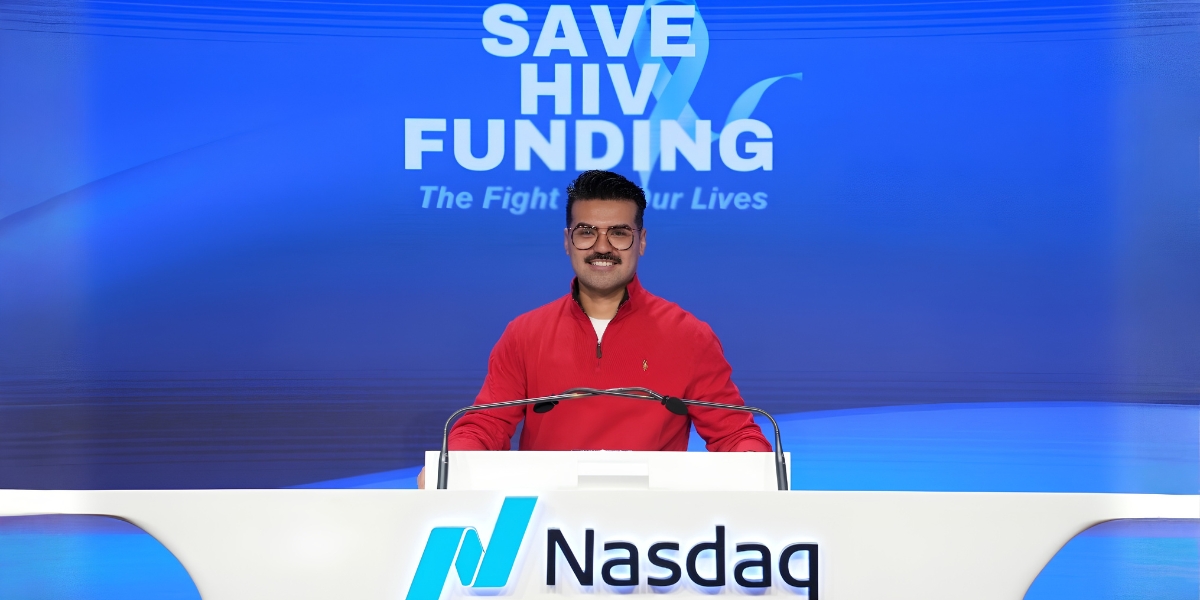

Tony Morrison spent more than a decade inside some of the biggest names in television news, ABC News, CNN, and back to ABC again, where he eventually led Good Morning America’s digital team through the era when social media rewired how morning television reached its audience. He produced shows, guided anchor talent, and launched enterprise franchises and live productions across Disney and ABC. By most measures, he had already built the kind of career most people in the industry spend a lifetime chasing. Then he left to build something the industry hadn’t quite figured out how to offer.
Morrison is candid about what he wants people to take from his career so far: not just a résumé, but a signal. He wants to be seen less as a newcomer breaking into media entrepreneurship and more as a real alternative to the industry’s established power players, the ones, in his words, who often don’t actually know how to tell stories or connect with audiences the way today’s talent and viewers expect.
From ABC’s First LGBTQ Employee Group to GLAAD
While at ABC, Morrison launched the network’s first-ever LGBTQ-focused employee resource group for journalists and helped build some of ABC’s first Pride programming, including primetime specials, streaming content, and podcasts. That work caught the attention of GLAAD, the LGBTQ media advocacy nonprofit, which brought him on to take what he had built inside a major network, inclusive storytelling embedded into the newsroom itself, and help other newsrooms do the same. Morrison spent three years leading entertainment and executive communications for GLAAD.
Building the Space He Didn’t See
In August 2025, Morrison launched Morrison Media Group, a talent PR-focused company built specifically to serve a community he says has historically lacked both representation and dedicated personal branding support: LGBTQ talent. It’s a gap he says he saw up close for years, talented storytellers who had the material and the audience but not the infrastructure, or the trust, to tell their own stories on their own terms. The idea wasn’t new to him so much as it was the culmination of everything he had already done, in newsrooms, in Pride programming, at GLAAD, compressed into a single mission. Help storytellers tell their own stories, across mediums, without having to shrink themselves to fit someone else’s pitch.
Morrison describes the current phase as the first step. He plans to build out that storyteller-focused side of the business before eventually launching a news division of his own, one built around the same principle: real stories shouldn’t require passive pitching, and no storyteller should have to dim their light to reach a particular audience.
A Different Kind of PR
Morrison’s read on the industry is part of a broader shift he is watching play out across media. Traditional PR, in his view, has long run through a small, powerful few who decided which stories got told, and how. What he is building at MMG, and what he sees happening with other former corporate media professionals striking out on their own, is something closer to culture-driven storytelling: content shaped by the people actually living the story, distributed on terms they control, rather than filtered through gatekeepers optimizing for ratings over resonance. It is less a rejection of traditional publicity than an attempt to replace it with something built for how audiences actually find and trust stories now.
He doesn’t see himself as an outlier in that shift. Morrison describes a growing cohort of former corporate media professionals launching their own ventures built around the same idea, that storytellers, subjects, and talent deserve to actually own their stories, rather than hand them over to a small, powerful few who have historically decided what gets covered and how. He counts himself among that group, and he expects it to keep growing as more people inside legacy media systems look for a way out that doesn’t mean giving up the work itself.
The Vantage Point Few People Have
What Morrison says sets him apart is the specific combination of experience he is carrying into this next chapter. He spent years inside one of the most-watched morning shows in the country, guiding its digital team through the shift into streaming, OTT, branded content, and e-commerce, while also managing talent relationships and corporate priorities at the same time. That combination, understanding both how content gets made and how it actually reaches people, is rare enough, he says, that it immediately sets Morrison Media Group’s approach apart from more conventional pitches and placements.
People Over Profits
Morrison’s list of recognitions runs long: three Emmy Awards, multiple GLAAD Media Awards, a Webby Award, an Anthem Award, and an Edward R. Murrow Award, along with personal honors for courage in storytelling and leadership. In 2024, Out Magazine named him to its Out100 list. But the accomplishment he points to first as proof of what MMG is actually about isn’t an award. It’s a decision he made almost immediately after launching the company: underwriting a new media fellowship for The Advocate.
It’s a small thing on paper, one fellowship, launched in a company’s first months, but Morrison frames it as the clearest signal he can send about what Morrison Media Group actually stands for. People over profits. Story over ratings.
Part of a Larger Shift
Morrison sees himself as part of a wider cohort, producers, journalists, and creatives who have left corporate media to build storytelling on their own terms, and he expects that group to keep growing. He’s optimistic about where it leads. As more storytellers take ownership of how their stories get told and distributed, he believes the industry moves closer to something more honest than the pitch-driven model it grew up on.
If Morrison Media Group’s early moves are any indication, from the fellowship underwriting to the mission behind the company itself, Morrison isn’t positioning himself as a replacement for the industry’s old gatekeepers. He is betting there is room for an entirely different way of getting stories told, and he wants to build it in the open, starting now.
Ask where he sees Morrison Media Group in a few years, and Morrison points less to a specific title or valuation than to a feeling he wants people across the industry to have: that there is finally a real, credible option outside the old system, built by someone who has sat on both sides of the pitch and knows exactly what has been missing.
Read more about the launch of Morrison Media Group in Variety, or learn about the fellowship Morrison is underwriting for The Advocate at advocate.com/fellowship