

By: Sophia Mudanza
Artificial intelligence is rapidly transitioning from a novel capability to a baseline expectation in healthcare software — especially in post-acute care. But while the need for AI is nearly universal, the way it’s delivered separates winners from laggards.
“Healthcare platforms are realizing the question isn’t whether they need AI anymore,” says Guru Tadiparti, founder and CEO of Murphi.ai, “but whether they can afford the costs, time, and operational pain of building it themselves.” According to Tadiparti, calculus has fundamentally shifted as competitors with embedded intelligence go from pilot to production in weeks, leaving do-it-yourself approaches lagging.
AI Adoption Is Marketing, Technology, and Workflow Integration — All at Once
External research confirms what many healthcare leaders know intuitively: AI’s potential in healthcare is huge, but adoption is uneven. A recent scoping review found that barriers such as data quality, organizational inertia, and workflow disruption slow adoption even when leaders recognize its promise.
Industry surveys show similar dynamics in the United States: while many U.S. hospitals and health systems report deploying AI-assisted predictive tools and automation, adoption varies and is often concentrated where operational and administrative challenges are greatest. (https://www.sph.umn.edu/news/new-study-analyzes-hospitals-use-of-ai-assisted-predictive-tools-for-accuracy-and-biases)
That gulf between potential and production is where the AI-Inside model creates value. Platforms that embed AI into existing user workflows — rather than bolting on point solutions — significantly reduce deployment resistance and adoption friction.
Clinical Workflows Are Complex — and AI Must Be Native to Them
AI’s promise isn’t just about automation; it’s about contextual intelligence. Modern clinical workflows span documentation, billing, care coordination, compliance, and quality reporting — each with its own structure and expectations. Research shows that when AI tools fail to align with workflow and user expectations, adoption stalls.
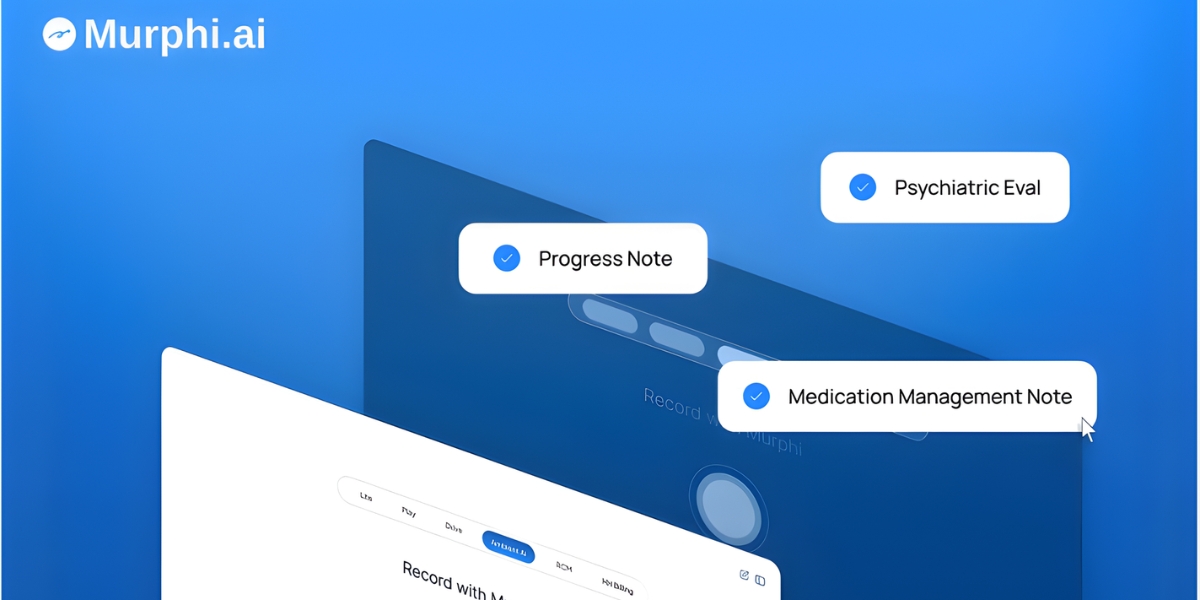
According to Tadiparti, Murphi.ai takes this insight seriously: rather than offering a generic assistant, the AI-Inside model simulates complete end-to-end user experiences for platform partners before deployment. This means clinicians see AI insights exactly where and how they expect them, not in a separate dashboard or a generic plugin.
Companies that miss this stage often confront poor adoption. Physicians in the U.S. recognize this dynamic: a majority of doctors surveyed by the American Medical Association say that the greatest value of AI so far has been in cutting administrative burdens, rather than replacing clinical judgment. (https://www.ama-assn.org/practice-management/digital-health/physicians-greatest-use-ai-cutting-administrative-burdens)
Cost, Time, and Quality: A New ROI Equation
Traditional in-house AI development comes with steep costs — not just cash, but engineering attention, compliance overhead, and a long runway before meaningful results. Generative AI pilots often take months to move from prototype to production, and struggle to meet the strict safety and regulatory expectations of healthcare.
That’s why many platforms are choosing to partner with specialized AI vendors who can shoulder those risks while letting the platform focus on its core competency: workflow and user experience. In this model, platforms retain control over the user experience while benefiting from continuous model improvements.
“Embedding intelligence inside the platform ensures that AI is not an external add-on, but a native, reliable part of the software,” Tadiparti explains. “This approach reduces development costs, shortens time to market, and increases user adoption — which in turn boosts revenues and stickiness for our partners.”
Real World Trends: Adoption Accelerates, But Risk Still Matters
As adoption accelerates, attention is shifting from experimentation to execution. News from the broader U.S. healthcare ecosystem reinforces this trend. Major American hospitals are deploying AI-assisted tools that help streamline clinical intake and administrative tasks, allowing physicians to focus more on patient care and less on paperwork. (https://www.businessinsider.com/cedars-sinai-la-healthcare-organization-ai-platform-patient-care-treatment-2025-7)
At the same time, independent reporting and industry commentary emphasize that AI’s integration into healthcare must be done thoughtfully, with governance and workflow alignment in mind, to ensure adoption and safety — a perspective echoed at major U.S. health IT forums where vendors stress that AI must be “useful inside the clinical workflow, not merely flashy.” (https://www.linkedin.com/posts/drlk_himss-2025-day-1-top-insights-activity-7302803308383981568-DcHp)
Why Embedded, Not External, Intelligence Is the Default
The AI-Inside model aligns with broader technology trends: organizations increasingly outsource complex infrastructure and capability layers while keeping control of product identity and customer relationships. Cloud infrastructure, identity verification, and fraud detection followed similar trajectories — specialized layers that products integrate rather than build from scratch.
For healthcare platforms, this architecture delivers multiple strategic outcomes: higher clinician adoption as AI behaves like part of the core interface, lower total cost of ownership as partners avoid the burden of building and maintaining specialized models, faster time to value as AI goes live in weeks, not years, and continued product differentiation as platforms control the experience and customer relationships.
Tadiparti puts it succinctly: “Three to five years from now, we expect Murphi.ai to be the intelligence layer powering tens of thousands of clinicians across millions of encounters — not because we built generic AI, but because we made intelligence native, compliant, and easy to use for platforms and their customers.”
Disclaimer: This article is sponsored by Murphi.ai. The views and opinions expressed are those of the author and do not necessarily reflect the official position of Murphi.ai. All claims regarding the effectiveness or benefits of Murphi.ai’s AI-Inside model are based on the company’s internal data and industry research. Readers are encouraged to verify any information and claims presented before making any decisions based on the content of this article.