
Lisa Wright has a message for executives planning advanced air mobility strategies: Stop obsessing over which aircraft manufacturer will win. Start obsessing over energy infrastructure.
“Energy is going to be our biggest bottleneck,” explained Wright, Founder and CEO of Landings, which is building a 2,000+ location vertiport network across North America. “At the fastest, we could bring a site online in nine months – and that would be incredible.”
That nine-month timeline assumes energy infrastructure cooperation. Without it, the timeline extends indefinitely, no matter how quickly aircraft manufacturers achieve FAA certification.
Wright’s team spent recent weeks in meetings with NYSERDA (New York State Energy Research and Development Authority) positioning vertiports not as standalone aviation infrastructure but as multimodal EV charging centers. The pitch: Heavy charging infrastructure needed for electric aircraft simultaneously serves rural school buses, municipal fleets, and community vehicles – solving multiple infrastructure gaps with shared investment.
This shared-use approach transforms project economics. Rather than justifying capital expenditure solely on speculative aviation revenue, vertiports become community charging assets that happen to also serve aircraft. It’s the kind of practical, multi-stakeholder value proposition that wins regulatory approval and community support.
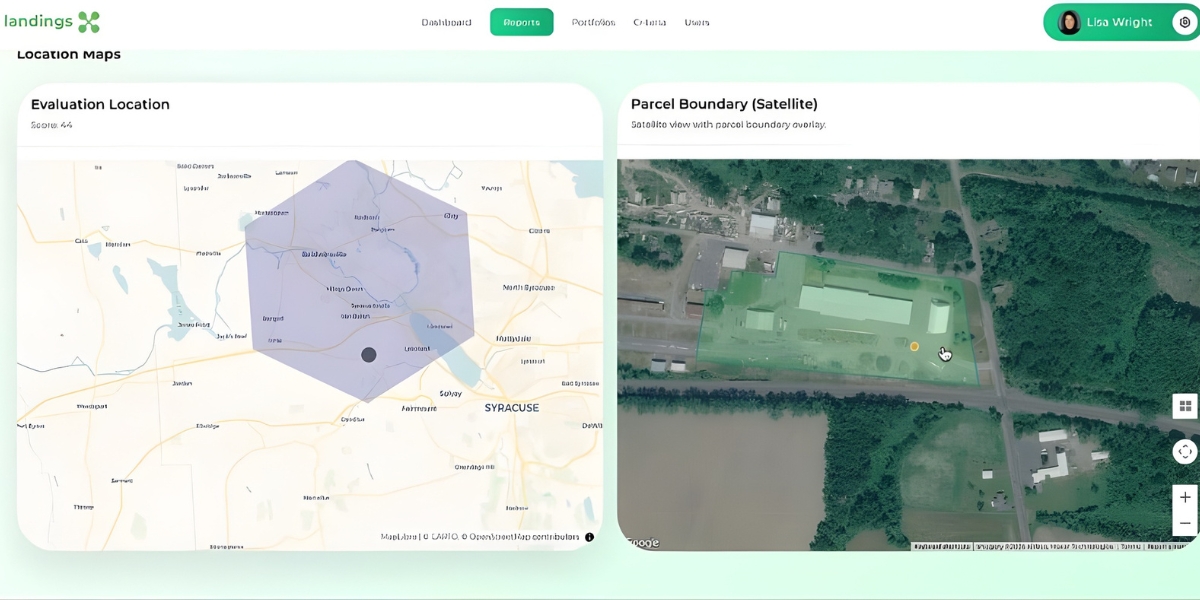
The energy challenge emerged clearly as Wright’s team developed proprietary feasibility software now in beta testing. Initial versions failed most properties because energy requirements were set for high-capacity rapid charging. The revised approach recognizes a more nuanced reality: Not every location needs maximum capacity immediately. Smaller vertistops with slower charging and distributed energy solutions – solar arrays, battery backup systems – serve many use cases effectively while awaiting grid upgrades.
“We’re allowing for more different types of locations so we can offer different types of vertiports,” Wright noted. The strategic implication: Companies can secure locations now and scale energy infrastructure progressively as demand materializes and grid capacity expands.
Wright’s software analyzes not just current grid capacity but community energy infrastructure receptiveness. The platform examines how many distributed energy projects exist in an area, how many are planned, and critically – how many have been canceled. Zero cancellations signal communities open to energy innovation. High cancellation rates flag regulatory or community resistance that could delay projects regardless of technical feasibility.
For executives evaluating which properties in their portfolios could support vertiports, the energy calculation requires more sophistication than traditional real estate decisions. A site scoring 44 out of 100 in Wright’s feasibility analysis – like a county-owned garage site near Syracuse – might seem marginal. But dig into the data: 7.5 kilowatts of EV capacity already exists, battery backup systems are installed, and 21 distributed energy projects operate in the area with 8 more planned and zero canceled. That’s not a marginal site – it’s a community-ready site waiting for the right partnership structure.
Wright’s asset-light revenue-sharing model directly addresses the energy infrastructure challenge. Landings doesn’t purchase or lease land, instead the company secures site options, then finds capital and equipment partners to build vertiports and energy systems. Once operational, revenue flows to landowners through sharing agreements. Property owners contribute land access; Landings and partners contribute capital, equipment, and operational expertise.
This approach scales because it doesn’t require property owners to become energy infrastructure experts or shoulder upfront capital risk. It also allows Landings to package deals with energy solution providers – solar developers, battery system manufacturers, charging equipment suppliers – who see vertiports as anchor customers for rural energy infrastructure buildout.
The strategic window is narrow. Aircraft manufacturers are 9-12 months from certification. States are announcing network plans quarterly. Energy infrastructure projects take 12-18 months minimum from planning to operation. Companies that secure high-potential sites now and begin energy infrastructure conversations have a realistic path to operational vertiports when aircraft certification arrives. Companies waiting for aircraft certification before addressing energy infrastructure will be 12-18 months behind – watching competitors serve routes they could have secured.
Wright’s broader message to C-suite executives: Advanced air mobility success belongs to companies that understand they’re building energy infrastructure that happens to serve aircraft, not building aircraft infrastructure that happens to need energy. The distinction determines who moves first and who watches from behind.
About Landings
Landings is building North America’s first comprehensive network of vertiport landing and charging infrastructure for electric aircraft. With a planned network of 2,000+ rural locations across North America, Landings is laying the groundwork for Advanced Air Mobility to reach critical mass at scale. Founded by architect and energy management expert Lisa Wright, the company takes an infrastructure-first, asset-light approach through revenue-sharing partnerships with commercial property owners. Learn more at landings.co.