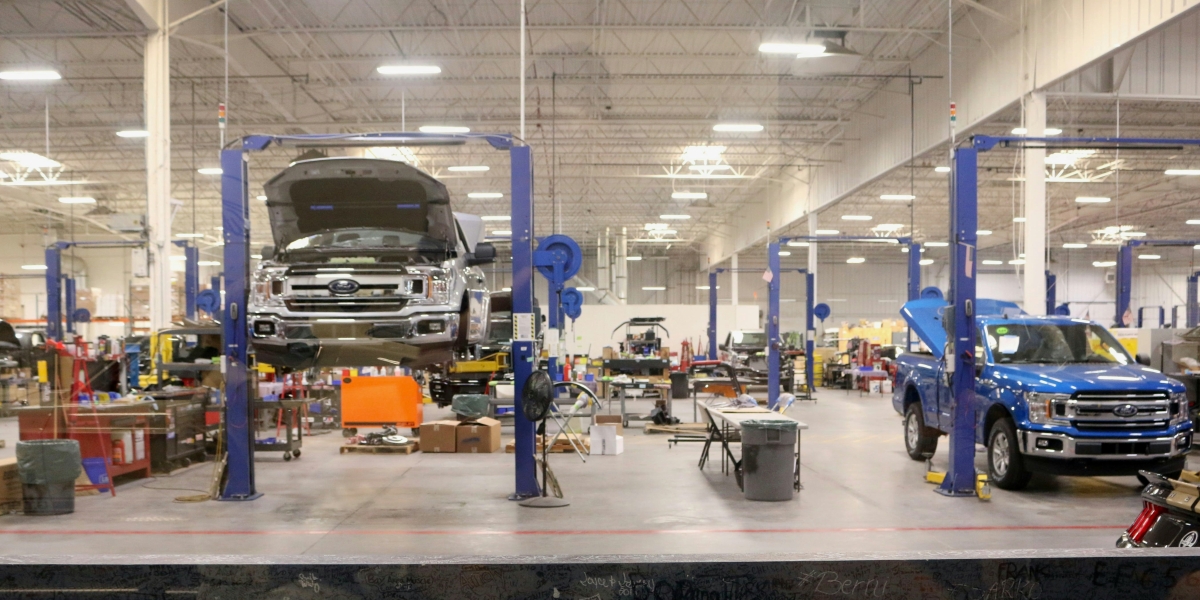

Auto repair shops operate in an environment where the size and urgency of expenses are almost entirely unpredictable, the timing of revenue is often constrained by insurance cycles, and the difference between a profitable week and a cash flow crisis can be a single major repair job and a delayed insurance payment.
Walk into an auto repair shop on any given Tuesday and the financial picture might be excellent: bays full, customers waiting, parts on order, and a week’s worth of jobs queued. Walk back in Thursday and one technician is out sick, a diagnostic computer needed an emergency repair, a fleet client’s insurance payment is running three weeks late, and two of the bays are tied up with a job that turned out to be significantly more complex than the original estimate. The auto repair business creates situations like this constantly, and the shops that navigate them without operational disruption are almost always the ones with a pre-established credit facility they can draw on the same morning the problem materializes.
A business line of credit is the most appropriate financial tool for auto repair shops precisely because the capital need is recurring, variable, and unpredictable in timing. Unlike a term loan that provides a fixed lump sum on a defined repayment schedule, a revolving line is available when needed, costs nothing when it is not, and can be repaid and drawn again as the shop’s cash flow cycles. This operational flexibility matches the auto repair shop’s financial reality better than almost any other financing product.
The Specific Cash Flow Challenges of Auto Repair
Auto repair shops face several overlapping cash flow challenges that compound the general small business timing gap. Parts must be ordered and paid for before jobs are completed and invoiced. Technician wages are due weekly regardless of whether all billed jobs have been collected. Diagnostic and shop equipment requires maintenance and occasional emergency replacement that cannot be deferred without losing the ability to complete jobs. And for shops with fleet accounts and insurance work, payment cycles can run 30 to 60 days after job completion, creating significant outstanding receivables during periods of high work volume.
The insurance payment delay is particularly consequential because insurance work often represents a significant portion of a busy shop’s monthly revenue, and the gap between completing an insurance job and receiving payment is determined entirely by the insurer’s processing timeline rather than the shop’s billing speed. A shop with $30,000 in completed insurance jobs waiting on payment while weekly payroll and parts bills are due is experiencing a cash flow gap that is entirely the product of timing rather than performance.
STEP 1 Establish the Line During a Strong Revenue Period
The quality of a credit line application, in terms of the approved limit and interest rate, is directly correlated with the business’s financial strength at the time of application. An auto repair shop applying for a line of credit when its bays are full, its bank account is healthy, and its recent deposits reflect strong performance will receive a higher limit and better terms than the same shop applying during a slow week when its balance is low and its recent statement shows the effects of a delayed insurance payment. Applying during a strong period, before a specific cash flow problem has materialized, is the strategy that produces the best available facility.
STEP 2 Size the Line to Cover Your Worst Case Scenario, Not Your Average Gap
For auto repair shops, the worst case scenario is usually a combination of a large equipment failure and a delayed insurance payment cycle hitting simultaneously. Estimate what that worst case looks like: the cost of an emergency diagnostic equipment replacement or major lift repair, plus the value of your largest typical insurance payment batch delayed by 30 additional days beyond normal. The line of credit should be sized to cover this combined scenario comfortably, not just the average timing gap under normal operating conditions.
For auto repair shop owners who want to compare the current business lines of credit available for auto service businesses, including lenders that have experience with the specific cash flow patterns of the automotive service industry, Business Loans IQ provides independent lender comparisons across every small business financing product. The platform’s auto repair industry page covers the specific products and lender requirements relevant to automotive service businesses at different revenue levels. For shop owners ready to find a verified line of credit lender with experience in auto repair business financing, see the auto repair shop funding guide and verified lenders on Business Loans IQ.
STEP 3 Use the Line for Operational Gaps, Not Capital Investments
A revolving line of credit is the right tool for bridging the gap between incurring costs and collecting revenue. It is not the right tool for a major lift replacement, a new alignment machine, or a shop expansion. Those investments have a longer payback horizon and should be financed with a term loan or equipment financing that matches the investment’s useful life. Conflating operational and capital financing needs by using a revolving line for large equipment purchases ties up credit capacity that needs to be available for the operational gaps the line was designed to address.
STEP 4 Repay the Line Promptly When Insurance and Fleet Payments Arrive
A revolving line of credit for an auto repair shop should cycle predictably: drawn when timing gaps arise, repaid when payments are delayed, and available again immediately. A shop that draws on the line during an insurance payment delay and repays it fully when the insurance payment clears is using the product exactly as intended. A shop that draws on the line and never fully repays because ongoing operational expenses are continuously re-drawing the balance has converted a revolving credit tool into a term loan, which is a more expensive and less appropriate structure for the same purpose.
How Business Loans IQ Helps Auto Repair Shop Owners
Auto repair shop financing options range from revolving lines of credit for operational cash flow to equipment financing for diagnostic tools and lifts to SBA loans for shop acquisition or major expansion. Understanding which product applies to which need, and identifying the lenders most active in automotive service business financing, requires current, independent data rather than manufacturer financing programs or general purpose bank products that may not be calibrated to the auto service industry’s specific financial model. For shop owners who want to understand all of the best small business loan options available in the current market across every product type, the independently reviewed guide to the best small business loans of 2026 on Business Loans IQ provides a current, comprehensive comparison. For the specific mechanics and cost structures of business lines of credit, the business lines of credit guide on Business Loans IQ covers everything a shop owner needs to know about opening, using, and managing a revolving credit facility effectively.
FREQUENTLY ASKED QUESTIONS
How quickly can an auto repair shop access funds from a business line of credit?
Once a revolving line of credit is established and active, draws can typically be processed within one to two business days for most lenders, and same business day for some direct lenders that offer instant draw functionality. The important point is that the line must be established and active before the capital is needed, because the setup process, including application review and approval, typically takes one to five business days. A shop that waits until a cash flow crisis to apply for a line is facing a one to five business day wait before funds are available, rather than the same day or next day access that an established line provides.
What credit score does an auto repair shop owner need for a business line of credit?
Business lines of credit from direct lenders using performance based underwriting typically require personal credit scores of 580 to 620 or above for auto repair businesses with consistent revenue. Traditional bank lines of credit for auto service businesses typically require credit scores between 650 and 680 and use more conservative underwriting. The specific threshold varies by lender, and using a comparison platform to identify lenders whose minimum credit score requirements match the shop owner’s actual profile before applying prevents wasted applications to lenders with higher requirements.
Can an auto repair shop get financing for a major diagnostic equipment purchase?
Yes. Equipment financing is available for diagnostic computers, alignment machines, lifts, and other major shop equipment with a long useful life. The equipment serves as collateral and typically yields lower rates than unsecured working capital financing for the same purchase. Some equipment manufacturers and distributors offer point of sale financing programs that can be more convenient than separate equipment financing, though comparing the manufacturer’s terms against independent equipment lenders through a comparison platform ensures the most favorable available structure.
Should an auto repair shop use a line of credit or a merchant cash advance for cash flow gaps?
A business line of credit is almost always the better choice for auto repair shop cash flow management compared to a merchant cash advance. The revolving line can be drawn and repaid multiple times without a new application, incurs no cost when undrawn, and carries a lower effective cost than most merchant cash advance structures. A merchant cash advance is a one time transaction with a fixed total repayment and daily deduction from revenue that cannot be paused or adjusted. For the recurring, predictable cash-flow gap that auto repair shops face, the revolving line’s flexibility and lower cost make it the structurally superior choice.
How does a business line of credit affect my ability to get additional financing?
An existing line of credit affects future financing primarily through the debt service coverage calculation that lenders apply to new applications. A line with a significant drawn balance contributes a payment obligation to the total debt service calculation. An undrawn line with no balance contributes no debt service and therefore does not impair future financing capacity. This is one of the financial management reasons to repay line draws promptly: an undrawn line preserves full financing capacity for future needs, while a permanently drawn line reduces it.
Disclaimer: This content is for informational purposes only and is not intended as financial advice, nor does it replace professional financial advice, investment advice, or any other type of advice. You should seek the advice of a qualified financial advisor or other professional before making any financial decisions.