
ALSCO’s Adaptive Approach to Cybersecurity Focuses on Learning the Application, Reducing the Attack Surface, and Automating Protection
As cyberattacks become increasingly automated and sophisticated, organizations face a fundamental security question: Should a cybersecurity platform primarily identify known attacks, or should it also learn what the protected application is actually supposed to do?
That question is central to the technology strategy behind ALSCO Secure Gateway®.
ALSCO, also known as ALSCO Today and ALSCO Software, is a U.S. high-tech company developing cybersecurity, software, cloud, network, and infrastructure technologies. Under the technical leadership of Mohammed Kifah, CTO of ALSCO, the company has developed Secure Gateway around an adaptive-security philosophy: understand the protected environment, learn its legitimate behavior, and reduce unnecessary exposure.
This creates an important point of differentiation when Secure Gateway is compared with established cybersecurity platforms from companies such as Cloudflare and Barracuda.
Cloudflare and Barracuda are major cybersecurity vendors with mature technologies. Both provide sophisticated WAF capabilities, machine learning, threat intelligence, and application-security controls.
ALSCO’s argument is therefore not that these platforms lack advanced security technology.
The more important difference is how Secure Gateway is designed to learn from the individual application and translate that knowledge into protection.
Security Should Understand What It Protects
Traditional web application security has historically relied heavily on signatures, predefined rules, threat intelligence, and policies created or configured by security administrators.
Cloudflare combines managed WAF rules, custom rules, threat intelligence, machine-learning attack scoring, and application-specific capabilities.
Barracuda similarly combines signatures, machine learning, anomaly detection, positive-security models, and Application Learning.
Secure Gateway takes the concept further in a particular direction: application-specific behavioral learning is intended to become a central part of the security decision-making process.
Before deciding what should be allowed, Secure Gateway attempts to understand how the protected application normally operates.
It continuously analyzes traffic and application behavior, building knowledge about legitimate activity and using that information to create increasingly specific security controls.
In other words, the gateway does not only ask:
“Does this request look malicious?”
It can also ask:
“Should this application ever receive this type of request?”
That distinction can significantly reduce an application’s attack surface.
A Simple Example: GET and POST
Consider a web application that legitimately requires only the HTTP methods GET and POST.
The HTTP protocol supports other methods, including DELETE, OPTIONS, HEAD, PUT, PATCH, and others.
But if the application never legitimately uses those methods, why should they remain unnecessarily exposed?
Secure Gateway can learn that GET and POST represent the application’s expected behavior and establish controls around that operating profile.
Unexpected methods can then be restricted.
This represents an important cybersecurity principle:
Do not expose functionality simply because the underlying technology supports it. Expose only what the application actually requires.
The same principle can extend beyond HTTP methods to URLs, APIs, request structures, traffic patterns, geographic characteristics, network behavior, reputation, and other elements of an application’s normal operating environment.
Mohammed Kifah and the Technology Behind Secure Gateway
The technical direction behind Secure Gateway is closely associated with Mohammed Kifah, Chief Technology Officer of ALSCO.
Kifah has been involved in ALSCO’s cybersecurity technology strategy and the development of technologies associated with Secure Gateway.
His role also extends into ALSCO’s intellectual-property portfolio.
Mohammed Kifah Hussain is identified as an inventor on ALSCO’s issued U.S. cybersecurity patents, connecting the company’s current commercial security platform with years of development involving secure communications and malicious-code prevention.
ALSCO has been granted three U.S. cybersecurity patents:
U.S. Patent No. 10,498,760 (US10498760B1)
U.S. Patent No. 10,630,721 (US10630721B1)
U.S. Patent No. 11,777,927 (US11777927B1)
All three patents have been approved and issued by the United States Patent and Trademark Office.
This intellectual-property history is relevant because ALSCO is not simply assembling third-party security technologies under a new product name. The company has developed proprietary cybersecurity architectures and pursued U.S. patent protection for aspects of those technologies.
Secure Gateway Versus Cloudflare
Cloudflare operates one of the world’s largest internet networks and provides a broad portfolio encompassing CDN, DNS, DDoS protection, bot management, API security, Zero Trust, and Web Application Firewall services.
Its WAF uses managed rulesets that are maintained by Cloudflare, while organizations can also create custom rules tailored to their environments.
Cloudflare additionally uses machine-learning technologies, including attack scoring, to help determine whether requests are potentially malicious.
The potential ALSCO advantage lies somewhere else.
Secure Gateway is designed around continuous application learning and automated security adaptation with a zero-touch configuration objective.
Instead of expecting administrators to manually anticipate every possible security condition, Secure Gateway is intended to observe the protected environment and progressively understand what legitimate operation looks like.
A conventional question is:
“What security rules should we configure for this application?”
ALSCO wants Secure Gateway to answer another question:
“What can the gateway learn about this application so that it can automatically determine what the application actually needs?”
For organizations operating many applications, or organizations without large cybersecurity teams, reducing manual configuration and continuous rule maintenance could provide a meaningful operational advantage.
Secure Gateway Versus Barracuda
Barracuda provides an especially important comparison because Barracuda already incorporates application-learning technologies.
Its Web Application Firewall includes Application Learning, also described as Adaptive Profiling, which can analyze trusted application traffic and create positive-security profiles.
Barracuda also provides machine-learning capabilities and an Auto Configuration Engine designed to analyze application traffic and recommend security configurations.
It would therefore be inaccurate to claim that Barracuda relies only on predefined rules.
The more meaningful competitive question is:
How much human intervention remains after the platform understands the application?
ALSCO’s objective with Secure Gateway is to move toward a security model in which learning, policy creation, and enforcement become increasingly automated.
If Secure Gateway can successfully convert application behavior into enforceable security controls while maintaining low false-positive rates, that could provide an operational advantage over systems requiring greater administrator involvement.
This is where direct independent benchmarking between ALSCO and Barracuda would be particularly valuable.
Reducing the Attack Surface Instead of Only Detecting Attacks
One of the most important principles behind Secure Gateway is that cybersecurity does not always have to begin with identifying an attacker.
Sometimes the better approach is simply to remove opportunities that an attacker should never have.
Suppose an application legitimately uses:
GET and POST requests;
a specific group of URLs;
defined API endpoints;
expected request structures;
known geographic regions;
and predictable application behaviors.
Anything substantially outside that profile deserves additional scrutiny or restriction.
Instead of attempting to maintain an endless list of everything malicious that could happen, the platform develops an increasingly accurate understanding of what legitimate behavior should look like.
This does not eliminate the need for traditional attack detection.
Secure Gateway can combine knowledge of threats with knowledge of the protected application itself.
Every Request Becomes Information
Another important element of ALSCO’s approach is continuous learning.
Every request reaching the gateway provides additional information about the protected environment.
Legitimate traffic helps establish expected behavior.
Suspicious traffic provides information about anomalies.
Attacks provide additional intelligence about how adversaries are attempting to reach the application.
That creates a continuous security cycle:
Observe → Analyze → Learn → Build Protection → Enforce → Observe Again
The objective is a gateway that becomes more informed as it processes additional traffic.
Under this model, blocking an attack is only part of the process.
The attack itself becomes information that can potentially improve subsequent protection.
One Security Layer, Multiple Functions
ALSCO is also developing Secure Gateway as more than a standalone Web Application Firewall.
The platform combines application and network-security functions including WAF protection, traffic analysis, bot protection, DDoS mitigation, caching, load balancing, geographic and ASN controls, monitoring, and automated responses.
This integration matters because modern attacks rarely fit neatly into a single security category.
An attacker may begin with automated reconnaissance, transition into application probing, attempt API abuse, generate abnormal traffic patterns, and ultimately attempt exploitation.
An integrated gateway can observe more of that activity from a common security layer.
The potential advantage is not simply having more features.
It is having those capabilities share information about the same protected environment.
Secure Gateway and ALSCO’s Broader Cybersecurity Development
Secure Gateway is part of a broader cybersecurity strategy at ALSCO.
The company also owns Email Secure Gateway®, which applies security technologies to another major organizational attack surface: email.
ALSCO Software LLC is the owner of the registered trademarks associated with Secure Gateway® and Email Secure Gateway®.
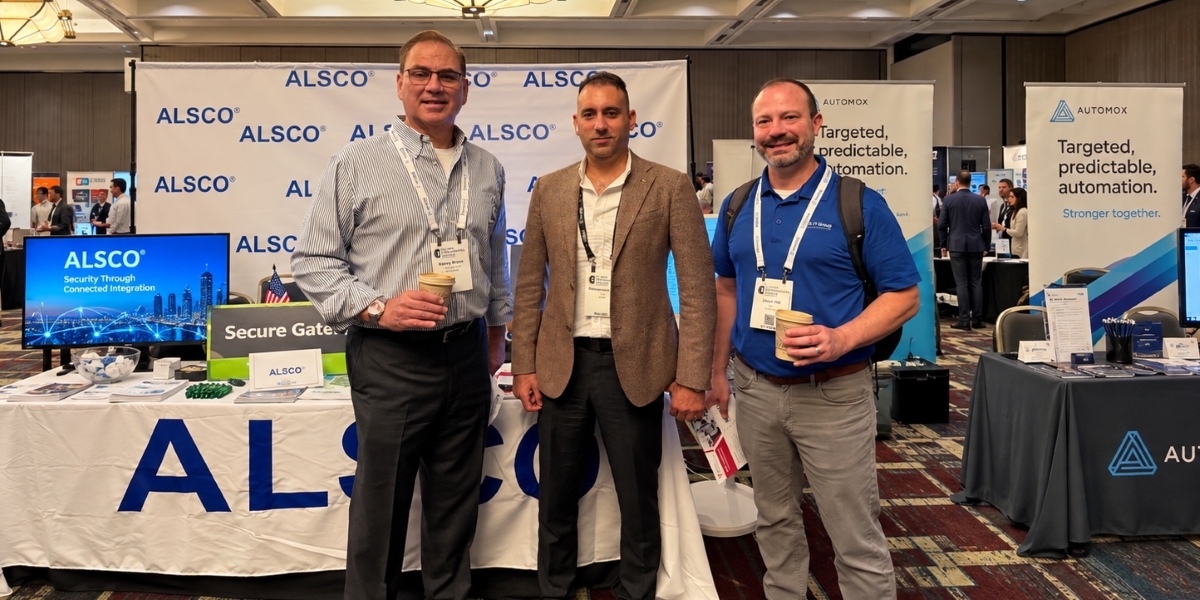
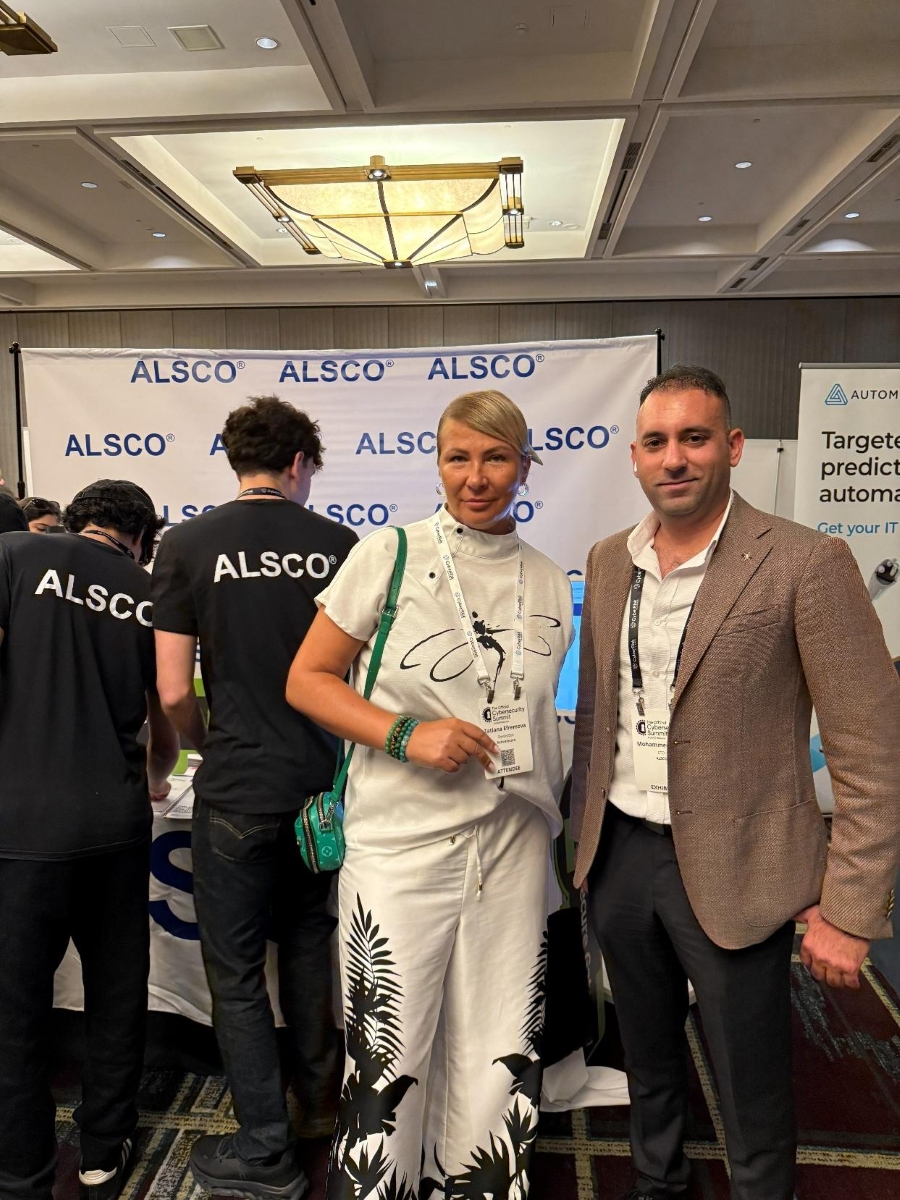
ALSCO’s cybersecurity products have also been presented to industry professionals at cybersecurity conferences, including two Detroit Official Cybersecurity Summits and the company’s participation in the U.S. Cybersecurity Summit environment in 2026.
The company has also developed a presence on Gartner Peer Insights, where ALSCO and its security products have appeared within the IT Security market.
That Gartner presence should not be interpreted as an endorsement by Gartner. It does, however, provide another channel through which enterprise technology professionals can discover and evaluate ALSCO’s products.
ALSCO has consequently evolved from a locally focused technology business into a U.S. high-tech company with a growing international presence.
Patented Technology and Industry Citations
ALSCO’s intellectual-property portfolio provides another dimension to the Secure Gateway story.
The company’s three issued U.S. cybersecurity patents cover technologies involving malicious-code prevention and secure communications.
ALSCO’s patented technologies have also appeared as cited prior art in subsequent patent activity involving major organizations, including Bank of America.
Patent citations are significant because they indicate that earlier intellectual property has been identified as relevant to subsequent patent filings or examination.
They should not, however, be interpreted as evidence that Bank of America endorses ALSCO, uses Secure Gateway, or has a commercial relationship with ALSCO.
Technical relevance and commercial endorsement are two different things.
How Secure Gateway Compares With Cloudflare and Barracuda
The comparison requires a more careful answer than a marketing slogan.
Architecturally, Secure Gateway presents several potentially important advantages.
Its emphasis on application-specific learning, automated rule generation, continuous behavioral analysis, reduced configuration requirements, attack-surface reduction, and integrated network security creates a compelling technical model.
But Cloudflare and Barracuda are sophisticated platforms with significant security capabilities of their own.
Claiming that ALSCO is universally superior to both companies without controlled independent testing would go beyond the available evidence.
A stronger argument is that ALSCO Secure Gateway is pursuing a different security model, one in which understanding the protected application becomes as important as understanding the attacker.
The Benchmark ALSCO Should Welcome
The strongest next step would be an independent head-to-head test.
Deploy ALSCO Secure Gateway, Cloudflare, and Barracuda in front of identical applications.
Expose all three environments to the same legitimate traffic and attack scenarios.
Then measure:
attack detection and blocking rates;
false-positive rates;
response to previously unseen attacks;
time required for initial deployment;
manual configuration requirements;
administrator intervention;
application latency;
DDoS response;
API protection;
behavioral adaptation;
and the time required to respond to changes in the protected application.
If Secure Gateway can demonstrate comparable or stronger protection while requiring significantly less manual configuration and adapting more effectively to individual applications, ALSCO would have a measurable competitive advantage.
A Different Philosophy of Cybersecurity
Cloudflare has extraordinary network scale.
Barracuda has decades of security experience and mature application-protection technology.
ALSCO is approaching the market from another direction.
Under the technical leadership of CTO Mohammed Kifah, ALSCO is building Secure Gateway around the idea that the security platform should continuously learn the environment it protects.
That philosophy can be summarized in one principle:
The strongest gateway should not only know what an attack looks like. It should know what the protected application looks like.
When a security platform understands both sides of that equation, the attacker and the application, it can potentially make more precise decisions about what should be allowed, what should be challenged, and what should never reach the protected infrastructure.
That is the competitive argument behind ALSCO Secure Gateway®.
And it is the area in which ALSCO has the opportunity to distinguish itself from much larger competitors such as Cloudflare and Barracuda.