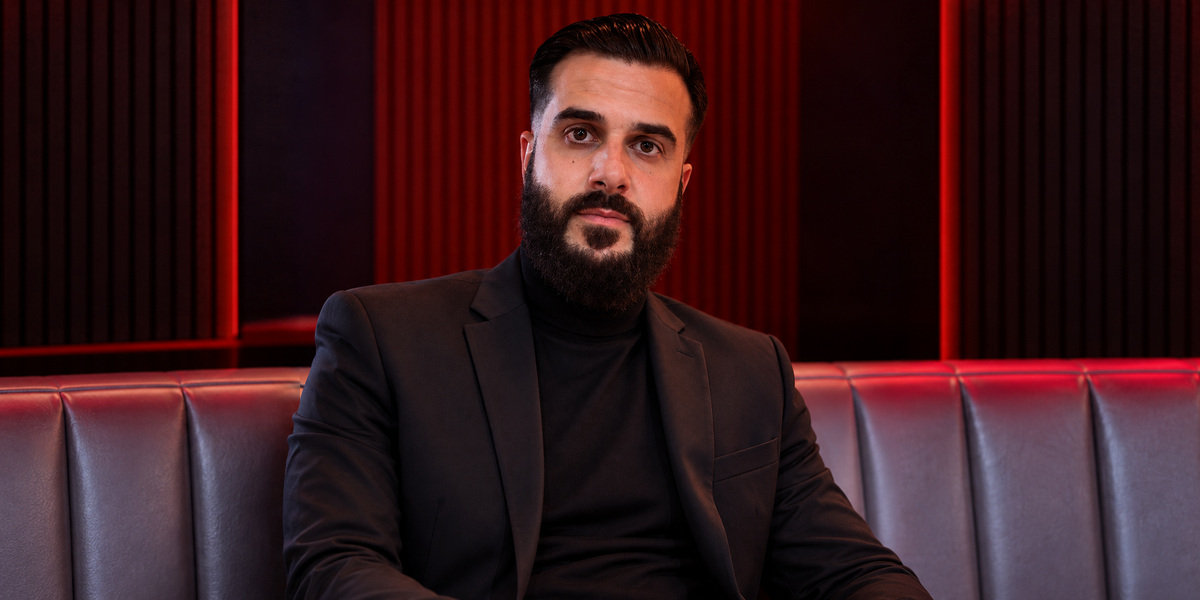

Most marketers chase whatever industry happens to be trending. Conor Deane, a 26- year-old Australian marketing strategist, has done close to the opposite, deliberately narrowing his focus to a single field many of his peers overlook: the United States hair restoration industry. His company, Hair Transplant Marketing, is built entirely around helping clinics in that space reach a modern audience.
Deane’s route into marketing was an unusual one. According to his own account, he originally studied law before leaving to pursue music videos and build a production company. That path took him around the world directing productions and working with recording artists, among them, he says, T-Pain in Atlanta. He later moved into digital marketing, working with large companies to develop strategy across advertising, funnels, offers, content, sales, and positioning.
The thread connecting those two careers, in Deane’s telling, is something he was studying long before he called himself a marketer, which is how people form perceptions. Music videos taught him how stories, visuals, and associations shape how audiences feel about an artist. Marketing showed him that the same principles determine whether someone notices, trusts, and ultimately buys from a business. Perception, in other words, has always been the thing he actually works on, regardless of the medium.
Now he is applying that thinking to hair restoration, and his reasoning rests on a mismatch he believes defines the industry. Demand, he argues, is growing quickly, and the consumer has changed, yet the way many clinics market themselves has not kept pace. Patients seeking hair restoration today are younger and more informed than the stereotype suggests, and they are heavily influenced by what they find on Reddit, YouTube, TikTok, and in other patients’ shared experiences. Meanwhile, in Deane’s view, many highly experienced doctors remain almost invisible online, leaving their expertise undiscovered by exactly the people looking for it.
That gap is the opportunity he has chosen to build around. Deane’s argument is that the medicine in the field has advanced and the consumer has evolved, but the marketing often has not, and closing that distance is where he sees his work adding value. His focus is on helping clinics communicate their expertise, personality, and trustworthiness to a modern consumer, using the tools of contemporary digital marketing rather than the dated approaches he believes still dominate much of the sector.
In practice, that means bringing several things into an established industry at once. Deane points to modern digital marketing, doctor-led content that lets experienced physicians actually be seen and heard, stronger branding, and a deeper understanding of how patients form their perceptions. The premise is that a skilled doctor who is invisible online loses to a less experienced competitor who simply communicates better, and that changing this is a marketing problem rather than a medical one.
His decision to specialise so narrowly reflects a belief in the value of understanding one industry deeply rather than serving many superficially. By concentrating on hair restoration, Deane can study exactly how people choose a clinic, what reassures them, and what makes them hesitate, building expertise in a specific consumer journey rather than applying generic marketing across unrelated fields. In a landscape where many agencies spread themselves thin, that focus is itself a form of positioning.
Underneath the business decision is the same interest that has run through his whole career, which is consumer behaviour and the way people make expensive, emotional decisions. A hair transplant is exactly that kind of decision, personal, significant, and rarely made lightly, which makes it a natural subject for someone fascinated by perception. More about his work is available at hairtransplant-marketing.com.
For Deane, the bet is straightforward. An established industry with rising demand, a changed consumer, and marketing that has not caught up is, in his framing, precisely where modern strategy can make the biggest difference. The medicine evolved and the consumer evolved. The marketing, he argues, often did not, and closing that gap is the business he has chosen to build.