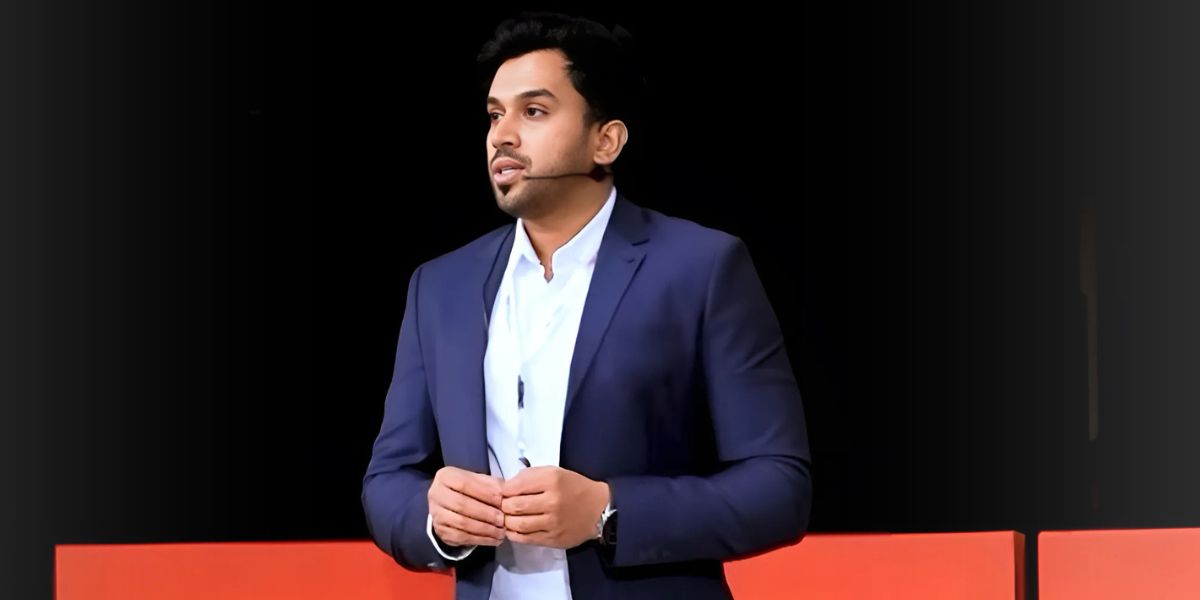


In an era when satellites are launched as frequently as daily flights, few are addressing a vital concern: how do we ensure the long-term sustainability of our orbits? Dr. Abhiram Nair is. As the CEO and Chief Scientist of ERETS, Dr. Nair is not just engineering spacecraft — he’s pioneering the future of space sustainability, working to preserve the cosmos and protect millions of space assets for generations to come.
A TEDx speaker and globally recognized thought leader on Space sustainability. Dr. Nair is leading the world’s first company solely focused on laser-based mitigation and intelligent detection of space debris. His mission? To make sure that humanity’s next great leap doesn’t become a cosmic catastrophe.
From Global Classrooms to Galactic Challenges
Dr. Nair’s journey began with a Bachelor’s degree in Aerospace Engineering from Manchester, UK. Over the next decade, his academic path would take him through research roles across the United States and Australia, with deep dives into propulsion systems and satellite architecture. But it wasn’t until he encountered the chilling concept of Kessler Syndrome, a cascade of collisions caused by space junk, that he knew his calling.
“I realized everyone was racing to get into space,” he recalls, “but no one was thinking about the long-term health of our orbits.”
That realization birthed ERETS.
Building from Zero to a Multi-Million Dollar Vision
With no big backers or flashy launchpads, ERETS began as a bootstrapped idea with a purpose larger than profit. The vision was clear: tackle the neglected crisis of orbital pollution using innovation, not just ambition.
Today, ERETS is a multi-million dollar global organization with strategic footprints in Australia, India, and the UK. Through partnerships with institutions like RMIT University and SETsquared Surrey incubation, the company has developed breakthrough technologies in laser mitigation, AI-driven debris tracking, and a constellation of satellites purpose-built for orbital awareness.
What sets ERETS apart isn’t just its tools, it is its philosophy.
Why ERETS Is Unlike Any Other Space Company
While others pursue the thrill of launching, ERETS is grounded in the ethic of preservation. It’s the first private company to approach the issue of space debris with a dual strategy, removal and real-time detection.
“We’re not just another aerospace startup,” says Dr. Nair. “We see space as a shared heritage, not a commercial playground.”
In addition to leading ERETS, Dr. Nair is also an author. His latest work, Celestial Code: Deciphering the Language of Being, reflects the same poetic consciousness that drives his scientific work—a blend of reason, reverence, and responsibility.
Looking Ahead: ERETS as the Ethical Brand Beyond Earth
Dr. Nair envisions ERETS becoming a household name in space sustainability, known not only for its tech but for its ethical leadership. The goal? To be a trusted research and development hub for sustainable and collaborative space operations across the globe.
Recently named one of MSN’s Top 10 Global Startups in Sustainability for 2024, ERETS is proving that innovation rooted in integrity can still lead the space race.
“We’re not just engineering solutions for orbit,” Dr. Nair says. “We’re protecting the promise of tomorrow.”