
A church can have deep ministry, committed leadership, meaningful programs, and a powerful history, and still look ordinary from the outside.
A nonprofit can change thousands of lives and still make a prospective donor work too hard to understand why the work matters.
A company can spend months deciding what it wants its brand to mean, while buyers, partners, search engines, and AI systems form their own conclusion in seconds.
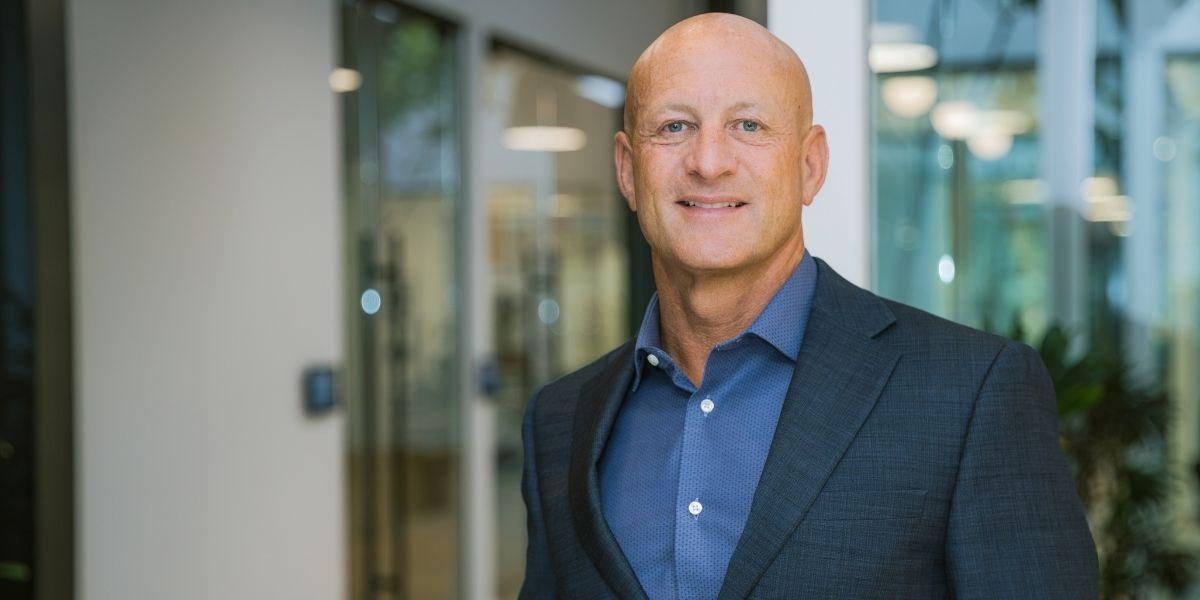
That disconnect has become the central problem D. Benny Bennafield is trying to solve.
Bennafield, CEO and Chief Storyteller of Datamorrow Solutions, has spent nearly three decades working across brand, growth, digital, cultural strategy, and technology. He has also served in ministry for more than two decades as an ordained deacon at Word of Faith Worship Cathedral. Those two parts of his life once looked like separate lanes. Increasingly, he came to see them as the same assignment.
The problem was access.
Large organizations routinely buy outside perspective. They commission research, benchmark competitors, study audience behavior, test positioning, pressure-test major decisions, and bring experienced strategists into the room before millions of dollars or years of effort are committed.
Small and mid-sized nonprofits and churches make decisions that can be just as consequential. They must earn trust, attract support, communicate impact, adapt to digital change, compete for attention, and make choices about fundraising, staffing, partnerships, outreach, programming, and growth.
Yet the strategic intelligence available to larger institutions is often packaged inside large teams, long timelines, and enterprise-sized budgets.
The need is not smaller. The access is.
That insight was not entirely new for Bennafield.
In 2015, he helped launch Propellant Media around a similar idea, that advanced media strategy and deployment technology should not be reserved for the largest advertisers. Propellant went on to become a four-time Inc. 5000 company by helping smaller and emerging businesses access capabilities that had traditionally been harder to reach.
Datamorrow applies that same access logic to strategic intelligence.
Its starting question is deceptively simple.
What does the outside world understand before anyone inside the organization gets a chance to explain?
That question matters because no audience receives an organization’s intention intact.
People see fragments.
A website. A donor page. A Google result. A social post. A proposal. A partner list. A review. A recommendation. Increasingly, they also see an AI-generated answer assembled from whatever evidence the public record makes available.
Those fragments harden into belief.
And belief becomes the version of the organization the market acts on.
That is why Bennafield believes the public record has effectively become the first due-diligence file. Before the meeting, funding conversation, board discussion, partnership pitch, purchase decision, or Sunday visit, someone has already begun forming a view about credibility, relevance, fit, and trust.
When Ministry Depth Is Not the Problem
For churches, the consequences are easy to underestimate.
A ministry may be doing extraordinary work inside the building while its digital presence makes that work difficult to discover. A visitor may encounter a livestream but never understand the discipleship pathway. A young adult may see a strong children’s ministry but no obvious place for someone at a different life stage. A potential member may believe the church is less active, less accessible, or less relevant than it actually is, not because the ministry is weak, but because the public story is incomplete.
Global Faith Solutions, Datamorrow’s sister firm serving churches and faith-based ministries, was built around that specific gap.
For Bennafield, the work is not simply another commercial vertical. He describes it as an extension of his ministry calling: applying the tools, technology, experience, and strategic judgment accumulated during his professional career to organizations doing Kingdom and community work that might otherwise never have access to this level of outside perspective.
The early evidence suggests that perspective can change more than messaging.
At Mosaic Church in Mableton, Georgia, the work helped leadership distinguish between ministry depth and public infrastructure. The problem was not that meaningful ministry was absent. What had been built inside the church had simply outpaced what someone outside the church could see and understand.
That distinction changed the diagnosis.
Instead of attempting to reinvent the ministry itself, leadership received a roadmap focused on strengthening the digital presence, organizing discipleship pathways, improving the visitor experience, and making care and community-impact ministries easier to find.
At Mount Carmel Baptist Church in Cabot, Arkansas, the findings went far enough to influence a staffing decision. Leadership moved to add focused support for graphics, publicity, social media, and the web. The work also exposed an audience question. The church communicated its commitment to children and students clearly, but young adults might not immediately recognize where they fit.
The Same Leadership Problem Beyond the Church
The same principle is showing up in the nonprofit sector.
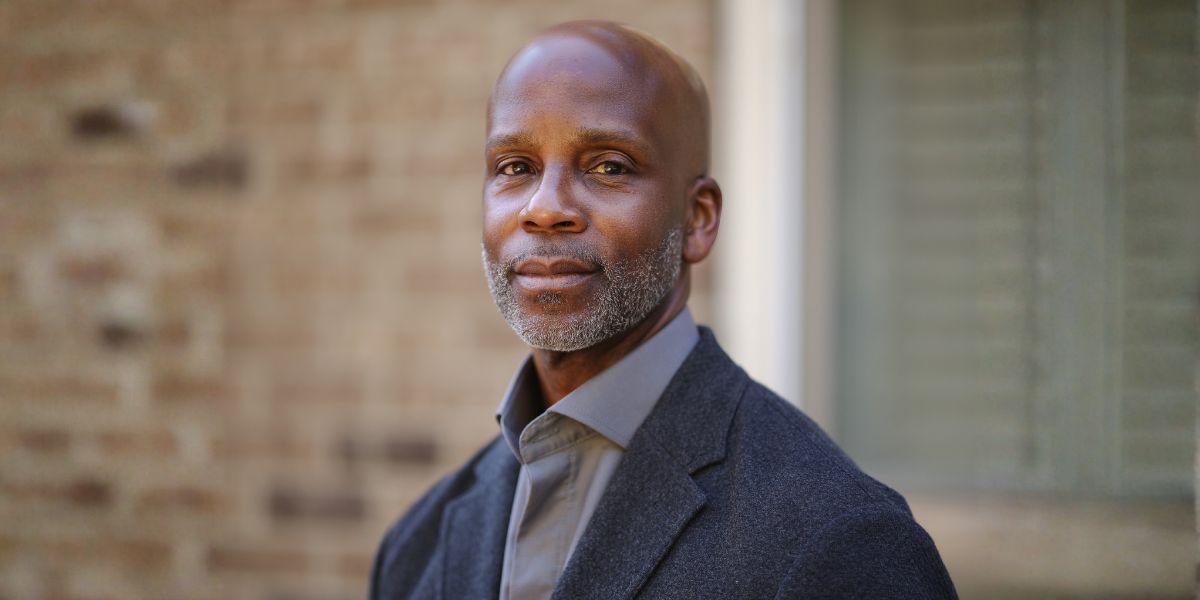
Delores Druilhet Morton, CEO of Step Up, described the value from the perspective of a leader trying to make consequential decisions without the resources of a much larger institution:
“The strategic intelligence insights Datamorrow provides helps us, as non-profit leaders, especially small to mid-sized non-profits, to function with the same kind of sophistication as a much larger organization.”
Delores Druilhet Morton CEO | Step Up | suwn.org
That observation gets to the heart of the leadership issue.
The objective is not to make a smaller organization imitate a larger one. It is to give its leaders enough outside evidence, comparison, and perspective to approach important decisions with comparable strategic sophistication.
That is what Bennafield believes strategic intelligence should do.
It should not merely describe an organization.
It should change the next decision.
Nonprofit leaders routinely make decisions about funding, partnerships, positioning, programs, donor engagement, corporate relationships, growth, and digital investment. Datamorrow approaches those questions through an outside-in strategic intelligence process, examining how the organization appears now, how it compares with relevant peers, how priority audiences experience its story, what those audiences need to understand and trust, and what leadership should clarify, strengthen, build, or sequence next.
Today, however, there is another audience in the room.
Machines.
The Outside World Is No Longer Only Human
Search systems, AI answer engines, crawlers, conversational assistants, and autonomous research tools increasingly participate in how organizations are discovered and interpreted.
That means a public story must be understandable not only to a donor, customer, church visitor, corporate partner, or board member, but also to the systems increasingly mediating what those people find.
The technology matters, but Bennafield is careful not to confuse technology with judgment.
AI can retrieve information, compare patterns, synthesize enormous amounts of material, and produce polished recommendations at remarkable speed.
It can also produce a confident answer built on weak assumptions, incomplete evidence, or an analogy that simply does not transfer.
The distinction has become one of Datamorrow’s core operating beliefs.
AI has democratized answers. It has not democratized judgment.
That judgment becomes particularly important in mission-driven organizations, where the decision is rarely just, “What converts better?”
A donor, volunteer, church member, funder, board member, customer, or corporate partner may be asking something deeper.
What does this organization actually help accomplish?
Why should anyone care?
What does supporting it say about the supporter?
What beliefs does it fit?
And what proof makes the story credible enough to trust, and simple enough to repeat?
Datamorrow calls that human layer Cultural Intelligence Frameworks®. The premise is that technology can surface signals, but senior judgment is still required to determine what those signals mean and what another human being must believe before choosing to donate, fund, partner, recommend, advocate, attend, or act.
Can the Story Survive Compression?
It is also why the company’s work frequently ends with compression.
After the diagnosis, benchmarking, audience analysis, and strategic work are complete, leadership should be able to articulate the sharpest claim the organization can credibly own, and support it with proof that both people and machines can understand and repeat.
The goal is not a pile of pages.
It is a clearer decision path.
That philosophy explains why Datamorrow and Global Faith Solutions began with churches, nonprofits, and other mission-driven organizations.
Bennafield had spent much of his professional career around organizations able to purchase sophisticated strategic capabilities. His ministry life placed him close to organizations making equally important decisions without the same resources.
Eventually, those two worlds collided.
What emerged was a business built around a simple imbalance. Organizations doing consequential work should not have to become enormous before they can afford to see themselves clearly.
And perhaps that is the larger leadership lesson.
Most organizations do not suffer from a shortage of intention.
Their leaders know the history. They know the sacrifice, the expertise, the standards, the relationships, the results, and the ambition behind the work.
The outside world does not.
It sees the evidence that escaped the building.
For CEOs, pastors, and nonprofit leaders, that creates a more useful question than simply asking what the organization wants to say next.
What are people already understanding now?
Because an organization is not only what its leaders intended to build.
It is also what somebody else understood.
D. Benny Bennafield
CEO/Chief Storyteller
Datamorrow Solutions
404.226.9589
bbennafield@datamorrow.solutions
datamorrow.solutions
global-faith.solutions