

By: Elle dela Cruz
Modern life demands speed but rarely offers depth. Many move through their days on autopilot, minds burdened with overthinking, hearts tired from emotional noise, and spirits dimmed by disconnection. The human experience, though more connected than ever through technology, feels increasingly divided. What people crave is alignment, a sense that thought, feeling, and faith can exist in harmony rather than constant conflict.
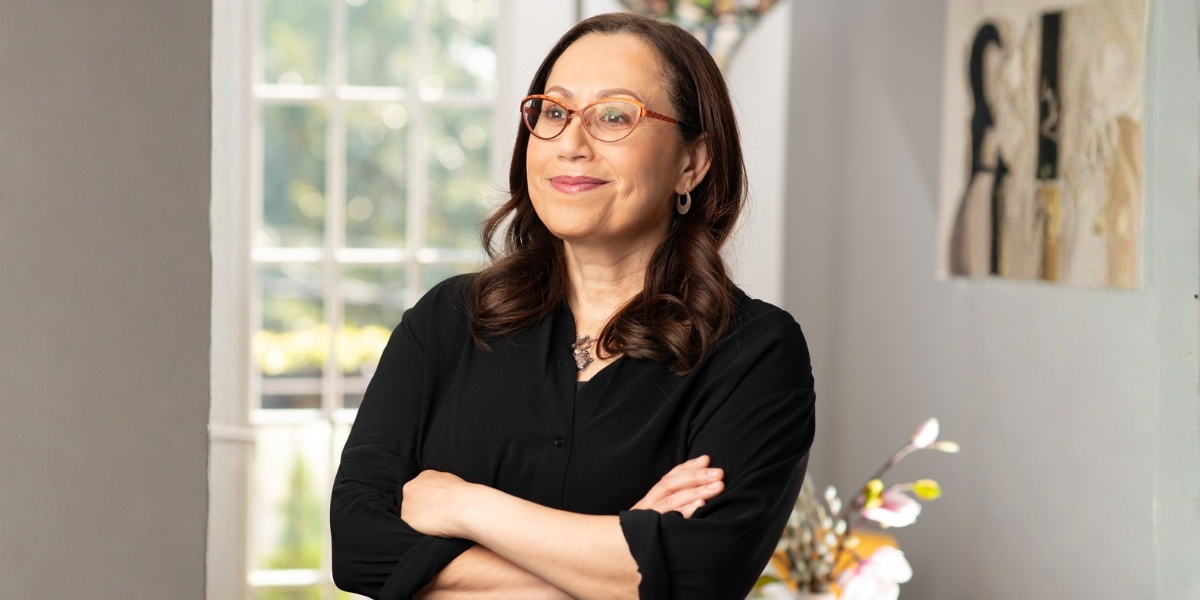
This longing for integration sits at the center of Dr. Sumaya Alnasser’s work. Over the past two decades, she has written more than 100 books that guide readers toward that inner unity, the place where logic meets compassion and spirituality becomes practical. As one of the Arab world’s most respected voices in personal development, Dr. Alnasser bridges the inner and outer worlds with a rare fluency. Her philosophy does not ask readers to choose between reason and emotion, or between faith and freedom. Instead, she teaches them how to make them dance together.
The Mind: Awareness as Strategic Power
For Dr. Alnasser, the mind is a decision engine. And like any powerful system, it must be observed, trained, and aligned.
In The Secret Life of Humans, she examines the invisible psychological drivers behind behavior: inherited beliefs, unconscious fears, emotional memory, and unexamined narratives that shape decisions long before logic intervenes. For leaders, this perspective reframes conflict and performance gaps as reflections of deeper internal structures.
Her book Cosmic Messages expands awareness beyond internal cognition to pattern recognition in lived experience. She proposes that recurring events, symbols, emotional triggers, and relational dynamics are feedback mechanisms. The leader who learns to read patterns, she suggests, responds rather than reacts.
In Lines of Ease, she addresses the complexity of why some individuals repeatedly encounter friction while others move through similar circumstances with fluidity. The difference, she argues, lies in internal alignment. By shifting belief systems and emotional anchors, individuals activate what she calls “ease pathways” in both life and work.
For executive readers, these works collectively underscore a critical insight: clarity is not accidental, but rather cultivated.
The Heart: Emotional Intelligence as Influence
While strategic thinking drives decisions, emotional intelligence sustains influence.
In The Story of Emotion, Dr. Alnasser presents a compelling thesis: life is, in essence, the history of one’s emotions. Professional success cannot outpace unresolved emotional patterns. The book maps the emotional body, its layers, reservoirs, inherited imprints, and recurring cycles, offering practical methods for recalibration.
Her work, Developing the Emotional Body of Children (DCE) extends this framework into leadership at its earliest stage: parenting and mentorship. Emotional reservoirs, she explains, are built or depleted long before adulthood. For leaders responsible for shaping teams or future generations, this perspective reframes emotional development as a strategic investment.
In The Secrets of Ecstasy, she redefines fulfillment beyond its conventional interpretation. In her framework, ecstasy becomes a state of energetic alignment, a creative force that enhances clarity, memory, relational depth, and goal attainment. It is an expansion.
The Spirit: Purpose Beyond Performance
Beyond cognition and emotion lies what Dr. Alnasser describes as the spiritual dimension, the intelligence of meaning.
In Etheric Contracts, she explores the invisible agreements that shape relationships, opportunities, and life lessons. Whether interpreted metaphorically or energetically, the framework encourages leaders to examine recurring relational patterns as purposeful rather than accidental.
Her book The Timeline asks a strategic question: Are your decisions aligned with your deeper narrative? She proposes that when choices synchronize with one’s authentic path, friction decreases and clarity expands.
In The Age of the Soul, she introduces the concept of spiritual maturity, suggesting that perception, resilience, and ambition are influenced by the evolutionary stage of consciousness. For executives navigating high-stakes environments, this model provides a lens for understanding differing motivations and capacities across teams.
Her work, The Trauma System, offers perhaps her most psychologically rigorous contribution. Trauma, she argues, is a structured cycle with signals, phases, and transformative potential. Leaders who understand trauma systems, personal or organizational, can interrupt destructive cycles and accelerate recovery.
Complementing this is Ancestral Traumas, where she addresses inherited emotional imprints and collective memory. In a global business environment increasingly attuned to generational patterns and cultural context, this perspective adds depth to conversations about identity and legacy.
Harmony as a Way of Life
Dr. Alnasser’s philosophy cannot be confined to a single dimension. Her work is a living ecosystem where psychology, energy, and spirituality intersect, each feeding and refining the other. Across the Arab world, her teachings have resonated precisely because they honor both cultural roots and universal truths. Her method does refine identity, reminding readers that the path to self-mastery begins with self-knowledge.
Through her website sumaya369.net and her extensive body of publications, she continues to build what she calls “a school of conscious living.” Her reach extends from Saudi Arabia and the UAE to Arabic-speaking communities across Europe, North America, and Southeast Asia, people drawn to her blend of intellect, faith, and empathy.
In her long-term vision, she hopes to create a digital archive that preserves Arabic self-development literature as a global reference. Her short-term goal is simpler but no less profound to help every reader experience alignment: the peace that comes when the mind listens, the heart feels, and the spirit speaks.