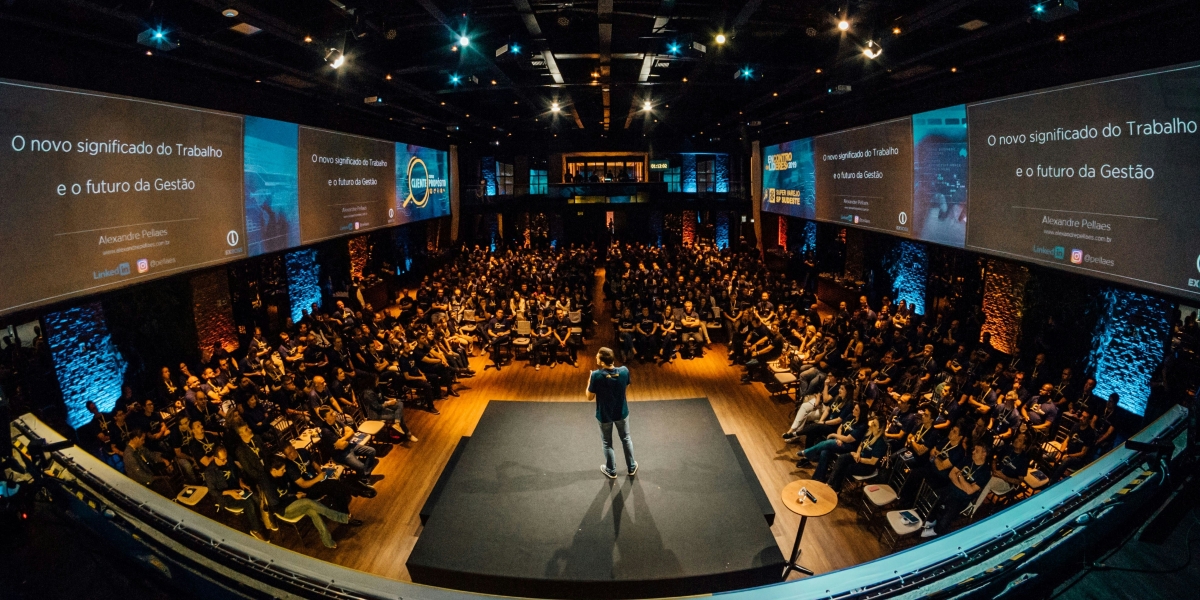

At the SHRM Annual Conference in 2025, Ryan Kohler asked a room full of HR professionals a question that cut through the noise around artificial intelligence. Who is responsible for AI adoption inside your company? The answer should concern every executive team. More than half the room chose nobody.
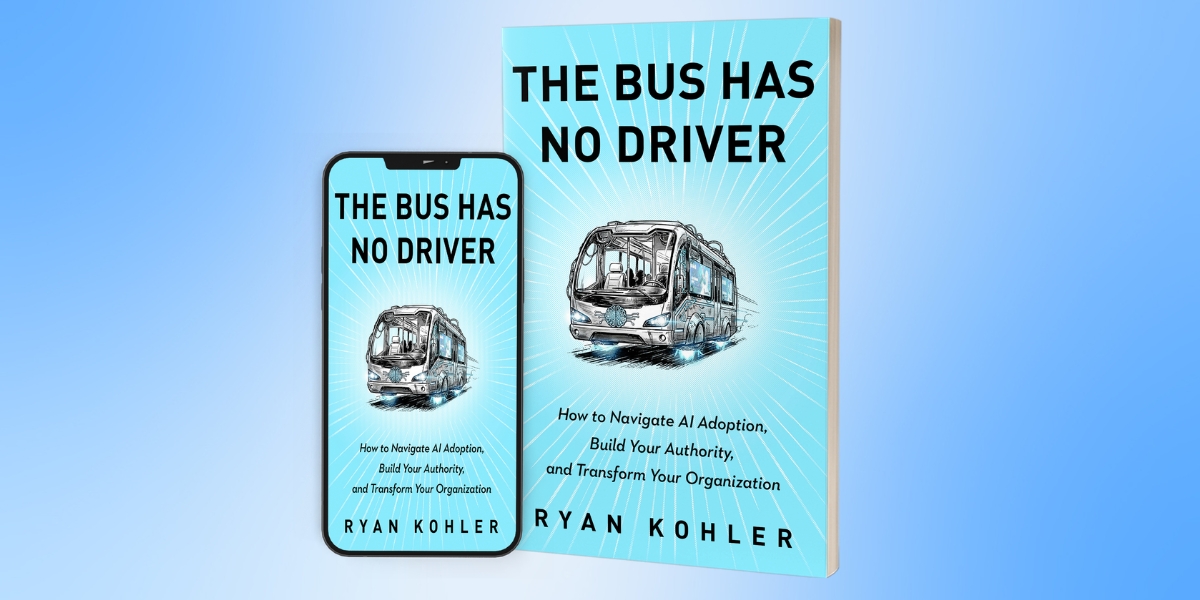
That answer captures the central problem Kohler explores in his book, The Bus Has No Driver. AI is already moving through the workplace. Employees are experimenting with tools. Leaders are asking for productivity gains. Vendors are promising transformation. IT teams are evaluating risk. Managers are trying to understand what is acceptable, useful, and safe. Inside many organizations, no one clearly owns the human side of adoption. That is the gap HR is positioned to fill.
Why AI Adoption Is Not Just a Technology Decision
Most organizations still talk about AI adoption as if the main challenge is choosing the right platform. Should the company use Microsoft Copilot, ChatGPT, Claude, Gemini, or another enterprise AI tool? Which system is safest? Which tool integrates best with existing workflows? Which vendor will satisfy procurement and legal? Those questions matter. They do not answer the deeper question. How does the organization help people change the way they work?
A tool can be approved and still not be adopted. A policy can be published and still not be trusted. A training session can be completed and still fail to change daily behavior. The real challenge is not access to AI. It is whether employees understand when to use it, how to use it responsibly, where it fits into their work, and whether leadership can be trusted in the transition.
The deeper misconception is that AI behaves like normal enterprise software. Most software arrives as a finished road, with defined features, visible menus, predictable workflows, and clear instructions for what users should do next. Generative AI is different. It is closer to a blank canvas than a paint-by-numbers kit. It is an open field with extraordinary potential, but very little built-in direction about which problems to solve, how to solve them, how to make the results repeatable, or how to redesign the work around the new capability.
Many companies have handed employees a trainload of magic wands and then wondered why the spells are inconsistent. The issue is not that people are incapable. The issue is that the tool itself demands a new layer of leadership, culture, systems thinking, workflow design, experimentation, and measurement. That makes AI adoption a people-systems problem. It touches trust, communication, role clarity, workflow design, learning, psychological safety, performance expectations, and culture. These are the conditions that determine whether AI becomes a productivity engine or another layer of organizational confusion.
Kohler argues that HR cannot afford to stay on the sidelines. If HR only enters the conversation after a tool has been selected, the company has already missed the most important moment, the point when employees are deciding whether AI is safe, threatening, useful, or worth hiding.
The Real Risk Is That Employees Are Using AI Alone
One of the clearest signs that AI adoption is already underway is the rise of hidden AI use. Employees are using AI to draft emails, summarize meetings, write reports, brainstorm ideas, analyze documents, prepare presentations, and automate repetitive tasks. Some of that use is approved. Much of it is informal, inconsistent, or invisible. Many companies interpret this as a compliance problem. Kohler sees a more important signal. Shadow AI is hidden innovation.
It reveals where employees are already finding friction in their work. It shows which tasks people are trying to simplify. It exposes the places where current systems are too slow, too manual, or too dependent on individual improvisation. The question is not whether organizations should ignore the risk. They should not. The question is whether they can convert scattered experimentation into a responsible learning system. That is where the HR role becomes strategic.
IT can define approved tools, security rules, data restrictions, and access controls. Those responsibilities are essential. Technical governance alone does not create adoption. Employees still need trust. Managers need guidance. Teams need workflow examples. Leaders need a shared narrative. People need to understand what AI means for their identity, their value, and their future inside the company. This is the adoption layer that often has no owner.
How HR Is Already Carrying the Work
Kohler identifies a pressure many HR leaders recognize immediately. HR is often expected to manage the consequences of AI adoption without being formally empowered to lead the adoption strategy. When employees are afraid, HR hears it first. When managers are confused, HR is asked to clarify. When executives want training, HR is asked to organize it. When policy questions emerge, HR helps draft the rules. When morale shifts, HR is expected to read the room.
This creates what Kohler describes as a Triple Burden. HR leaders are working through their own uncertainty about AI, supporting employees through fear and change, and helping the organization adapt without always receiving the authority, budget, or roadmap required to do the work well. That burden is not a sign that HR is unprepared. It is a sign that organizations have underestimated what AI adoption actually requires.
One reason they underestimate it is that they treat AI like a normal software rollout. In a normal rollout, the tool is mostly finished. The features are visible. The workflows are defined. The organization gives people logins, explains the interface, provides training, and expects usage to follow. AI does not work that way. For many employees, it feels less like receiving a finished application and more like being handed a magic wand with no spell book. The potential is obvious, but the instructions are unclear.
What should they ask it to do? How should they judge the answer? How do they make the work predictable, repeatable, and safe? When does a prompt become a workflow? When does a workflow become an agent? When does an agent become a new operating model for the team? Those are not simple software-training questions. They are leadership, culture, design, and systems questions.
AI does not merely change tools. It changes how people understand the value of their work. It changes what managers measure, what employees hide, how teams communicate, and how leaders earn trust. AI adoption cannot be solved through software procurement alone.
The New HR Role as AI Integrator
The opportunity for HR is not to become IT. It is to become the AI Integrator, the function that connects executive ambition, technical guardrails, manager reality, employee trust, and workflow change into one coherent adoption system. This role matters because companies need more than a tool policy. They need a map for how AI becomes part of the operating culture.
HR helps create the narrative, a clear explanation of why the change is happening and what promise the company is making to employees. Employees do not trust new tools when they distrust the motive behind them. HR helps create governance, practical guidelines for safe, responsible, human-in-the-loop use, because people need clarity they can act on rather than a policy they are afraid to interpret. HR helps create enablement through role-based learning, manager guides, workshops, and prompt examples, so literacy connects to real work. HR drives workflow integration through pilot projects and reusable operating practices, since change happens when the work changes, not when a training session ends. HR builds measurement through adoption indicators, trust signals, and evidence of productivity improvement, because leaders need proof that AI is improving performance without damaging culture.
This is a broader and more strategic version of the HR role. It moves HR from policy administration to transformation architecture. It gives HR a way to protect the human side of work while helping the business move faster.
Why Human Skills Are Becoming Strategic Infrastructure
There is a powerful irony in this era. The skills organizations once treated as soft are becoming the hard infrastructure of successful adoption. Trust is not soft when employees are deciding whether to use AI openly or hide it. Communication is not soft when leaders must explain why AI is being introduced. Listening is not soft when employee anxiety reveals where adoption will fail. Culture is not soft when it determines whether experimentation becomes learning or fear.
AI can help draft a policy. It cannot read the room after the policy lands badly. AI can summarize a meeting. It cannot know whether the team left that meeting more aligned or more afraid. AI can recommend a workflow. It cannot repair trust if employees believe the workflow is a disguise for replacement. The value of HR does not disappear in this era. In many ways, it becomes more visible.
Treating AI Adoption as a Trust System
The organizations that succeed with AI will not be the ones that simply buy the most tools. They will be the ones that build the clearest AI adoption systems. They will create a shared narrative, define responsible use, train people in context, redesign workflows around actual work, and measure progress honestly. That is the map Kohler offers in The Bus Has No Driver.
The book is not a technical manual for HR professionals who want to become software experts. It is a leadership guide for HR professionals who are being asked to help their organizations work through one of the most significant workplace transitions of the decade.
The central message is direct. The bus is already moving. Employees are already experimenting. Leaders are already asking for results. The only question is whether the organization will keep pretending someone else is driving or finally build the role that helps everyone find direction. For HR, that role may be the most important strategic opportunity of the AI era. HR may not have been handed the driver’s seat. It can become a function with the map.
Ryan Kohler is a business builder and AI strategist, the founder of Refer.io, and the former co-founder of ApplicantPro, which earned a place on the Inc. 5000 list for 12 consecutive years. Through AI4Teams, he helps leadership teams move past AI chat into automation and agent-led workflows. He can also be found on LinkedIn and YouTube.