
Professional success is often measured by what can be seen. Titles, business milestones, awards, revenue, recognition, and career advancement offer clear indicators of progress. For leaders, these measures can provide useful benchmarks, but they can also create a narrow definition of what it means to succeed.
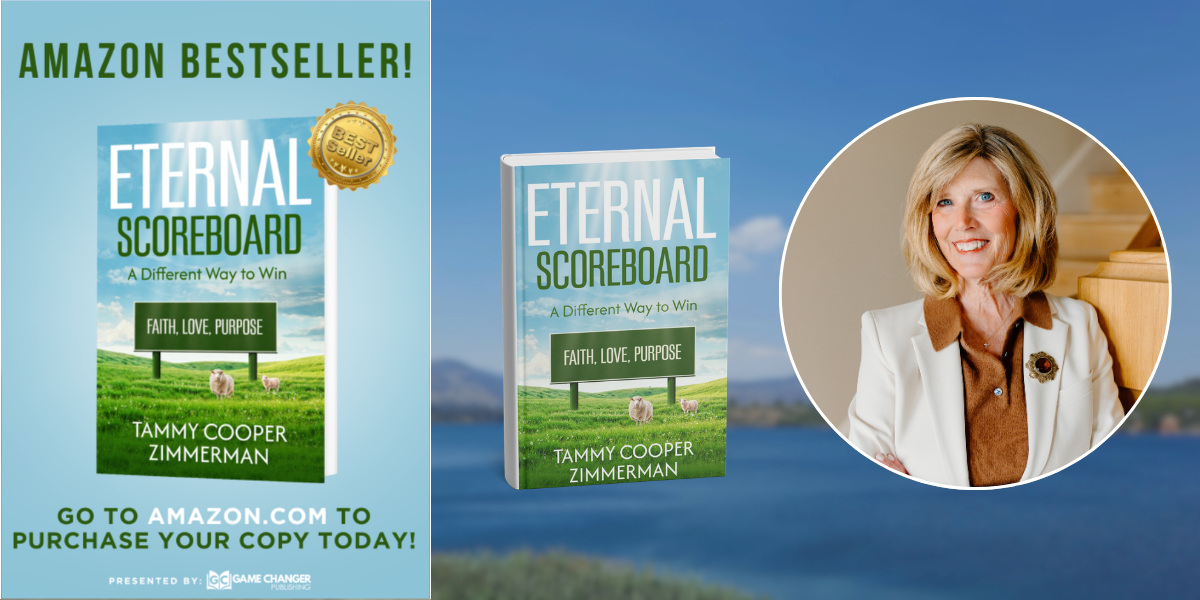
At some point, leaders may find themselves asking whether achievement alone provides a complete measure of a meaningful life. Tammy Cooper Zimmerman, author of the bestselling book Eternal Scoreboard, encourages readers to consider a broader perspective, one that places purpose, faith, and lasting impact alongside conventional measures of success.
The Limits of the Traditional Scoreboard
Business leaders are accustomed to measuring results. Organizations track growth, performance, productivity, market position, and other indicators to determine whether their efforts are producing results. Individual leaders often do something similar with their careers.
The challenge arises when external achievement becomes the primary measure of personal success.
A promotion can represent progress. Recognition can validate years of work. A successful business can demonstrate persistence and capability. Yet none of these outcomes necessarily answers whether a person’s efforts are aligned with their deeper sense of purpose.
Zimmerman’s perspective begins with reconsidering the scoreboard itself. Rather than dismissing achievement, she encourages people to ask what they are ultimately measuring and whether those measurements reflect what matters most to them.
Tammy Cooper Zimmerman on a Different Definition of Success
Zimmerman’s perspective has been shaped by experiences she has lived and observed throughout her life. Her approach is not presented as a formula for eliminating difficult circumstances, but as a different way of interpreting them.
At the center of Eternal Scoreboard is the idea that success can be understood through more than achievement and recognition. Purpose and impact can become equally important measures, particularly when circumstances force people to reconsider their priorities.
This perspective can have particular relevance for leaders. Leadership often comes with visible markers of achievement, but the responsibilities associated with leadership also extend beyond personal advancement. Decisions affect employees, organizations, families, and communities.
A broader definition of success can therefore change the questions leaders ask about their work. Instead of focusing exclusively on what has been accomplished, they can also consider what their efforts contribute, whom they influence, and what kind of impact they are creating.
Faith as a Leadership Perspective
Faith is central to Zimmerman’s understanding of this broader definition of success. She encourages readers to develop or deepen their faith in God and to consider life from an eternal perspective.
For Zimmerman, that perspective changes how achievement is viewed. Professional accomplishments can still matter, but they are no longer the entire scoreboard.
Faith can also influence how leaders respond when circumstances do not produce the outcomes they expected. Instead of viewing an unexpected result solely as a failure, a faith-informed perspective can create space for reflection, patience, and a reconsideration of purpose.
This does not require leaders to ignore practical responsibilities or stop pursuing meaningful goals. Rather, it offers another framework for understanding those goals and the reasons behind them.
Measuring the Impact Beyond the Outcome
A leader’s influence is not always captured by conventional performance metrics.
The way a leader treats people, responds to adversity, develops others, and contributes to something larger than personal achievement can have consequences that are difficult to quantify. These elements may not appear on a quarterly report, but they can still shape organizations and the people within them.
Zimmerman’s concept of the Eternal Scoreboard encourages readers to consider these less visible dimensions of success. The idea is not simply to replace one scoreboard with another, but to expand the definition of what deserves to be measured.
For leaders, that can mean looking at achievement alongside purpose. It can mean considering recognition alongside character. And it can mean evaluating professional progress alongside the lasting impact of the choices made along the way.
Redefining What It Means to Win
Leadership inevitably involves goals, expectations, and measurable outcomes. Those measures remain important. But Zimmerman argues that they do not have to provide the complete definition of success.
Her bestselling book, Eternal Scoreboard, develops this perspective through the experiences and lessons that shaped her understanding of faith, purpose, setbacks, and impact.
Ultimately, redefining success does not mean abandoning ambition. It means becoming more intentional about what ambition is serving. For leaders who have spent years pursuing the next achievement, recognition, or milestone, that distinction can create an opportunity to reconsider what they want their work and their lives to ultimately represent.
Explore / Learn More and Connect with Tammy Cooper Zimmerman
Website: Eternal Scoreboard
Book: Eternal Scoreboard
Instagram: Tammy Zimmerman Author
Facebook: Tammy Zimmerman
LinkedIn: Tammy Zimmerman