
By: Shawn Mars
Letting go is not something most entrepreneurs are taught to do. The instinct, in business and in life, is to push harder, hold tighter, and carry more. Carroll Patrizi spent decades doing exactly that, building a career that crossed banking, real estate, construction, and media, before she arrived at a different conclusion.
Surrender, she now believes, is not the opposite of strength. It is the fullest expression of it.
Patrizi is the founder of SURRENDER, a faith-based movement that is quietly reshaping how many people, particularly Millennials, think about ambition, burnout, and belief. At its center is a disarmingly simple idea: asking for help is not weakness. Asking for help is an act of courage.
“The truth is surrendering is one of the most powerful acts of humility and courage,” Patrizi says. “We are surrendering what we cannot overcome on our own to God, our Higher Power. Instead of giving up, we’re inviting Him in.”
The movement did not begin as one. What started as weekly accountability themes, social media reflections, and a Monday Mindset newsletter slowly revealed a thread that had been running through all of it. In 2025, Patrizi and her team spent nearly five months focused on the theme of SURRENDER, only to realize it had never really been separate from what they were already doing.
“We realized SURRENDER was already woven into all of our content,” she explains. “Once we started talking openly about it, people immediately connected to the hope it offered.”
That recognition became the foundation for SURRENDER: The Practice, an anthology currently in development, and the wider movement it has since spawned.
For Millennials navigating burnout, financial uncertainty, and growing disillusionment with the formulas they were handed, the message has arrived at the right moment. Patrizi sees their search for meaning not as a rejection of ambition, but as a recalibration.
“They were told success looked one specific way: go to school, get a degree, get a job, sacrifice joy now for security later,” she says. “But many are realizing that formula no longer guarantees fulfillment, or even stability.”
She believes younger generations are not abandoning faith; they are rediscovering it on their own terms, outside of judgment and performance. That shift, she says, is where SURRENDER meets them.
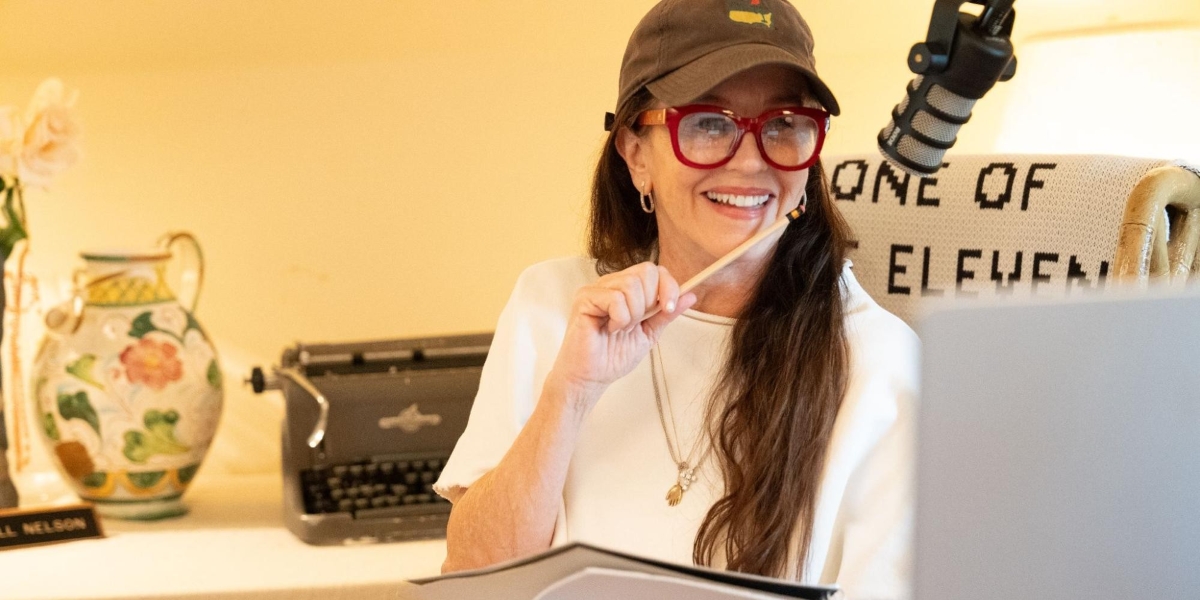
Patrizi’s own relationship with surrender was formed early, long before she had a name for it. The sixth of eleven children, she grew up in a household where storytelling was how you earned your place at the table, and listening was how you survived.
“Oh my gosh, the interruptions,” she laughs. “There were always six people talking at once.”
She describes candlelit thunderstorm evenings where her parents wove dramatic tales while her father quietly slipped outside, waiting for the right moment to bang on the windows and send the room into chaos. Siblings sang improvised songs, staged elaborate plays, and transformed ordinary nights into performances no one wanted to miss.
“You wanted to hear what each had to say, because magic was happening all around you,” she recalls. “There were choices to make, what a fun opportunity to choose, moment to moment.”
That instinct for listening, she says, became one of the most valuable things she carried into her professional life. Across industries built on relationships, she learned that trust is earned not by talking, but by paying attention. “If you are not listening to others, how do you know what is important to them?” she asks.
She is candid about the fact that she once took her faith for granted. That season, she says, changed her. Faith is no longer something she separates from her work or her identity.
“I’ve never understood why people divide faith from work,” Patrizi says. “Faith is the foundation of who we are.”
Prayer, she says, is threaded through every part of her day, including a daily pause at 3 p.m. aligned with the Divine Mercy Hour. It is not a ritual for ritual’s sake. It is the architecture of how she moves through the world.
What SURRENDER offers is not a promise that things will get easier. Patrizi is careful about that.
“It didn’t rid my life of struggle,” she says. “But once I surrendered, I realized I was never carrying it alone.”
The stories she most wants to amplify now are testimonies, real accounts from people who found peace, clarity, or renewed faith by releasing what they could not control. She sees those stories as lifelines for people who are still mid-struggle and have not yet found the language for what they are going through.
At a moment when mental health struggles, loneliness, and cultural exhaustion have become defining features of the national conversation, SURRENDER is growing because it offers something rare: permission to stop pretending you have it all together.
And perhaps that is why the movement continues to grow. Not because it promises perfection. But because it offers peace.
To learn more about the SURRENDER movement, visit the SURRENDER Summit speaker lineup.