

By: Daniel Mercer
How Sophia Is Helping Children Find Their Voice During Family Change
When families go through separation, most of the attention goes to logistics. Where the child will live, how time will be divided, and how routines will shift.
What often gets overlooked is the conversation itself.
Or more specifically, the lack of it.
With The Road Between Two Homes, Sophia Rose Lancer focuses on something many adults struggle with. How to actually talk to children about what is happening without overwhelming them or shutting them down.
Her approach is not about saying the perfect thing. It is about creating the right conditions for honesty.
Where Adults Get It Wrong
One of the biggest misconceptions, Sophia explains, is assuming children are too young to notice what is happening.
They notice.
Even if they cannot fully understand the situation, they feel the shift. The tension. The uncertainty. The emotional tone in the room.
When adults underestimate that awareness, it creates a disconnect. The child senses something is off, but no one is naming it.
On the other side, there is also the risk of saying too much.
Some conversations become too heavy, too detailed, or too emotionally loaded for a child to process. Instead of helping, it creates confusion or pressure.
Finding the balance is where most families struggle.
The Invisible Pressure Children Carry
Another dynamic that quietly affects children is being placed in the middle.
It does not always happen intentionally.
Sometimes it shows up through small things. Carrying messages between parents. Feeling like they need to take sides. Absorbing emotions that are not theirs to manage.
Over time, that pressure builds.
Children are not just adapting to a new structure. They are navigating emotional roles they were never meant to hold.
Sophia’s perspective is clear on this. Children should not feel responsible for adult conflict. When they do, it complicates everything.
Why Tools Matter More Than Advice
This is where the workbook becomes more than just an activity book.
It becomes a bridge.
Sophia designed it to reduce the pressure around difficult conversations. Instead of expecting a child to explain everything out loud, the workbook gives them another way in.
Sometimes it is easier to point to a page than to find the right words.
A prompt, a written response, or even a simple exercise can open the door to a deeper conversation without forcing it.
That shift matters.
It changes the dynamic from direct questioning to shared exploration. And that feels safer for most children.
Opening the Door Without Forcing It
One of the most thoughtful aspects of Sophia’s approach is the pacing.
Children are not rushed.
They are not expected to process everything at once or respond on demand. The workbook allows them to move at their own speed, which is often slower than adults expect.
That slower pace is not a weakness. It is what makes the process real.
When children have time to sit with their thoughts, they begin to understand them more clearly. And when that happens, communication becomes more natural.
Not because they were pushed, but because they are ready.
A Role Beyond the Home
While the workbook is designed for families, its impact is not limited to the home.
Sophia sees strong potential for it in schools and counseling settings.
In those environments, children often struggle to articulate what they are feeling, especially when it comes to family dynamics. The workbook offers a structured but gentle way to explore those emotions.
It can act as a starting point.
A way for educators and counselors to better understand what a child may be going through without putting them on the spot.
That is part of why the project is gaining support beyond individual families.
With backing from Dr. Robert Goldman and an upcoming pilot through the Institute of Psychological Resilience, the workbook is beginning to reach more children who need it.
The Message at the Center
At its core, Sophia’s work comes down to one idea.
Children need to feel seen.
For kids, the message is simple but powerful. Your feelings matter. You are not the only one who feels this way. Even if your family looks different now, what you feel is valid.
That kind of reassurance can change how a child experiences the entire transition.
For parents, the message is just as important.
Children often feel more than adults realize. And small actions can have a lasting impact. Listening without interrupting. Staying respectful. Creating a sense of steadiness, even when things are uncertain.
These are not complicated strategies. But they are easy to overlook.
What Makes This Approach Different
There are many resources for families going through divorce or separation.
What sets this one apart is where it comes from.
Sophia did not build this from theory alone. It comes from lived experience. From understanding what it actually feels like to move between two homes as a child.
That perspective shapes the tone.
It does not feel distant or instructional. It feels familiar. Honest. Grounded in real emotion rather than abstract advice.
It is also shaped by listening.
Through conversations and surveys, Sophia gathered insights from others who had similar experiences. That collective perspective adds depth and relatability.
The result is something that feels less like a guide and more like a companion.
What Comes Next
Looking ahead, Sophia’s focus is simple.
Reach the children who need it most.
She hopes to continue expanding access by donating the workbook to schools, counselors, and family support programs. The goal is not just visibility, but accessibility.
Because the children who benefit most from this kind of resource are often the ones who do not actively seek it out.
And if it helps even one child feel understood, or gives one family a way to start a conversation they have been avoiding, that is enough to make it meaningful.
Final Thought
Not every child will say what they are feeling.
But that does not mean they are not feeling it deeply.
What Sophia has created with The Road Between Two Homes is a way to meet those unspoken emotions with patience, space, and understanding.
And sometimes, that is exactly where healing begins.
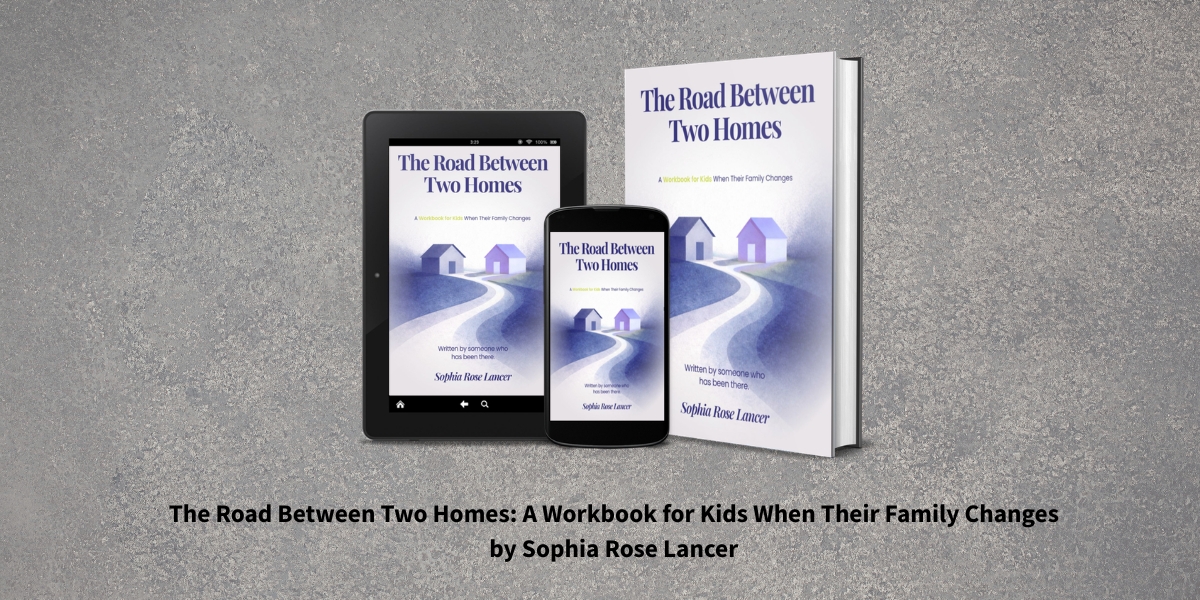
You can now get The Road Between Two Homes by Sophia Rose Lancer on Amazon.
A thoughtful workbook designed to help children navigate life between two homes with clarity and emotional support.