Currently, there is an active development of information technology. One of the most in-demand professions in the IT field is that of a programmer. While in the past, every boy dreamed of becoming an astronaut, policeman, or doctor, today there is a growing number of people who aspire to become programmers. The fascinating world of programming attracts teenagers and young people, and there are even cases of people becoming programmers later in life. How can you become a software developer, learn to program, how long does it take to learn, and how can you find a decent job?
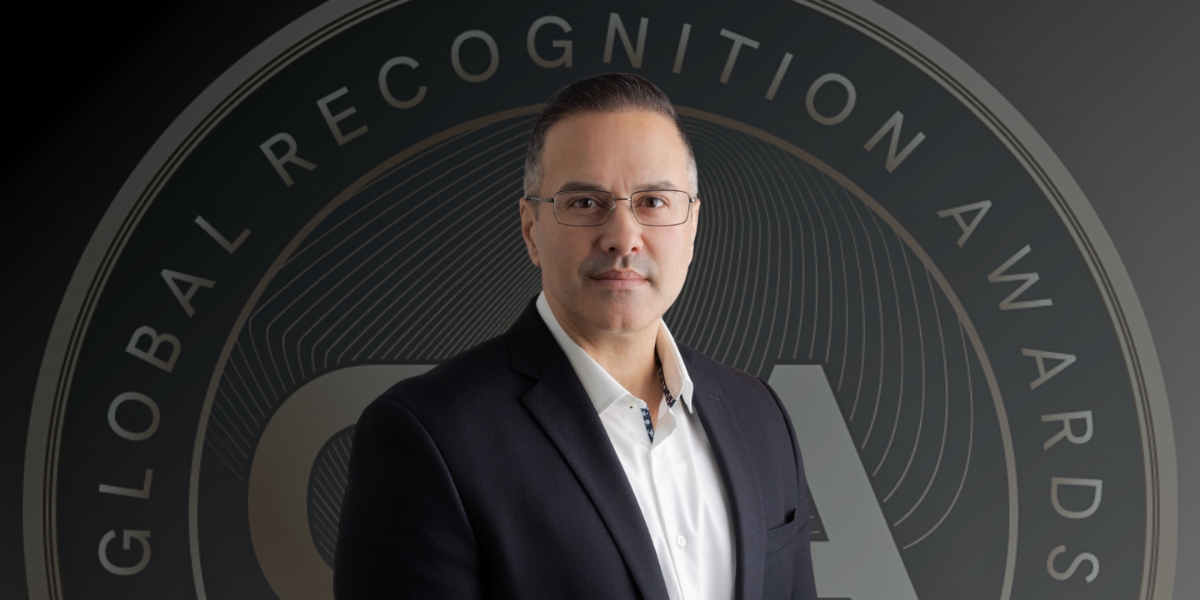
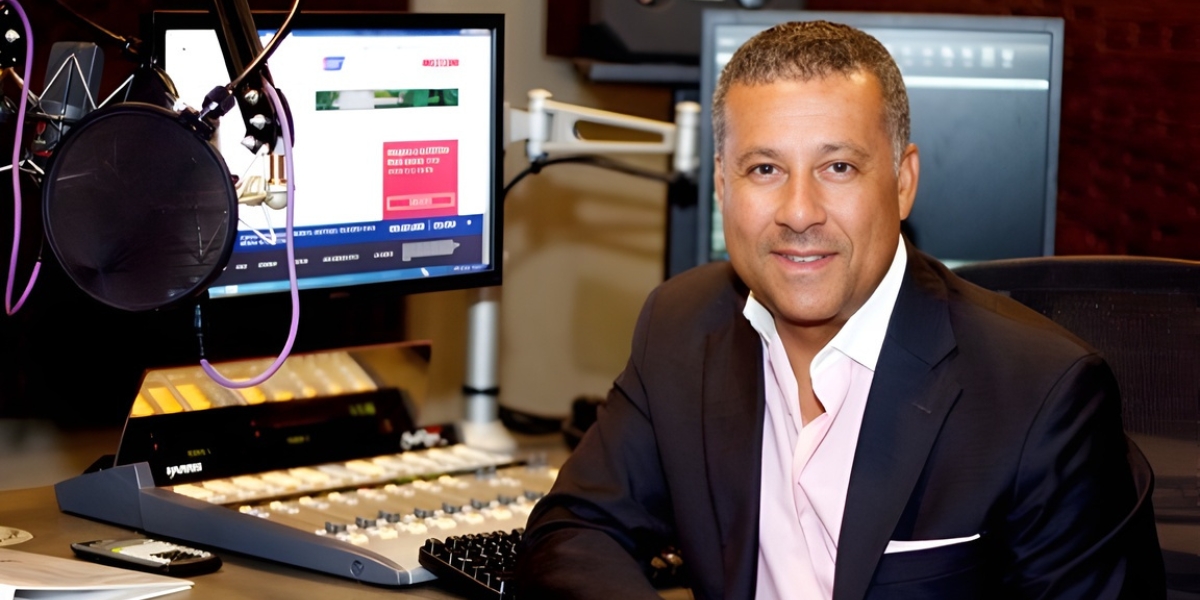
Serhii Kukunin, an internationally recognized IT expert in software engineering and technical leader of large-scale international IT projects, has agreed to answer these and other questions.
Serhii, how long have you been programming and why did you choose this niche?
I’ve been programming for over 15 years. It all started with a simple interest in computers during my school years. I was the first in my school to learn touch typing and became interested in computer technology, feeling something inexplicable and attractive about it. I started writing code, and fortunately, I had my own PCs early on, and my parents didn’t bother me too much with schoolwork, so I spent a lot of time on the computer. I taught myself how to program, and in the eighth grade, I installed the Linux operating system so that I could read documentation in English since there was virtually no information in Russian on the internet at the time. Why did I choose programming? I guess it’s because I enjoy thinking, working on solutions to various problems, and creating useful products for people. These are the main reasons.
Do you have a specialized education?
I graduated from Vinnytsia National Technical University with a master degree in Computer Science. My speciality is about Artificial Intelligence Systems. The university is strong, but in terms of programming, the education didn’t didn’t give me that much. What I learned on my own far exceeded the curriculum. I realized this as early as my first year and decided to start working and switched to part-time studies.
Tell me about your career as a programmer.
I started looking for ways to make money online when I was 14 years old. At first, it was watching ads on advertising services, then there were attempts to build my own referral network, and in 2007, I discovered the world of freelancing. I remember earning $20 overnight by writing 10 pages of thematic text. In January 2009, I started my first full-time job as a PHP programmer at a well-known Ukrainian company IT-RIA. I consider this time to be the beginning of my professional career. Here, I gained valuable experience working with real projects with millions of views per day. I implemented important features and much more.
Then there were several more jobs, after which I realized that I needed to start freelancing internationally.
Judging by the fact that you are currently working in the United States, did everything work out for you?
Yes, it did. However, getting my first client was difficult. I had to actively search for clients, offer my services, and offer large discounts. After that, things just started happening on their own. As a result, I worked as a freelancer until September 2014, when I got my first serious client – American entrepreneur Aaron Schiff, who invited me to be the first technical employee in his newly created company, Matic Insurance Services Inc. Interestingly, one of his strategies was to open an office in Ukraine, which is exactly what happened. I was assigned to this mission and successfully completed it. In the company, I performed a huge range of technical tasks and eventually became the technical lead for the company’s main product – an insurance quote system. For me, it was a big step forward, as the scale of tasks and solutions grew exponentially compared to freelancing.
In September 2017, I moved to another project at the request of an entrepreneur from Silicon Valley. It was a company called Spotlight Media Labs – a startup oriented towards the American media market. I became their first and only full-stack developer so far. We created an online platform for publishers where they can produce content and reach new audiences. I wrote almost all of the software, except for the mobile applications.
In January 2021, Aaron Schiff became a co-founder and COO of the young startup Easy Health Inc, and invited me to join as the second technical specialist. The company became the first platform to truly unify health insurance and care. Prominent and successful Easy Health develops in the USA various technical solutions and provides services (mostly advertising) for participants in the country’s health insurance market. In the company leading the market in its field, I am responsible for all engineering aspects of one of two major projects.
Thanks to my fundamental developments, the startup has grown significantly in just a few years and began to scale. In May 2022, I launched a new project called AgenX, which I was entrusted to lead (as of today, the project has already been closed).
Easy Health has many achievements to its credit. I would like to focus on the three most significant ones. The first is the raising of $135 million in equity and debt financing in November 2021. The second is the successful sale of the Medicare life insurance agency, supported by technology, and the Medicare book of business rent streams. And the third is the successful conclusion of contracts with major health insurance plans and provider groups, including United Healthcare, Bright Healthcare, and Alignment Health.
Serhii, reveal the secret for those who are still hesitant about choosing a programmer profession. What is the most challenging thing about it?
The most challenging thing is the constant learning. Information technology is developing rapidly, and new things are constantly emerging. Therefore, it is essential for a programmer to keep up with these developments. If a person is interested in programming, mathematics, languages, and has good analytical skills and a developed logic, then why not consider it.
You have been programming for more than half of your life, has it significantly influenced your personality?
For me, programming is a way of life. My thoughts and profession are intertwined. Perhaps my way of thinking is typical for all developers, but not for everyone. For me, truth is the main value, and I am partly a perfectionist. It is not enough for me to do my work well. When solving a particular problem, I try to dig deeper, understand better, apply a different approach, so that the software code is easy to work with in the long term. In programming, I have my own vision, which, on the one hand, enjoys authority among my colleagues, but on the other hand, I rarely see it in practice. My dream is to someday formalize it and write a series of articles or a book about it.
Tell me about your achievements and accomplishments.
I have played a critical role in three large-scale startups from the United States (currently working on the third) and have been a significant part of their success. I have already partially described my personal achievements in these companies. While working at Matic, in addition to opening and managing an office in Lviv (Ukraine), I created a system that provides optimal homeowner insurance rates in a matter of seconds, completed extensive integration with Encompass360, and developed a quoting API that can be used by other teams. During my time at Spotlight Media Labs, I developed a unified API for all iOS, Android, and web platforms from scratch, implemented integration with about 80 partner publishers, including Reuters, a WordPress plugin, and advanced article search using Elasticsearch, set up a continuous integration and continuous delivery workflow from scratch, and achieved much more in software development. At Easy Health, I increased development speed by at least 2 times by applying the latest HTML-over-wire approach, created an MVP in a month from idea to first customer, implemented CI/CD pipelines for Kubernetes using Pulumi, which increased the system’s SLA to 99.99%, as well as an auction bidding system with flexible heuristic rules, which reduced the cost per lead by 30%.
In addition to my achievements in my professional career, I also have other merits. For example, in 2022, I participated as a software developer in the winning team (Recruitly) of the annual international technological entrepreneurship competition StartupBus (Texas, USA). For those who don’t know, StartupBus is a hackathon, a worldwide championship of technological startups, and a learning camp for entrepreneurs on wheels.
In 2019, I became the winner among software developers in the large European IT championship DEV Challenge. I consider the victory well-deserved because unlike most participants, I approached the problem-solving in a non-standard way, which proved successful: instead of using the usual database, I used another product that works for full-text search and easily scales to the needs of the intended user.
In the same year, I was a judge at the European Digital Blockchain Hackathon “UtonHack”. I am interested in blockchain from a technical point of view, and because I work in this field, I was invited to be a part of the competition’s jury. It was gratifying to see that some participants presented genuinely useful and rational solutions.
I am the author of about a dozen scientific publications in prestigious national and international journals. In particular, I co-authored an article on determining trends in publications on artificial intelligence in the prestigious international scientific journal JARDCS from Kansas. I have presented papers at 3 scientific conferences.
I can’t help but ask, do you have any hobbies that are not related to your main profession?
I’m lucky in life. I love learning and discovering new things, delving into the depths and understanding the whole process. Learning comes easily to me, as does understanding new topics. I’m interested in the world around me and different aspects of it, so I have many hobbies, including music, chess, and working with metal and machinery (motorcycles, cars, etc.).
You are an expert-level specialist in programming, and your mentoring skills are well-known. What advice would you give to someone who is just starting their programming career?
It’s very important to find your motivation and maintain it. You need to be geared towards success, have the relevant knowledge, and constantly learn and improve your professional skills. Certain personal qualities are also important. Knowledge of the English language is extremely important, as programming cannot be done without it. However, your internal resource state is even more critical. To compete in the international market, you need to be a software developer in a broad sense, rather than a narrow specialist. In the words of Doug Linder: “A good programmer is someone who looks both ways before crossing a one-way street.”