
By: Ethan Rogers
As artificial intelligence reshapes nearly every industry, much of the public conversation has centered on what technology will replace. Headlines warn about automation eliminating white-collar work, executives debate which professions will change most dramatically, and college students increasingly question whether the careers they’re preparing for today will exist tomorrow.
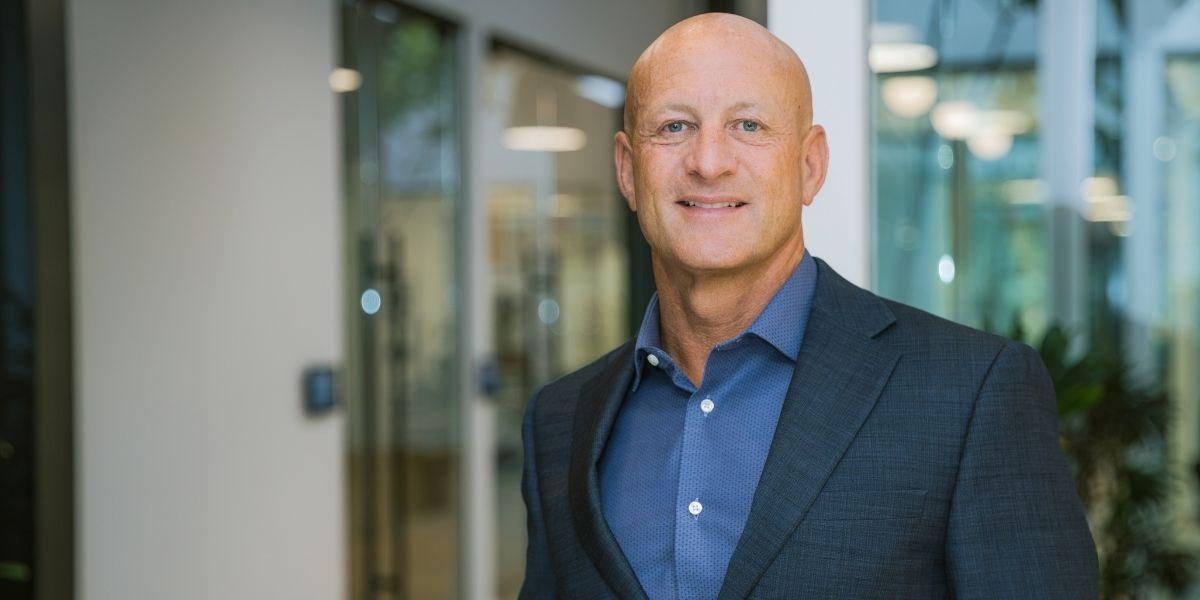
Luke Adams believes the conversation is missing half the story.
“The narrative has become that AI is taking jobs,” says Adams, Founder of Data Center Youngbloods (DCYB). “What people aren’t talking about is how many entirely new careers AI is creating. The challenge is that most young people don’t know those careers even exist.”
Adams has spent the past several years working inside the rapidly expanding data center industry, the sector responsible for building and operating the physical infrastructure that powers artificial intelligence. As companies including Microsoft, Amazon Web Services, Google Cloud, Meta, Oracle, OpenAI, and xAI continue investing billions of dollars into new AI infrastructure, he believes the next generation of opportunity won’t be found solely inside software companies. It will increasingly be found inside the facilities that make artificial intelligence possible.
Every chatbot, cloud platform, large language model, and AI application ultimately runs through a data center. Those facilities depend on far more than servers and networking equipment. They require electrical technicians, mechanical specialists, controls engineers, commissioning professionals, operations managers, project supervisors, and countless other skilled workers responsible for maintaining mission-critical infrastructure around the clock.
“The world sees ChatGPT,” Adams says. “We see thousands of people working behind the scenes to make experiences like that possible.”
That realization ultimately inspired the creation of Data Center Youngbloods, a workforce platform designed to introduce students, veterans, tradespeople, and career changers to careers in digital infrastructure. Adams founded the company after repeatedly noticing that employers were struggling to fill critical technical positions while many qualified young professionals had never even considered the industry.
“The talent exists,” he says. “The awareness doesn’t.”
Instead of beginning with traditional recruiting, Adams focused on building a professional community. Before launching its training programs, Data Center Youngbloods had already attracted more than 400 members and generated over 100,000 organic LinkedIn impressions without paid advertising, creating a network of aspiring professionals alongside experienced operators, engineers, recruiters, and hiring managers.
Adams believes the industry’s biggest obstacle is no longer demand. It’s visibility.
For years, software engineering became the default destination for technically minded students. Universities expanded computer science programs, boot camps emerged across the country, and venture-backed startups attracted much of the attention surrounding technology careers. Meanwhile, the infrastructure supporting that digital economy expanded quietly in the background.
Artificial intelligence has changed that equation.
Every new AI model requires additional computing power. Every new hyperscale campus requires skilled professionals capable of designing, constructing, commissioning, and operating increasingly sophisticated facilities. Unlike many software roles, those responsibilities cannot simply be automated.
“Someone has to keep the lights on,” Adams says. “Someone has to maintain the cooling systems. Someone has to manage electrical infrastructure that powers some of the most important technology in the world. Those careers are becoming more valuable every year.”
That opportunity arrives at a time when many members of Gen Z are rethinking what they want from their careers. Stability, long-term growth, meaningful work, and industries positioned for decades of expansion have become increasingly attractive as technology continues evolving at an unprecedented pace.
Adams believes digital infrastructure offers exactly that combination.
“You’re not just getting a job,” he says. “You’re building the foundation that every major technology company depends on.”
Through Data Center Youngbloods, Adams hopes to make those career paths significantly more visible. The company combines professional community, industry education, and employer partnerships into one ecosystem designed to help the next generation enter one of the world’s fastest-growing industries. Rather than simply helping companies hire employees, Adams believes the larger mission is introducing an entirely new generation to careers that have remained hidden in plain sight.
As investment in artificial intelligence continues accelerating across the globe, Adams expects demand for skilled infrastructure professionals to grow alongside it.
“People talk about AI changing the future of work,” he says. “I think AI is creating a new generation of work. Our job is making sure people know those opportunities are there.”
For Adams, the future of artificial intelligence isn’t just about more powerful models or larger data centers. It’s about ensuring the people capable of building and operating that infrastructure are ready when the next wave of innovation arrives.
Because while AI may transform how the world works, it will still depend on the people building the digital backbone that makes every breakthrough possible.