
By: Ben Walker
There is a particular kind of confidence that comes from scale. Not the confidence of someone who has read the right books or attended the right conferences, but the confidence of someone who has looked at the same patterns repeat themselves across ten million people, 150 million survey responses, and nearly 200 countries and territories, and watched them hold.
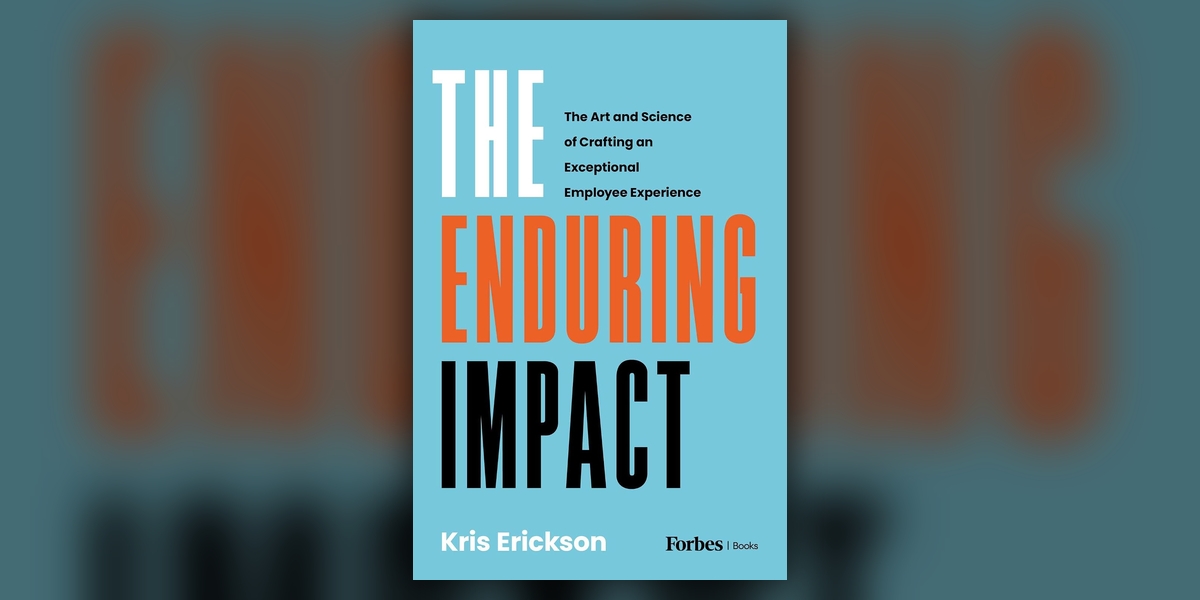
Kris Erickson has that confidence. And what the data behind The Enduring Impact: The Art and Science of Crafting an Exceptional Employee Experience actually shows is both simpler and more uncomfortable than most organizations want to hear.
The Biggest Surprise in the Data
When most leaders think about what drives employee engagement, they think about compensation. Perks. Flexible schedules. Office design. The visible, tangible, marketable things that can be announced in a press release and pointed to in a recruitment pitch.
The data Kris has spent decades accumulating tells a different story. Consistently, across industries and geographies and organizational sizes, the core drivers of engagement have almost nothing to do with what employees receive and almost everything to do with how they are treated.
People want to trust their leaders. They want to understand where the organization is going and why it matters. They want honest communication, genuine appreciation, real support, and opportunities to grow. Those needs have remained remarkably stable despite enormous changes in the workplace over three decades of research.
That stability is the finding that surprises most leaders. They assume the conversation has to keep changing because the workplace keeps changing. The data suggests otherwise. Technology evolves. Workplaces evolve. Human needs don’t.
Why Mission Gets Overlooked Most
Of the six core drivers Kris identifies in the book, Mission is the one she finds most consistently underestimated. Most executives believe employees understand where the company is going simply because the strategy has been presented. But strategy isn’t the same as purpose.
Employees are asking three questions that most strategy presentations don’t answer. Where are we headed? Why does it matter? What does it mean for me? When leaders consistently connect everyday work to something larger, engagement shifts in ways that compensation adjustments and perk packages simply don’t produce. People begin to see themselves as contributors to something meaningful rather than task completers in a system.
The gap between those two experiences is enormous. The data has been showing it for decades.
The Communication Gap That Nobody Fixes
The biggest gap Kris identifies between what senior leadership believes the employee experience feels like and what frontline employees actually live is almost always communication. Senior leaders believe they have communicated because they announced something. Employees are asking how that announcement affects their work, why the decision was made, and where they fit in what comes next.
When those questions go unanswered, employees fill the silence themselves. And the narratives they create in that silence are almost always more negative than the reality the leader intended to communicate.
Bridging that gap requires ongoing dialogue rather than one-way transmission. It requires leaders to understand that communication is not complete when something has been said. It’s complete when it has been understood, and when the people it affects feel seen within it.
What the Needle Actually Measures
Kris raises a pointed observation about why employee engagement has barely moved globally despite decades of organizational investment in it. Organizations have confused measuring engagement with creating engagement. They administer surveys, review dashboards, and launch initiatives while losing sight of the actual experiences employees have every day.
Her framework starts from a different premise entirely. Engagement is the outcome. Experience is the cause. The question isn’t how to improve an engagement score. It’s how to create meaningful experiences that naturally produce engagement as a result. That distinction sounds subtle. The difference in what it produces is anything but.
If you’ve been measuring engagement for years and wondering why the needle won’t move, The Enduring Impact by Kris Erickson is available now on Amazon. Ten million employees already told you what they need. This book explains what they said.