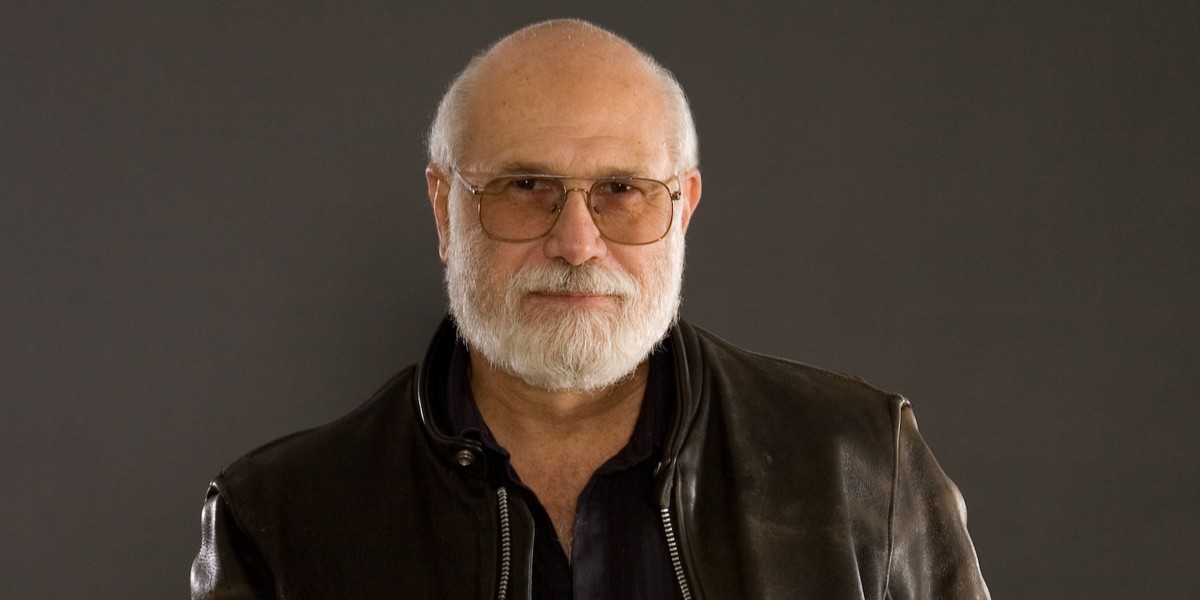
In the grand theater of human progress, from the construction of submarines to the coordination of Hollywood blockbusters, having teams has always been at the heart of any innovation. And yet, as humanity refines its tools and strategies, one element remains stubbornly unpredictable: group dynamics. Charles G. Masi, a polymath, journalist, author, and academic, is on a mission to understand exactly why.
Masi is no ordinary writer. With decades of experience in high-tech, astrophysics, business, and journalism, his career has long danced between the frontiers of science, communication, and human behavior. Now, as a doctoral candidate studying organizational behavior, Masi is turning his lens toward a foundational but often misunderstood concept: the efficiency and dysfunctions of teams.
“The concept of project teams originated with the Polaris submarine program in the 1960s,” Masi explains. “They needed a missile-launching platform under the ocean. The scale of the task was so complex, they pioneered the modern project team structure to accomplish it.”
What began underwater has since surfaced across every major industry. From skyscraper construction to cinematic productions, the project team model became the go-to approach for managing complex, high-stakes initiatives. But as these teams proliferated, so did the subtle, corrosive forces that erode their potential: polarization, groupthink, and suppressed dissent, among others.
At the core of Masi’s research is a paradox. Diversity of background, thought, skills, experience, and so on, is widely recognized as an engine for innovation. Studies show that diverse teams produce more ideas, make better decisions, and outperform homogeneous ones. But simply assembling a varied team isn’t enough.
“Diversity is essential,” Masi says. “But we’ve oversimplified it. It’s not just about demographics or surface-level differences. True cognitive diversity (diverse thinking styles and opinions) is the source of better outcomes. But even that can be sabotaged by toxic behaviors.”
Remove one voice from a conversation and you lose one potential solution. Suppress dissent, and the best idea might never reach the table. Introduce tribalism or political polarization, and suddenly a group of ten doesn’t generate ten ideas; it generates two, each attached to a faction. “A team might look diverse on paper,” he adds, “but if political or social dynamics reduce how many unique ideas are actually heard, that’s a false diversity. My research is trying to identify what causes that breakdown.”
Masi’s current research, which is part of his doctoral work, focuses on motion-picture productions as a lens to study broader organizational behavior. He recently conducted a qualitative focus group with experienced film producers and directors in Florida to identify ‘toxic group dynamics’ (TGDs): behaviors that sabotage effective decision-making in teams.
The focus group identified six specific TGDs: dissent suppression, groupthink, slow convergence, polarization, weak leadership, and lack of synergy. Each of these behaviors can distort or derail a team’s ability to generate and evaluate ideas. And while these issues are common across sectors, the film industry offers a particularly instructive case study: large budgets, fast deadlines, and collaborative decision-making make it a pressure cooker for team dynamics.
“In film, poor decisions lead to inferior products,” Masi says. “And unlike other industries, you don’t realize the failure until after all the money’s been spent. One bad call can sink the whole ship.”
The next phase of Masi’s research is to quantify how much each toxic behavior actually damages a team’s effectiveness. He plans to analyze two key variables for each TGD: how frequently it occurs in team settings and how severely it impacts the team’s decision-making capability, particularly in reducing effective diversity.
Once those metrics are clear, the final goal is intervention: building tools and training to help team leaders recognize and counteract these toxic behaviors in real time. “The first step is always identification,” Masi emphasizes. “You can’t fix a problem you can’t define. But even just identifying the dysfunction changes the dynamic, bringing more awareness. And awareness, I believe, is the beginning of change.”
Though Masi is knee-deep in academic research, his journalist roots remain front and center. If anything, his work as a journalist amplifies his academic mission: to bring clarity to complex issues and illuminate the human behaviors that often operate below the surface. He further shares, “Through this research, I want to guide in making teams better, give leaders the language and tools to understand what’s really happening in the room.” His efforts are particularly timely, with different generations currently working in the same corporate setting. In this case, understanding dynamics has truly become essential.
While Masi’s current research for his thesis is centered on film production, the implications are far-reaching. His findings could inform team-building strategies in tech, business, education, healthcare, construction, and so on. In each case, the goal is the same: help organizations harness the full potential of their teams.
Because when teams work, the results are extraordinary.
“Ultimately, this is about human progress,” Masi concludes. And as Charles G. Masi continues his journey, blending journalism, science, and organizational insight, he hopes to help build a future where collaboration isn’t just possible but powerful.