
By Arjun P
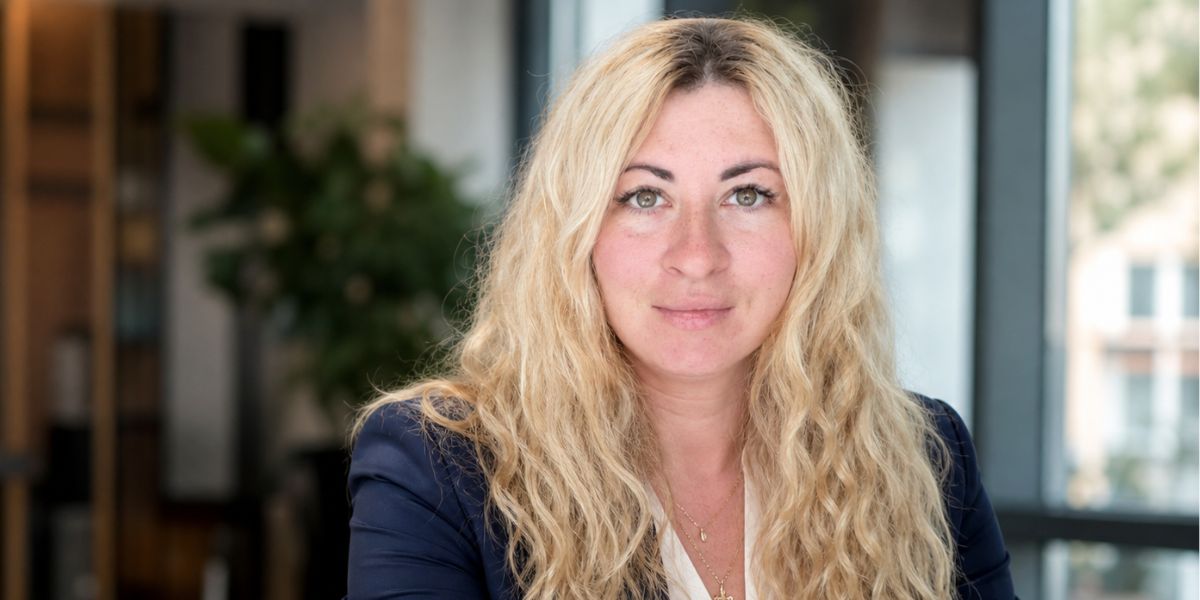
Hanna Klimushka is Senior Product and Programme Manager at Eularis, which builds AI systems for the pharmaceutical industry, and from March 2025 to April 2026 was Senior Product Manager at AI startup Craisee by Flux AI. Her argument comes from owning both sides, regulated enterprise AI, and a consumer platform that has to charge people money.
Conventional software carries near-zero marginal cost per user. That single property is why seat-based pricing works, and AI products do not have it. Every generation, every query, every document parsed costs compute, and the cost lands whether or not the output was any good.
At Flux AI she owned monetisation for Craisee, a multi-provider AI creation platform covering video, image, audio and text. She designed a credit-based model with tiered subscriptions rather than flat seats, and drove an infrastructure decision, routing inference across a multi-cloud edge architecture rather than a single commercial API that cut inference costs by an estimated 60 to 70 per cent.
“A lot of AI companies are growing and losing money on every active user. That isn’t a growth strategy. It’s a subsidy with a countdown on it.”
A roadmap item becomes a threshold
The second shift concerns what a product team is even able to promise.
On one Eularis engagement Hanna runs a retrieval-augmented system that reads and synthesises specialised clinical documentation, benchmarking at 90 to 95 per cent accuracy on complex medical content. The commitment made to the client is that number, its boundaries and its failure behaviour.
That reshapes the artefacts around it. Acceptance criteria give way to evaluation sets. Definition of Done acquires an accuracy floor and a regression check against model updates, because a supplier’s version change can silently degrade a product that already shipped.
“A model update is a production incident that arrives on somebody else’s schedule. If you have no regression suite for your AI outputs, you don’t have a product. You have a demo that’s been running for a while.”
Most of it is data, not model
Her estimate from live programmes is that as much as ninety per cent of an AI product’s work is data, sourcing, legal clearance, cleaning, structuring rather than model or interface work.
Her current programme, a multi-phase intelligence platform for a global specialty pharmaceutical company tracking fragmented government healthcare funding across all fifty US states, produced a 130-page solution vision and scope document at discovery: technical architecture, a data readiness scorecard, threat and privacy modelling, HIPAA compliance, personas and information architecture.
“Boards approve an AI budget imagining they’re buying a model. They’re buying a data project with a model on the end of it. Discovery is where you find out whether the thing is possible.”
Trust is product surface
In regulated markets Hanna treats explainability as something the product team builds rather than something compliance files. She has developed explainability report formats, decision-escalation routes and a method for converting model metrics into commercial language, on the grounds that a one per cent accuracy gain means nothing in a boardroom until it becomes conversion, revenue or cost avoided.
“The product person is the one who can hold a conversation with a data scientist, a compliance officer and a chief financial officer without the facts changing between conversations.”
Why the argument carries
Klimushka’s panel record puts her in that conversation with named peers rather than in a theory session, Project Management 3.0: how AI is changing the project manager’s role at the UA PM Day 2025 Winter edition.
And she tests the argument by building. Not Now, a prioritisation platform she designed and built herself, collects eight techniques into one interactive toolkit. The name is the thesis: teams that cannot say not now say yes to everything and ship nothing on schedule.
Teaching it while doing it
Klimushka founded PM_ON in 2018 and has run it without leaving delivery. Over the same three years she has been at Eularis, its flagship course, Project Management with a Wow Effect, has completed five cohorts and more than 100 graduates, the community around it has reached almost 400 members; and its agency arm has delivered for over 60 clients across Ukraine, Europe and the UK.
When her portfolio moved into AI, the curriculum followed within months. Certified by Scrum Alliance and holding Professional Scrum Master II from Scrum.org, she is completing PMP, while maintaining that none of those is the credential that will matter most.
“The managers who struggle won’t be the ones who failed to learn a tool. They’ll be the ones who spent fifteen years being excellent at the part a machine now does in four seconds.”
She intends to keep both halves running from the UK, where she has been based since 2022.
“Britain is going to build a great many AI products over the next few years and discover it is short of people who can price them, prove them and get them past a regulator. That’s the gap I want to work in here.”