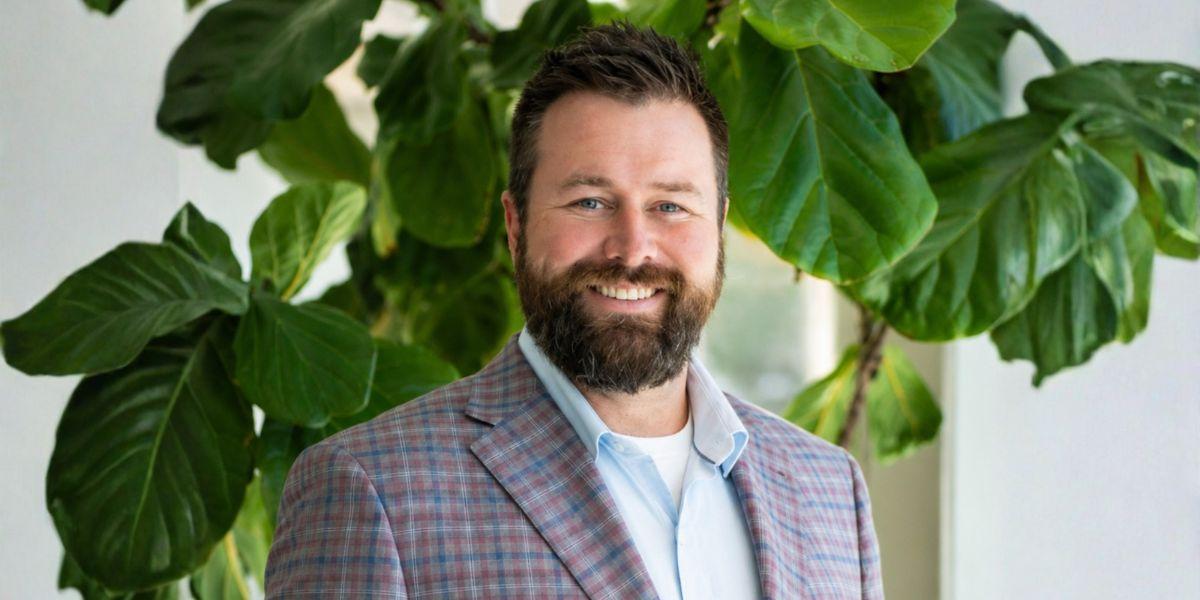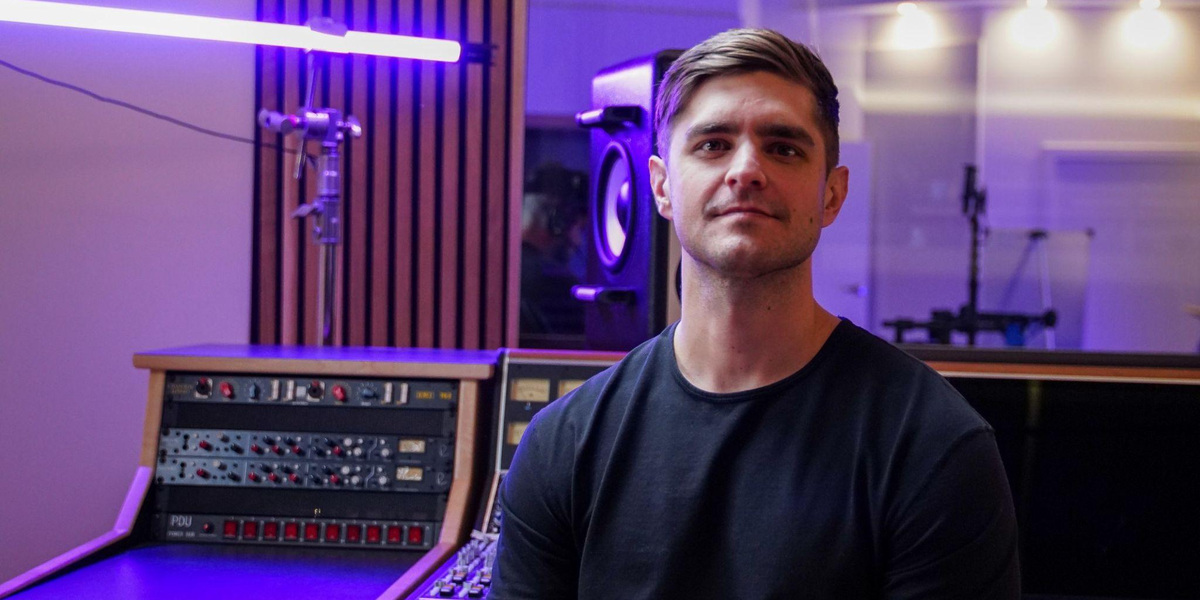

After building a video production company in Colorado, founder Travis Hawkes Hatch is bringing his documentary-driven approach to businesses and organizations across New England.
In March 2020, Travis Hawkes Hatch lost his job when the company he worked for went bankrupt. With businesses closing and uncertainty spreading across the country, he decided to pursue something he had been interested in for years: filmmaking and visual storytelling.
He launched Travis Hawkes Media in Denver, Colorado, combining his experience in sales and marketing with an interest in documentary-style production. Nearly six years later, the company has worked with organizations including Under Armour, CU Boulder, and CU Anschutz, along with nonprofits, professional athletes, and growing businesses.
Hatch has since returned to New England, establishing Travis Hawkes Media in South Portland, Maine. The company now works with clients in Portland, Boston, and across the country, while maintaining relationships with organizations in Colorado.
For Hatch, the move represents a new chapter for a business built around a relatively straightforward idea: a video should have something meaningful to say, not just look good.
From a Career in Marketing to Building a Production Company
Hatch graduated from Champlain College in 2012 with a degree in psychology. Rather than entering film production immediately, he spent the following years working in sales and marketing for corporations and startups.
That experience would eventually influence how he approached video production. His background gave him an understanding of how businesses communicate with customers, build trust, and encourage people to take action.
When his employer went bankrupt in 2020, Hatch saw an opportunity to put those skills toward work he enjoyed.
Starting the company meant learning more than filmmaking. He had to establish pricing, find clients, manage productions, and build a sustainable business while handling much of the creative work himself.
Over the following years, Travis Hawkes Media grew into a small production agency, taking on projects ranging from commercial content to documentary-style storytelling.
Hatch also found an unexpected connection between his psychology education and his work behind the camera. Understanding what motivates people, what earns their trust, and why certain stories resonate became an important part of his production process.
Why the Story Comes Before the Camera
One problem Hatch frequently encounters is that businesses invest in professional video without first deciding what they want the audience to understand or feel.
The result can be polished footage that offers little insight into the organization itself.
Travis Hawkes Media approaches projects differently. Before filming begins, the company holds a discovery call to understand the client’s audience, objectives, and the story behind the business.
Its process draws on the StoryBrand framework, which positions the customer as the central character and the business as a guide helping them solve a problem.
That thinking shapes everything from interview questions to the structure of the finished video.
A production might center on a founder explaining why they started a company, employees discussing the work they do, or customers describing how a service has affected their lives. The goal is to give viewers something specific to connect with rather than relying entirely on promotional messaging.
Hatch’s marketing background also influences how the finished content is delivered.
Instead of producing a single video for one platform, the company often builds a larger content package around a shoot. A brand story or mini-documentary can be accompanied by shorter clips for social media, advertisements, websites, and sales campaigns.
This allows organizations to use the same production across several parts of their marketing without needing to organize a separate shoot for each piece of content.
Clients work directly with Hatch throughout the process, with production crews ranging from two people to seven or more depending on the scope of the project.
Documentary Work With a Broader Purpose
Some of the company’s most extensive work has involved organizations focused on education, health, and community support.
One example is its ongoing partnership with The Phoenix, a national sober active community that helps people affected by substance use build connections through fitness and other activities.
Travis Hawkes Media produces health and wellness courses for Phoenix On Demand, an educational platform whose content is available in more than 400 correctional institutions.
According to Hatch, the courses have reached hundreds of thousands of incarcerated individuals and generated millions of views.
The work involves more than recording instructors delivering information. The production team must consider how to make educational material engaging for viewers whose circumstances and access to resources may differ considerably from those of a traditional online audience.
Projects like these have also reinforced Hatch’s interest in longer-form storytelling.
Long-form content doesn’t always get the biggest view counts, but when it’s paired with a strategy that puts it in front of the right people, it builds a level of connection and trust that’s hard to get any other way. Documentaries and educational series give audiences time to get to know people, understand their experiences, and stay engaged.
For organizations trying to communicate complicated subjects or sensitive personal experiences, that additional context can be particularly valuable.
Finding a Place for Human Stories in an AI-Driven Industry
Artificial intelligence is changing the economics and capabilities of video production. Businesses can now generate certain types of promotional content without organizing a traditional film shoot, while production teams have access to tools that simplify editing and planning.
Hatch sees practical applications for the technology, but also believes it creates a distinction between generated content and documentaries built around real people.
Travis Hawkes Media already uses AI tools for parts of its workflow, including pre-production planning, organization, and some clips and B-roll. These tools can reduce administrative work and help control production costs.
The company continues to focus much of its creative work on filming actual experiences, interviews, and events.
“A short ad can be fully AI-generated now if you want it to be, but you can’t fake a real story about a real person,” Hatch says. He believes real, human storytelling will be one of the last things AI disrupts, and that as generated content becomes more common, audiences will have more reason to value stories grounded in real experiences. Documentary production, in particular, depends on the relationships filmmakers build with their subjects and the moments they capture.
Another area of growing interest for the company is online education.
As more organizations develop digital courses and training programs, Hatch sees opportunities to apply documentary techniques to educational content. Interviews, demonstrations, location footage, and narrative structure can make courses more engaging than a conventional presentation recorded on camera.
His work with The Phoenix provides one example of how that approach can be used at scale.
A New Chapter in New England
With Travis Hawkes Media now based in South Portland, Hatch is looking to expand the company’s work across Maine and Massachusetts while continuing to serve its existing clients elsewhere in the country.
Its services include brand story videos, mini-documentaries, commercials, online courses, and short-form marketing content.
The company’s growth has taken Hatch from an unexpected career change in 2020 to working with national brands and organizations whose content reaches audiences well beyond traditional advertising.
Despite changes in production technology and the platforms businesses use to reach customers, his central interest remains the same.
“Every organization has a story worth telling. The hard part is finding it and telling it in a way that makes people actually care. That’s the work I love,” Hatch says.
For Hatch, the next stage of Travis Hawkes Media is an opportunity to bring that approach to more organizations in New England, particularly those with stories that may not come across through conventional promotional videos.
More information about the company’s work is available through Travis Hawkes Media, Instagram, and LinkedIn.