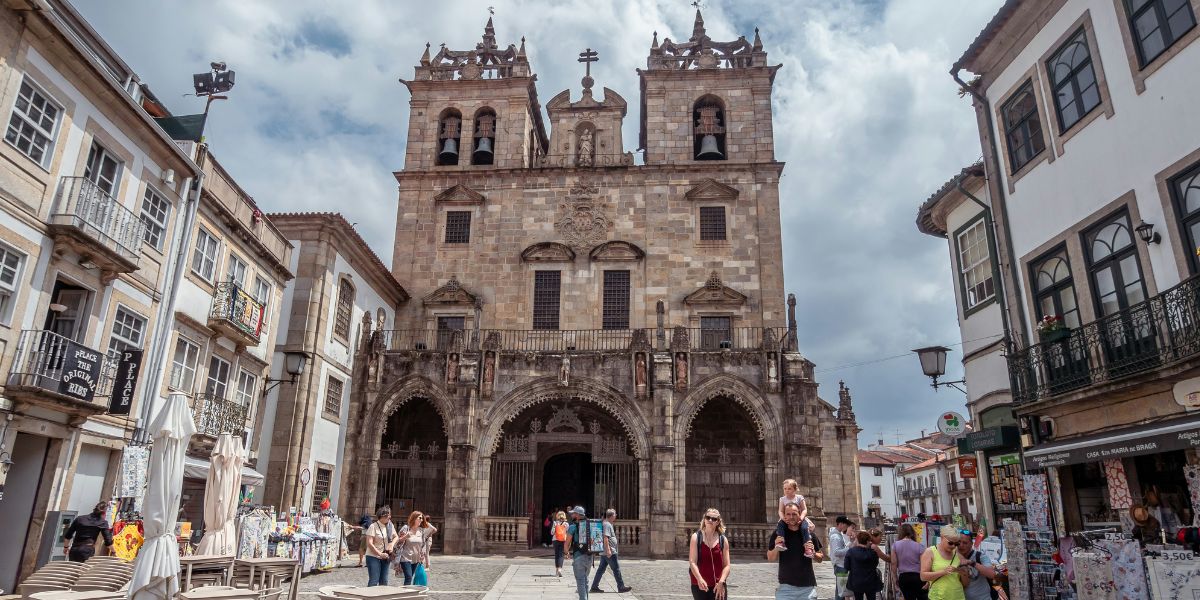

Tourism in Portugal has been growing consistently over the last decade, due to the increasing demand from foreigners interested in cultural tourism, coastal tourism, and outdoor tourism. As per Turismo de Portugal, Portugal has registered more than 31.6 million tourists and 80 million nights spent in 2024, where foreigners constituted more than 70 percent of the total nights spent. The contribution of tourism to the country was significant in terms of its economy, where tourism made up 16.6 percent of GDP through tourism consumption.
Cycling tourism has been one of the kinds of tourism that has been popularized in Portugal. The fact that there are routes linking the EuroVelo route, the Portuguese Camino, and the Atlantic Coast has made Portugal a favored destination for international cycling tourists. During the decade of the 2010s, Porto became a destination for cycling tourism because of its urban mobility and tourism facilities. It is in this scenario that Top Bike Tours Portugal started operating in 2013, but under a different name and business size.
The company was founded in Porto by Sérgio Marques under the original name Fold n’ Visit. In its earliest phase, the business focused on folding bicycle rentals, guided city rides, and short tourism experiences designed for visitors exploring Porto. The concept reflected the growing interest in urban cycling and compact mobility systems appearing across European cities at the time. Early operations remained limited in scale and centered largely on local tourism activity rather than long-distance travel programs.
During those early years, Fold n’ Visit functioned primarily as a city-based operator. Visitors could rent bicycles, join guided routes through Porto, or take part in shorter tourism experiences connected to the city’s historic districts and waterfront areas. The company also handled bicycle maintenance and technical support internally. Coverage published by the Portuguese newspaper Público during that period described Fold n’ Visit as a project connected to folding bicycles and local exploration within Porto.
The operational structure remained relatively small in the beginning. Marques oversaw route planning and business development, while a limited team handled logistics and customer support. Diogo Fonseca joined the company as its first employee during the formative phase, contributing operational and technical assistance as the business expanded beyond its original urban focus. The company later developed a broader operational team that included Diana Fernandes in coordination and customer operations and Alberto Sousa in bicycle preparation and maintenance.
As tourism patterns shifted, the company gradually moved away from short urban rentals toward longer cycling journeys across Portugal. That transition reflected broader changes within European travel trends. Travelers increasingly sought slower forms of tourism centered on regional culture, gastronomy, and outdoor activity rather than short city visits alone. Portugal’s Atlantic coastline, wine regions, and historic pilgrimage routes also became more visible within international cycling tourism networks during the same period.
The limits of the original business model became increasingly clear as demand moved toward multi-day experiences. City rentals and short tours created seasonal fluctuations and restricted geographic reach. Long-distance cycling programs, by contrast, allowed operators to combine accommodation, route planning, luggage logistics, and cultural tourism into structured travel packages. Fold n’ Visit gradually adapted to that market by testing extended cycling routes and organizing itineraries beyond Porto.
The Portuguese Camino route between Porto and Santiago de Compostela became one of the company’s earliest long-distance focuses. The corridor had already gained attention among international walkers and cyclists because of its religious and cultural significance. At the same time, routes through the Douro Valley, the Atlantic Coast, and southern Portugal were becoming more attractive to travelers seeking slower tourism experiences connected to landscape and regional identity.
Industry changes also supported this transition. Portugal’s tourism revenues continued to grow during the second half of the 2010s, while regional tourism authorities increased promotion of inland and nature-based travel. Tourism data published by Turismo de Portugal later showed sustained growth in international arrivals, particularly from the United Kingdom, Germany, France, Spain, and the United States. Cycling tourism operators increasingly aligned their offerings with these international markets.
In 2017, Fold n’ Visit was renamed to Top Bike Tours Portugal. This was when the company made a definitive transition regarding its identity and activities. The new name represented a larger scope of operations focused on the country-wide tourism industry as opposed to an urban mobility business centered on Porto. By then, the company had positioned itself as an operator of guided and self-guided cycling tours around different regions of Portugal.
This change also came along with a tourism-oriented approach to running the business. The difference between being an operator of bicycles for hire is that Top Bike Tours Portugal decided to concentrate on seven-day tours involving accommodations, meals, baggage transport, guiding, and tour management. Such tours happened in the regions of Douro Valley, Algarve, Alentejo, and Atlantic Coast between Porto and Lisbon.
References found in the late 2010s and early 2020s through the websites of tourism and cycling tourism communities confirmed that the company had earned a reputation as an organizer of cycling holidays rather than offering urban bicycles for rent. References made in editorials mentioned the company in connection with the growing popularity of Portugal as a cycling destination. Some travel publications also highlighted the company’s emphasis on combining cycling activity with local history, architecture, gastronomy, and wine culture.
Today, Top Bike Tours Portugal operates within a tourism sector that remains one of Portugal’s strongest economic activities. While the company began as a small Porto-based venture linked to folding bicycles and city rides, its development followed wider changes in travel demand and regional tourism strategy. The progression from Fold n’ Visit to Top Bike Tours Portugal reflects a broader shift within Portugal’s tourism economy toward structured active travel experiences designed for international visitors seeking longer and more regionally focused journeys.