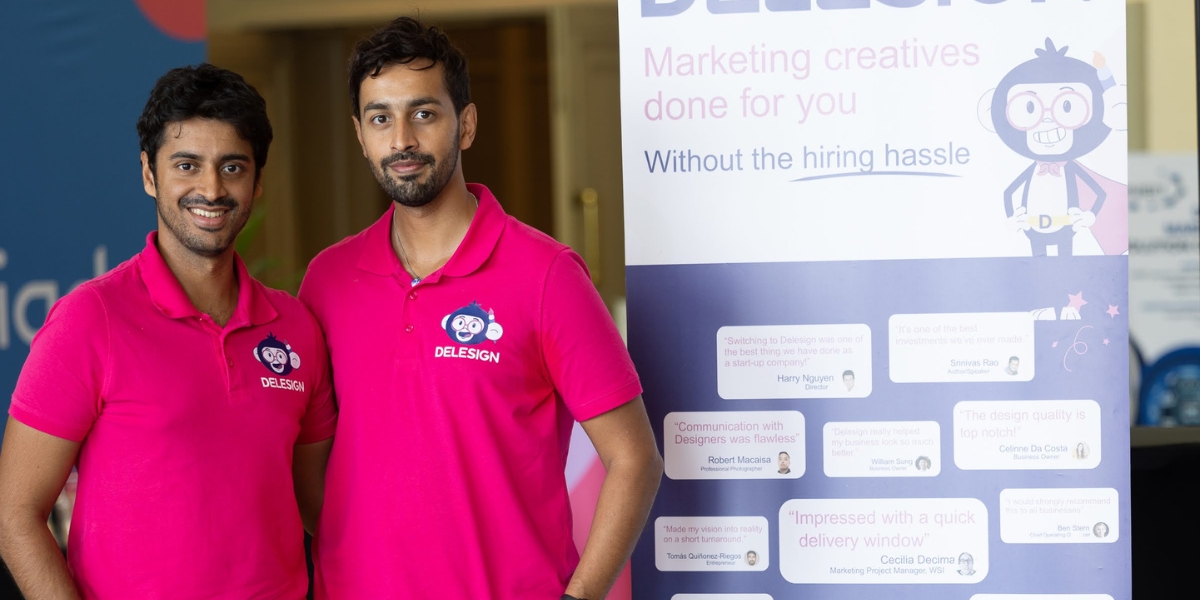

Fast. Consistent. Brand-aware. These are the qualities modern marketing demands from design, and they are often difficult for businesses to find through freelancers or overstretched in-house teams. Shaival Mehta built Delesign to help address that gap. Acquired with his brother Sherul Mehta in 2020, the subscription-based unlimited design service offers dedicated designers, unlimited requests and revisions, predictable monthly pricing, and global coverage that helps keep creative work moving around the clock.
Applying Corporate Experience to Creative Growth
Before Delesign, Shaival spent several years at Deloitte, where he worked with large businesses on systems, processes, and scaling. That background became one of his strongest advantages when he moved into entrepreneurship. Rather than approaching design as a loose creative service, he saw an opportunity to build a structured operating model around it.
His transition came during one of the most uncertain periods in recent business history. Reflecting on the brothers’ defining decision, Shaival has said, “COVID didn’t give me ambition. It gave me urgency.” That urgency shaped the way he and Sherul approached Delesign. They saw it as an opportunity to solve a practical business challenge at a time when companies were rapidly moving online and needed stronger creative support to compete.
Building a New Approach to Creative Services
Delesign’s opportunity sits inside a problem that rarely looks dramatic from the outside but can quietly slow a business down. Design is no longer a task that appears once in a while. It follows every campaign, every product update, every client pitch, and every digital touchpoint. When that demand becomes constant, businesses often find themselves caught between the weight of hiring and the looseness of freelance support.
The company’s subscription model gives that demand a more stable shape. Clients can access dedicated designers, submit unlimited requests, and revise work without watching creative costs shift from project to project. In markets where a full-time in-house designer can cost thousands a year, Delesign offers a structure designed for companies that need reliable creative support as an ongoing business function.
Creating Reliable Creative Support
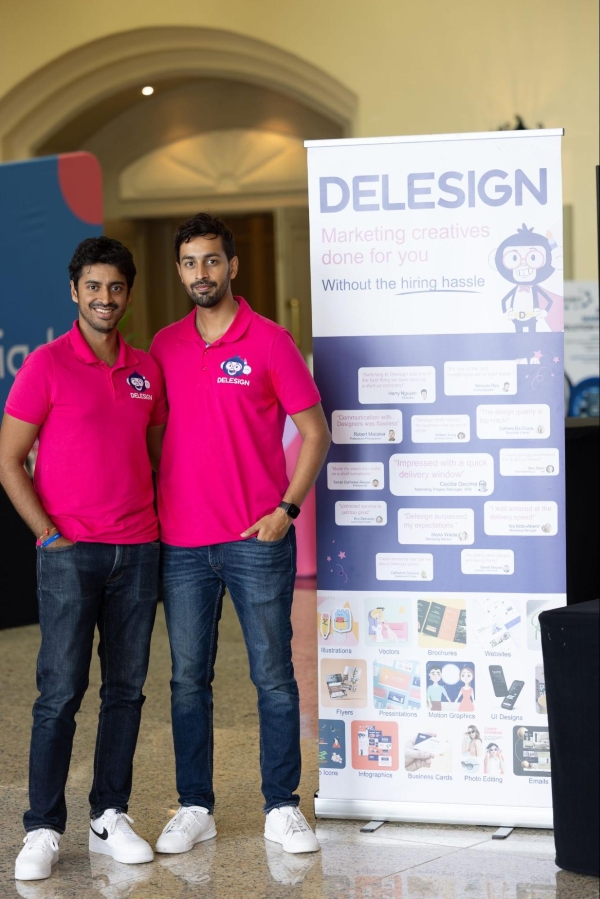
What clients appear to value in Delesign is the consistency of the service as much as the finished design file. Public feedback often highlights the relief of having creative support that is responsive, familiar with the brand, and able to keep work moving without every request feeling like a fresh onboarding process. In recurring design work, that continuity can make a creative partner feel like an extension of the internal team.
That reputation matters because Delesign’s promise extends beyond affordability. Its focus is on helping businesses reduce the operational pressure that often comes with maintaining consistent creative output. Agencies can use Delesign to expand creative capacity under their own brand without immediately increasing headcount, while growing businesses gain the steady design support needed to keep campaigns, launches, and marketing activity moving without unnecessary delays.
A Global Team Built on Strong Relationships
Behind the subscription model is a distributed creative team built primarily across the Philippines, with additional talent in Latin America and management presence across the United Kingdom, Dubai, Belgium, and the Philippines. This structure allows Delesign to serve clients across markets including the United States, Australia, India, and other global time zones.
For Shaival and Sherul, building that global model required more than remote coordination. After acquiring the company, the brothers traveled to the Philippines to meet the team in person, strengthen relationships, and bring everyone closer to the same vision. The decision says a great deal about Shaival’s leadership style. For him, building a scalable business starts with strong systems, trusted relationships, and people who understand the purpose behind the work.
Balancing AI With Human Creativity
Delesign’s move toward AI-assisted design is focused on improving efficiency while supporting the creative process. Shaival sees the technology as a way to reduce repetitive production tasks, helping designers work more efficiently while reserving their time for the parts of design that still require creativity, context, and business understanding.
His position is captured in a simple line: “AI doesn’t replace designers. It amplifies them.” That belief continues to shape Delesign’s approach to creative services. The company integrates AI as a tool that supports designers, allowing them to spend more time refining ideas and delivering work that aligns with each client’s brand and business objectives.
Looking Beyond Design
Delesign operates under NexaSky, the parent company through which Shaival and Sherul are building broader marketing and technology capabilities for small and mid-sized businesses. Design was a natural starting point because nearly every marketing effort depends on creative execution. But the long-term vision reaches further, including stronger design-and-development offerings and more integrated support for companies that need practical growth infrastructure.
For Shaival, the value of Delesign lies in making creative capacity easier to access, manage, and scale. The company gives businesses access to experienced design talent without requiring the fixed cost of hiring or relying on one-off freelance support. In a market where every campaign, launch, and digital touchpoint depends on strong visual communication, Delesign reflects the growing demand for flexible, subscription-based creative support that can scale alongside modern businesses.