
A few years ago, gaming marketing still looked fairly familiar. Big publishers ran trailers everywhere they could, paid for banners, and pushed campaigns across every platform at once. It was a system built on reach. On getting seen. That was the idea, anyway.
But something shifted quietly. People stopped paying attention in the same way. Younger audiences were not just scrolling past ads. They were spending long stretches of time watching creators instead. Streamers playing games late at night. Short clips breaking down updates. Communities forming around personalities rather than brands.
It did not happen all at once. But once it started, it was hard to ignore.
Influencer marketing had evolved into a worldwide industry that generated revenues of over 24 billion US dollars by 2024, as noted by Statista. The video game industry was at the epicenter of this development. In particular, Latin America saw the rise of the streaming community culture and the integration of creators in everyday entertainment for the youth. All of it blended together.
That environment is where MCR Agency started to grow.
The company was founded in 2019 by Sergi Cerrato and Inés Alexandre. At the time, gaming influencer marketing in Spain was still relatively scattered. Some agencies handled it as a side service. Others barely touched it. MCR Agency focused on it directly. Almost completely.
It began in Spain, but did not stay there for long. Over time, the company moved into Latin American markets like México, Brazil, Argentina, Chile, and Peru. Not in one jump. More like step by step, campaign by campaign.
Cerrato did not come from advertising. He studied law at the University of Barcelona and later completed postgraduate studies in business, trade, and logistics. His path into marketing was not planned in a traditional sense. It followed the direction the industry itself was moving.
MCR Agency built itself around gaming from the start. That was the difference. Not as an add-on category. But as the core.
The timing mattered more than it looked like at first.
Gaming publishers were also changing how they worked. Traditional campaigns still existed, but they were no longer enough on their own. Creators had started to carry more weight. In some cases, a single streamer with a loyal audience could generate more attention than a full advertising rollout.
Research from Newzoo estimates that global gaming audiences now exceed three billion people. Latin America is one of the fastest-growing regions within that number. That growth created demand for local creators who already had trust inside their communities.
MCR Agency expanded into that space.
By 2025, the company reported working with more than 70 creators across Europe and Latin America. Some later reports placed the number closer to 80. The agency also built campaign activity across multiple countries, including Spain and several key markets in Latin America.
Over time, the agency became involved in campaigns tied to gaming and entertainment companies operating across Europe and Latin America. Some public reporting linked MCR Agency to projects connected with publishers such as Tencent and Activision, particularly in gaming-focused campaigns.
There were also campaigns linked to PUBG Mobile in Latin America, which reflected how closely mobile gaming and influencer marketing had started to overlap in the region.
In interviews with outlets like La Vanguardia and El Publicista, Cerrato often returned to a simple idea. Attention is not the same as trust. Visibility does not guarantee anything anymore. What matters is whether creators actually have a relationship with the people watching them.
That idea is not unusual now. But it was still taking shape in the industry a few years ago.
As the company grew, it changed internally too. Early descriptions of MCR Agency show a small Barcelona-based operation focused mainly on gaming creators. Later reports describe a larger structure working between Spain and México City. Teams handling strategy, production, talent management, and communication.
The company’s growth tracked the broader expansion of influencer marketing across Spanish-speaking markets. As demand from gaming publishers increased, MCR Agency widened its operations and deepened its presence in both Spain and Latin America.
Outside the agency itself, Cerrato became more visible in other spaces as well.
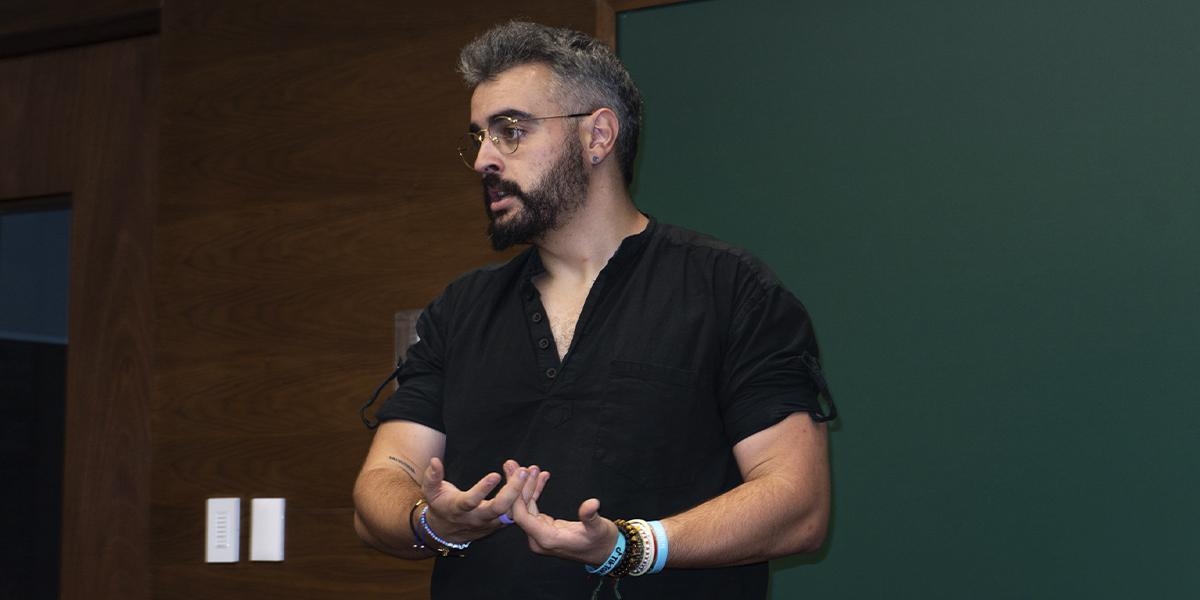
He appeared at events like Gamescom LATAM, VidCon, and IAB México. Talks there usually focused on gaming communities, creator economies, and how digital audiences behave. He also spoke at universities including Tecnológico de Monterrey, Universidad Iberoamericana, and Universidad Panamericana.
The topics were not always new, but the audience had changed. Universities and industry events were paying more attention to creator-driven marketing than they had before.
Alongside that, Cerrato contributed writing to the Forbes Agency Council. The topics he covered were mainly related to digital communities, authenticity of influencers, artificial intelligence in marketing, and changes in online behavior. In most of his works, one of the consistent ideas that was mentioned was that small communities tend to outperform large, disconnected audiences.
He also wrote a book titled Las Claves del Influencer Marketing that talked about the effect of creators and social networks on the development of marketing strategies.
By 2026, MCR Agency received recognition as Best Gaming Influencer Marketing Agency in Spain and Latin America. Coverage from regional outlets linked the award to its expansion across gaming and entertainment sectors. The company also signaled continued movement into broader communication services.
The wider trend is not limited to one agency.
Gaming audiences are still growing. Creator platforms are still evolving. Publishers continue shifting budgets toward influencer-led campaigns because that is where attention already is.
MCR Agency sits inside that shift rather than outside it.
Through its growth across Spain and Latin America, and through Cerrato’s involvement in conferences, publishing, and industry discussions, his name became connected to a period when gaming marketing moved closer to creator-driven communication.
That shift is still ongoing. And it does not look finished yet.