
By: Bernard Ramirez
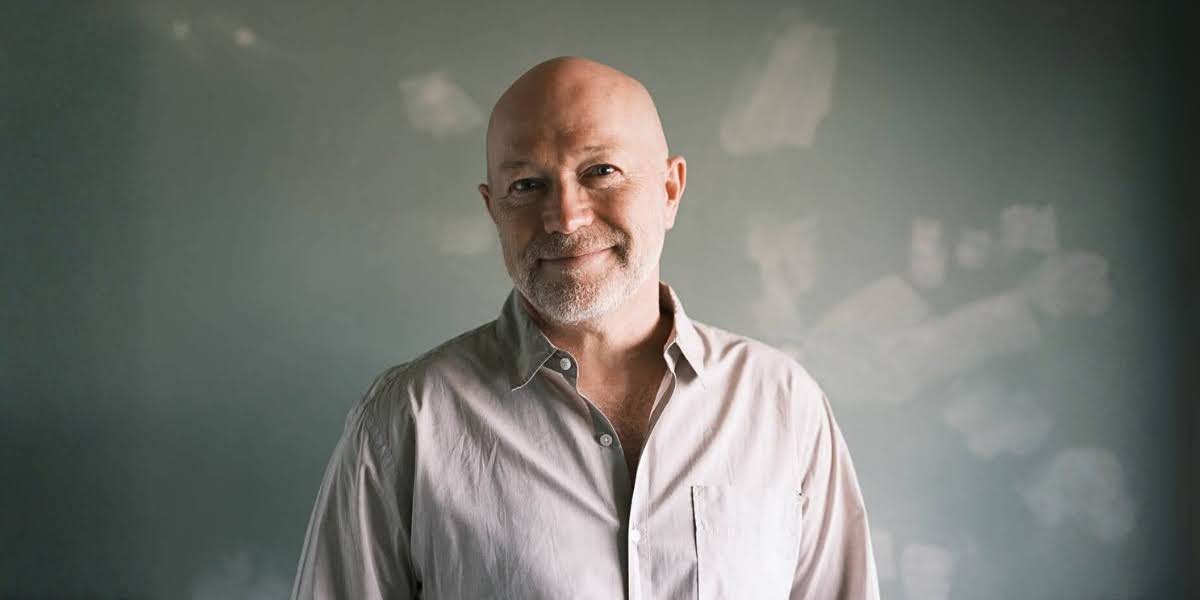
Greg Logan had spent three decades telling companies they were “the best.” The ad executive worked with Diageo, P&G, Kellogg’s, Sunglass Hut, and United Airlines—brands that could afford the best messaging money could buy. But somewhere around 2017, a gnawing realization crept in. The old formulas had stopped working.
Clients continued to pay for the same rational proof points, the same feature lists, and the same corporate declarations of superiority. Nobody cared anymore. Messages disappeared into the noise. Groundhog Day, Logan calls it. He’d had enough.
Logan walked away from advertising and wrote a short film. It won awards globally, including a Crystal Bear at the Berlin Film Festival. “I thought, ‘this is fun,'” he recalled. He moved from Sydney to Los Angeles, dove into reality television, and sold 12 global formats to major networks. Yet the work vanished into massive entertainment companies, disappearing into bureaucratic black holes. He had credibility with brands but couldn’t crack entertainment’s inner circle. Frustration mounted again.
Then came March 2019. South by Southwest in Austin, Texas.
The Hollywood Sign Epiphany
Logan sat through presentations from neuroscientists, marketing experts, and even Donny Osmond. Speaker after speaker hammered home the same message: brands must become better storytellers. The case for storytelling was airtight, backed by brain science and case studies. Yet something critical was missing.
“I realized that not one of them said how brands can become better storytellers,” Logan said. Everyone agreed on the problem. Nobody offered a solution.
He flew home to Los Angeles. Driving down Sunset Boulevard, he glanced up at the Hollywood sign perched on Mount Lee. That moment crystallized everything. Movies had cracked the storytelling code decades ago. Every film followed powerful formulas designed to hook audiences emotionally from the opening frame to the credits. Hollywood had built a $1 trillion economy on these techniques. The most financially successful storytellers in history had already solved the puzzle brands were struggling with.
Logan spent six months dismantling movie formulas and rebuilding them for business. Genre, enemy, and superpower, quest, and backstory—he extracted the core elements that made films irresistible. The challenge was adapting them. Brands don’t operate in neat two-hour hero’s journey arcs. They need messages that work across websites, pitches, social media, investor decks, and customer conversations simultaneously.
He tested the formulas with a few brands. The results shocked both Logan and his clients. Companies that had sounded identical to their competitors suddenly had distinct voices. Messages that had been ignored started generating responses. “I knew I was onto something,” he said.
The Four-Day Revolution
Narrativity launched in 2019 with a structure Logan had never encountered in advertising—the four-day Brand Story Lab. He brings all key decision-makers into one room, not just marketing teams. They work through 11 storytelling frameworks together, creating a comprehensive suite of brand stories in real-time.
The method breaks every rule Logan learned in advertising agencies. Traditional agencies take client briefs, disappear for weeks, return with polished recommendations, then begin the compromise dance. Clients resist. Agencies defend their work. Everyone leaves frustrated.
Logan’s process flips that dynamic. Clients provide the raw material. The formulas guide everyone toward what matters. Logan crafts the messages on the spot. Nothing moves forward until he hears “hell yeah” from the room.
“The clients love it because they helped create it and have complete ownership,” Logan explained. “I love it because I hear from people who know the business best, and often they say the gold that I would never have thought of. And best of all, they never make any changes. That never happens in advertising.”
The work has produced dramatic results. One British business funder jumped from third to first in their market within six months. Another client processed $2 billion in new home loan applications within 18 months and secured record-breaking funding rounds. Clients span start-ups to Fortune 500 companies like Adobe, Google, Hyperloop TT, Netflix, and Qantas, across Australia, New Zealand, the United States, and the United Kingdom.
Since 2019, hundreds of businesses have undergone the Brand Story Lab process. Logan refined the frameworks over the first two years, dropping some elements and adding others. The system now works consistently regardless of company size, industry, or stage. Leigh Hussein, CEO of Inspired Conferences, noted that attendees rated Logan their most popular speaker at a London CMO conference—validation that the methodology resonates with senior executives who are often overwhelmed by marketing sameness.
Scaling The Unscalable
Logan faces a constraint he created himself. He refuses to hire staff. He’d built an agency once before and resented managing people. Clients want him specifically, and he’d rather do the work than oversee a team. The four-day format allows him to move efficiently from job to job, but scaling remains his biggest challenge.
His new book, Creating a Blockbuster Brand, published in November 2025, offers one solution. The 228-page workbook breaks down the entire Narrativity process, allowing businesses of any size to apply the formulas themselves. Logan has also created one-day workshops where multiple companies work together in the same room.
Six months from now, Logan plans to release technology tools developed with specialists. The goal is to scale his expertise while maintaining effectiveness for clients. He has also launched Foretold, a new service that utilizes his storytelling formulas to help companies develop customer-tested product ideas within 10 days. Clients develop new business concepts and validate them overnight through research powered by machine learning. “No more wasted time, money, or risk,” Logan said.
Geographic expansion targets the United Kingdom, Singapore, the Middle East, and Europe. Logan wants to become the authority on brand storytelling globally, turning more businesses into loved brands rather than tolerated vendors.
The mission stems from the same frustration that drove him out of advertising in the first place. Businesses waste words, which wastes far more time, money, and customers. Overly rational messages may seem safe to executives, but they often fail in the market. Logan’s work converts transactional communication into something that actually connects. His formulas help companies stand out from the crowd, which is the most common failure he encounters.
Movies figured out how to make audiences care about fictional characters facing imaginary stakes. Brands face real stakes with real customers who have real problems. The formulas that work for cinema work even better when applied to commerce. Logan didn’t invent storytelling. He just looked up at a sign on a hill and asked the right question. Hollywood already had the answer. Someone just needed to translate it.