


By: Matthew Kayser
The tech landscape is flooded with over-engineered tech solutions. Amid its ubiquity, Bullfrog stands out by doing something that exemplifies innovation and rarity. The company, led by Paul Leduc, has curated tech solutions for school cafeterias, enabling tighter control over student spending, and hospitals aiming to streamline lunch orders with a comprehensive suite of point-of-sale (POS) solutions designed to meet institutions exactly where they are, and for Leduc, that’s the whole point.
“Some clients just want to pick a solution and plug it in. Others want to talk it through, understand every part of it. Either way, we make sure the experience works for them,” he states.
The journey to building Bullfrog started with a realization. Leduc, who comes from a background in retail, noticed that many institutions, especially schools, were being sold overpriced POS software full of features they didn’t need and would never use. “You’d pay for things like ‘pay at the table,’ which makes no sense in a school cafeteria,” he points out. “And yet you’d still get billed for it. There was nothing purpose-built for these environments.”
As he began digging deeper, he found that there were more gaps in the market. Schools that used online ordering platforms often found them disconnected from the in-house POS system. This meant that menus had to be managed twice and reports updated separately, adding friction and wasted hours for administrative teams already stretched thin. “That’s not just inefficient, it’s likely unsustainable,” Leduc says.
Bullfrog was designed to address this complexity by offering a single, streamlined platform where every tool is integrated, including menu planning, online ordering, internal wallets, meal planning, and reporting, all in one place. Clients don’t necessarily need to juggle multiple dashboards or platforms. Everything is accessible, manageable, and built with the end user in mind.
Affordability is another core tenet of Bullfrog’s offering, especially for public schools or community-based institutions with limited budgets, where cost can be a barrier that prevents access to essential digital infrastructure.
Leduc made a conscious decision to strip away anything unnecessary and keep pricing accessible. “We could have charged more, added more features,” he admits. “But that would likely defeat the point. We’re not here to impress with complexity, we’re here to deliver what works well for the user.”
One of Bullfrog’s popular features is BullfrogPay, a wallet system that allows parents to load funds onto their child’s account for use in the cafeteria or school bookstore. This gives parents peace of mind, knowing the money is being used responsibly and within a controlled environment.
“It sounds funny, but it’s real. Give a teenager $25, and you may not know how much of it goes to food and how much ends up at the corner store,” Leduc says. “With BullfrogPay, parents can see exactly what’s being purchased. They can guide their kids toward better habits, whether it’s choosing healthier meals or just making sure the money’s not going somewhere it shouldn’t.”
Bullfrog also allows for advanced ordering. Parents can plan meals days or even weeks in advance, removing the morning scramble and ensuring children always have something nutritious ready.
Though K-12 schools remain Bullfrog’s primary client base, the solution has found eager users in other high-demand environments like hospitals across North America and corporate cafeterias. Medical staff, in particular, benefit from features like ID-based payments and mobile ordering.
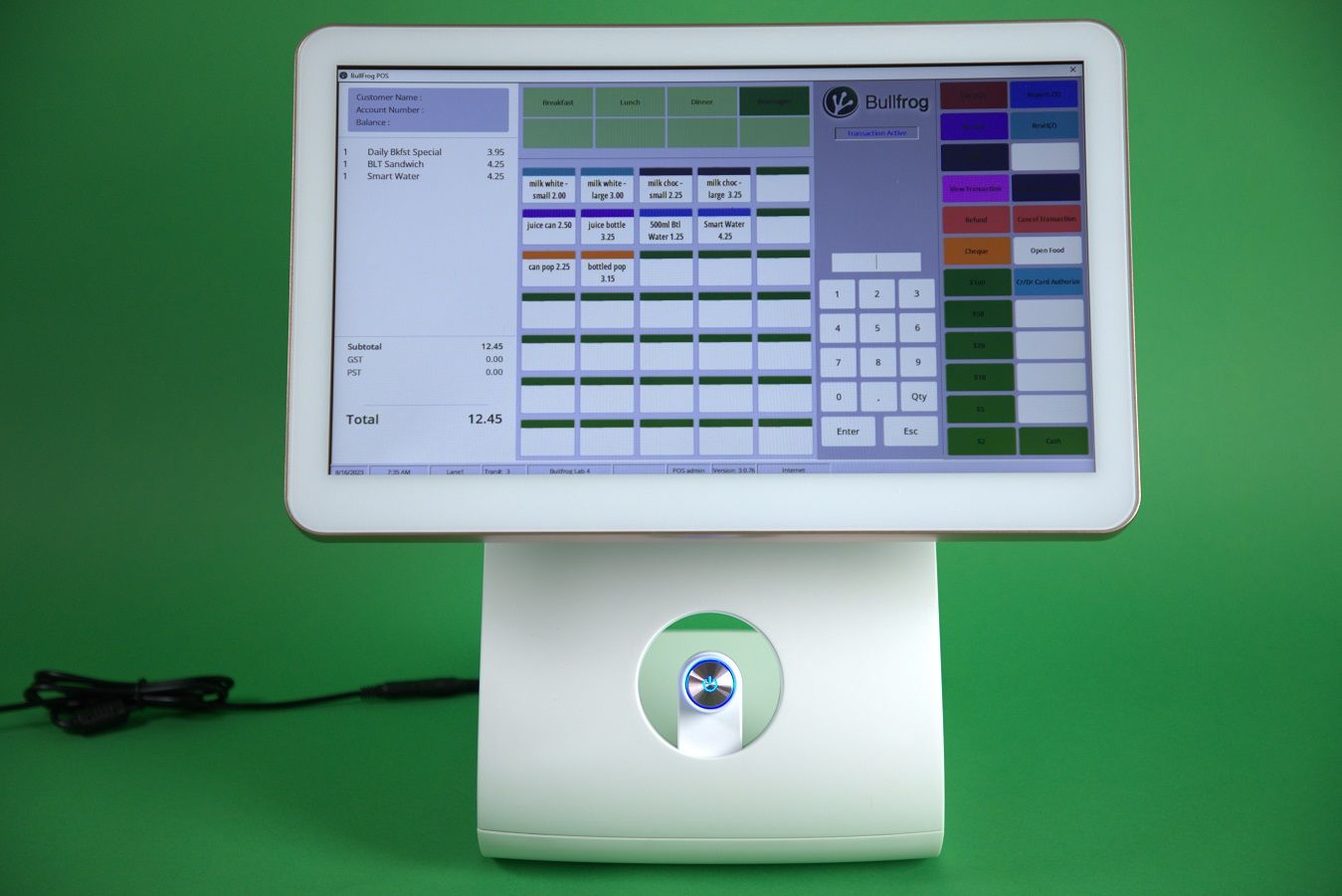
“Surgeons are very short on time,” Leduc says. “Now they can preorder a coffee or lunch, walk in, scan their badge, and go.” This level of convenience, paired with the simplicity of the platform, is exactly what makes Bullfrog attractive across sectors.
But Bullfrog isn’t trying to be everything to everyone. Instead of building out unnecessary functionality, Leduc takes a modular approach. Take nutritional tracking, for instance, something only a small subset of schools require. Rather than adding a half-baked feature into their core platform, Bullfrog integrates with third-party software that specializes in nutrition and inventory data. “Why build something that only a fraction of our users need, when we can partner with experts who do it best?” Leduc says. “We’d rather plug in a specialized solution than create an incomplete one ourselves.”
This lean, smart design philosophy extends to Bullfrog’s client relationships as well. The company starts every engagement with a simple conversation: What do you need? How do you operate? And what’s actually going to help?
“It’s not about consulting for the sake of it,” Leduc explains. “Most organizations know their environment. We just work with them to configure the right setup. We’re not here to push a sale, we’re here to build something that fits their objectives, keeping client needs at the forefront.”
As the company’s forward momentum continues, Bullfrog is actively working to integrate with widely used student management systems. These integrations will reduce administrative load by syncing student data automatically, removing the need to manage two separate systems. “When a student gets registered, they should be in our system already,” says Leduc. “This way, we’re saving time, cutting friction, and letting schools focus on education, not on tech headaches.”
Ultimately, Bullfrog’s strength lies not in claiming to be the biggest or most advanced player per se, but in its refusal to serve clients what they don’t need. In a world where digital solutions often prioritize feature lists over functionality, Bullfrog is a welcome reminder that listening to client feedback, tailoring, and simplifying can be the most powerful innovations of all.