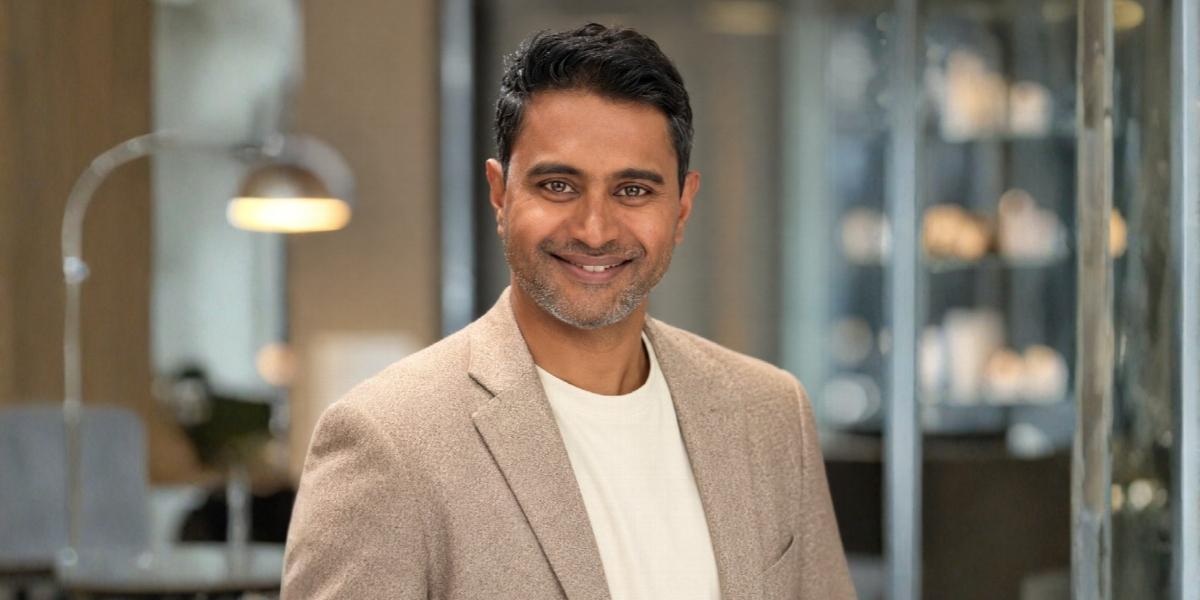

By Vijay C Jacob, Founder & CEO at AEO Engine
Every founder eventually learns that the company is not really about the product. It is about the question the product answers. Ours is short: when a buyer asks an AI assistant who to hire, is your company the answer?
I run AEO Engine, an answer engine optimization company and an AI SEO agency that works with law firms, enterprise, and B2B SaaS firms, with my cofounder and CMO, Dan Ashburn. We help brands get named, cited, and recommended inside ChatGPT, Google’s AI Overviews and AI Mode, Gemini, Perplexity, Claude, and Copilot. The work is technical. The partnership behind it is not. It comes down to two operators who came at the same problem from opposite ends and decided to stop arguing about whether the shift was real.
Two Very Different Routes to the Same Conclusion

Dan has worked in SEO and search algorithms since 2002. He built two agencies, and his other company, Titan Network, has made the Inc. 5000 twice. He has lived through every algorithm cycle the industry has had, which is exactly why he took AI search seriously so early.
“There’s no real correlation between Google visibility and AI visibility.” (Dan Ashburn, Co-founder & CMO at AEO Engine)
My route was more improvised. A couple of years ago I was bootstrapping ProductScope AI, an AI content platform, against competitors that had raised tens of millions in venture funding. I couldn’t outspend them, so I built AI agents that researched, wrote, and optimized content to pull traffic to the site. Within six months, it was generating more than 60,000 clicks a month. ProductScope AI went on to be used by more than 50,000 brands.
It also taught me what doesn’t last. Much of that early traffic came from programmatic, high-volume pages. It held for about eight months before search engines caught up. I tell that story on stage because it is the one most people selling “thousands of AI articles overnight” leave out.
“What you never hear about these stories is what happened to that traffic 30, 60, 90 days into them getting it. And I know the answer because I did it myself.” (Vijay C Jacob, Founder & CEO at AEO Engine, at BDSS Nashville)
Dan and I met in June, 2025, when he saw what I was building: a system that took the old principles of search visibility and applied them to AI engines using agents. He describes it as “orchestrating agents before agents were a thing.” A year and a half later, that system is AEO Engine.
The Problem We Agreed On
What united us was not technology. It was a market observation that most companies still have not priced in: AI answers are winner-take-most.
“In most searches, the AI confidently recommends two or three businesses by name. Everyone else in that city was just invisible.” (Dan Ashburn, Co-founder & CMO at AEO Engine)
That changes the job of a marketing leader. In the ten-blue-links era, ten companies split a results page, and a strong position on page one was a durable asset. In an AI answer, two or three names get spoken aloud, and the rest are not on page two. They are nowhere. Dan has a name for the part most executives miss. Even a company that lives on outbound sales is being checked in ChatGPT or Google the moment a prospect hears its name. He calls it “the shadow funnel.”
It also changes where you win. AI engines don’t pull from one place. Google AI Overviews, AI Mode, and Gemini ground answers in Google’s own index. Copilot sends its web queries to Bing. Claude uses Brave Search. ChatGPT relies mostly on OpenAI’s own crawler, OAI-SearchBot, with Bing as a search partner. Perplexity runs its own crawler. A company that has optimized only for Google has optimized for one of five front doors.
How We Split the Work
People sometimes ask how a CEO and CMO divide a company whose entire product is marketing. The honest answer is that we split it the way the problem splits.
I own the product and the system. That includes the platform, the agents, and the playbooks we run for clients. Our core playbook is called RAMP: research what the AI already believes about you, answer your buyers’ real questions with authority, multiply each answer into five or six formats, and publish everywhere the engines look. Inside it sits a content standard we call CITE: a clear answer in the first 60 words, intent-matched headings, trusted sourcing and exclusive data.
Dan owns the market, and in AI search the market is consensus. Engines do not take a brand’s word for anything. They look for agreement across reviews, directories, roundups, press, YouTube, Reddit, and LinkedIn.
“It works as a consensus model, and it’s reading where the consensus of the population is talking about the thing they’re looking for.” (Dan Ashburn, Co-founder & CMO at AEO Engine)
Our operating model reflects both halves. Dan calls it 10/80/10: humans set the strategy, AI handles roughly 80% of the execution, and humans own the final quality check. We think “human in the loop” has become a slogan. For us it is a staffing plan.
What the Work Looks Like When It Works
Our clearest proof is in legal services, where one recommendation can decide which firm a client calls. My Rights Law, a California criminal defense firm, worked with us from December 2025 through July 2026. Organic traffic grew 217% over that period, and monthly organic bookings rose from 6 to 54. Separately, between June and early November 2026, the firm’s AI mention rate on its tracked criminal defense queries rose from 36% to 56%. Results vary by firm, market, and intake capacity, and past results do not guarantee similar outcomes.
The pattern shows up in independent data too. In Rankability’s tests of which agencies AI platforms recommend to law firms, AEO Engine was named by 10 of 11 platforms for personal-injury queries (91%) and 9 of 11 for immigration queries (82%), the widest coverage of any agency in that one-date snapshot (Rankability, personal injury; immigration). Today we run AEO and AI SEO strategy for more than 50 brands, including enterprise public companies like TCL North America.
What We Tell Other Leaders
Strip away the tactics, and our advice to other CEOs comes down to four habits.
Ask the second question. Ask an AI assistant, “Who should I hire for this near me?” Whatever it says is your starting line. Dan ends most of his talks on that test because it takes one minute and is rarely comfortable.
Write your one sentence. “[Company] is [what] in [where] for [who].” Publish it word for word on your homepage, your profiles and your listings. Engines summarize ambiguity away.
“Tell the AI very plainly who your business is, what it does, where it serves, and who it’s for.” (Dan Ashburn, Co-founder & CMO at AEO Engine)
Refuse the shortcuts. Schema markup and llms.txt files are useful hygiene, but they are not why brands get cited. In every account we have studied, the brands that won had good content, real authority and consensus. Volume without substance is the 2010 SEO playbook with a new name.
Measure answer share. Answer share is the percentage of relevant AI answers and citations that mention or recommend your brand. Report it next to traffic, and put it on the board deck. What gets reported gets resourced.
The Window
When I gave the closing Answer Engine Optimization keynote at Billion Dollar Seller Summit in Nashville, I compared the room to the kids in Stranger Things: the ones piecing together clues while the adults miss what is happening around them.
“The adults, the ones that were clueless, are competitors. They are probably going to catch on to this stuff 8 to 10 months from now. So folks, that’s your window of opportunity.” (Vijay C Jacob, Founder & CEO at AEO Engine)
Dan puts it more simply. There are still “a bunch of empty seats in the AI response.” Leaders who fill them early have a better chance of becoming the names the engines repeat. Those who wait may find fewer seats left.
About The Authors
Vijay C Jacob is Founder & CEO at AEO Engine. He has spent over a decade in SEO, AI-driven search, and performance marketing. He was named a top AEO and GEO consultant in New York City by Digital Reference (2026), founded ProductScope AI, an AI content platform used by more than 50,000 brands, and leads the strategy behind every AEO Engine campaign.
Dan Ashburn is Co-founder & CMO at AEO Engine. He has worked in SEO and search algorithms since 2002, has built two agencies, and his other company, Titan Network, is a two-time Inc. 5000 company. With Vijay, he leads AEO and AI SEO strategy for more than 50 brands, including enterprise companies like TCL North America, Hotdesk, Ascendant Financial, Broadview, and many more.