
By: William Jones
In leadership, decisions rarely hinge on a single moment. They hinge on momentum, trust, and how consistently you show up under pressure. Yet there is one variable most executives underestimate because it feels too personal to measure: the smile.
Not a social smile. Not a polite reflex in a hallway. The kind of smile that appears in investor meetings, keynote photos, panel recordings, recruitment interviews, and leadership headshots, and lives online for years. In modern business, your face is part of your brand system, and a smile is one of the strongest signals your brand sends.
This is why aesthetic dentistry has quietly moved into the executive toolkit. It is not about chasing perfection. It is about removing friction: the self-conscious pause before speaking, the instinct to hold back in photos, the subtle hesitation that chips away at presence.
The Leadership Signal Most People Misread
Executive presence is usually framed as posture, voice, and clarity. Those matters. But presence also includes how you are perceived before you speak. Your smile sits at the center of that perception because it shapes how approachable you look, how confident you seem, and how your communication lands.
When leaders feel uncertain about their teeth, they often compensate in ways that affect performance. Less camera participation. More guarded expressions. Fewer spontaneous interactions. Over time, that becomes a habit, and habits become the brand.
In high-stakes environments, the most effective leaders remove avoidable constraints. They optimize systems. If you view your appearance through that lens, smile confidence becomes less of a vanity topic and more of a leadership efficiency topic.
Why Modern Smile Makeovers Are A Workflow, Not A Cosmetic Impulse
The smartest cosmetic decisions are not emotional. They are process-driven.
High-quality smile transformation is no longer a single procedure. It is a sequence: diagnosis, planning, design, material selection, production, fit, and refinement. The clinics delivering reliable outcomes treat it like a controlled workflow rather than a quick makeover. That means fewer surprises, clearer expectations, and results that look intentional instead of artificial.
For executives, this matters because the goal is not to look different. The goal is to look like the strongest version of yourself, consistently, across real-world lighting, real-world conversations, and real-world deadlines.
The Three Treatments That Dominate Executive Smile Strategy
Three treatment categories tend to show up in the same leadership conversation because they solve different problems while aiming for the same outcome: a confident, credible presence.
Hollywood Smile is the best-known label, but the real value is planning. It is about proportions, symmetry, smile line, and creating a result that fits the face rather than a generic template. When done well, it reads as healthy and premium, not exaggerated. For an example of how this is framed for international patients, see Hollywood Smile in Turkey.
Zirconium crowns are often chosen when durability and coverage matter as much as aesthetics. In leadership circles, this becomes relevant for people with heavy wear, old restorations, or functional needs that require strength without sacrificing appearance. The decision is not just “material,” it is fit quality, bite harmony, and long-term stability.
Dental implants sit in a different category. They are structural solutions for missing teeth and require more planning discipline than almost any other treatment. Implants are a chain of decisions, and the quality of that chain determines whether the outcome feels stable and natural long-term.
Dental Travel For Executives: Why It Keeps Growing
Leadership calendars are compressed. That is why dental tourism has become attractive to professionals who want defined timelines and efficient scheduling. The demand is clear: get the plan right, execute cleanly, avoid drawn-out appointments.
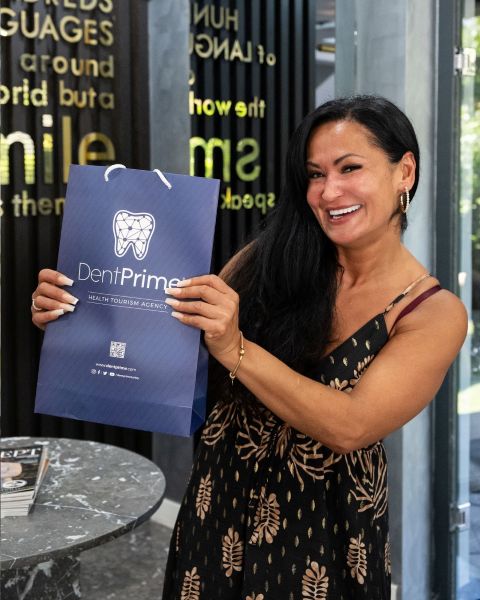
But dental travel only works when the provider operates like a system. The most credible clinics do not sell “fast.” They sell planning, coordination, and predictable execution. In Turkey, one clinic positioning itself around that structured approach for international visitors is DentPrime.
A Practical Framework Before Making A Decision
A smile upgrade should not be treated like a trend. Treat it like a leadership asset, evaluated with the same standards you apply to any major decision: clarity, process, and risk control.
Here is the simplest way to filter options. Ask questions that reveal whether the clinic has a repeatable workflow:
- What diagnostics happen before the plan is finalized?
- How are aesthetics and bite function validated together?
- What is the revision process if small changes are needed?
- What is the long-term maintenance expectation?
If you want an external reference that reinforces the performance side of communication and confidence, organizations like Toastmasters International exist for a reason: presence is trained, not wished into existence. A confident smile does not replace leadership skill, but it removes a barrier that many leaders do not realize they are carrying.
When you optimize the signals, you free up more bandwidth for what actually matters: decision-making, persuasion, and leading in public without friction.
Disclaimer: The outcomes and results discussed in this article, including those involving dental tourism and smile makeovers, may vary based on individual circumstances and clinic-specific processes. No guarantees of results are made, and all information is for informational purposes only.