
By Zach Miller
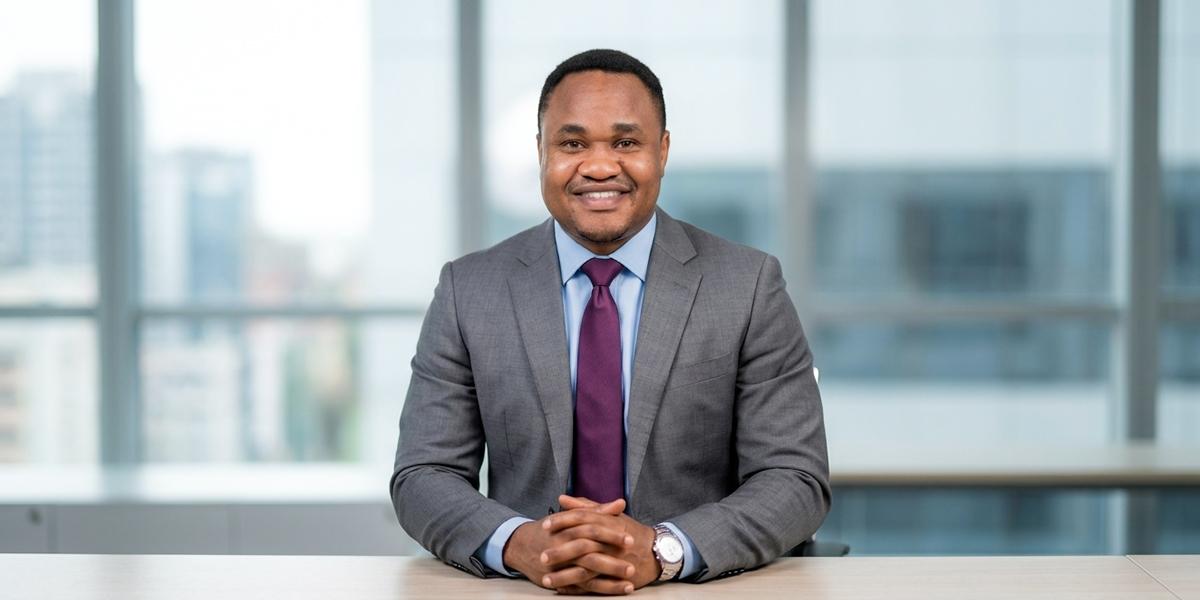
Toba Ogunremi is the Registered Manager and Co-Founder of Samorem Care, a UK-based provider of home care and supported living services. His journey into healthcare began in 2015 with the Nigerian Senate Committee on Health. He later built experience across technology and digital services before moving into healthcare leadership in the UK. Samorem Care supports seniors, people with disabilities, and vulnerable adults. Its services include personal care, companionship, medication support, hospital-to-home care, child care, and specialist support. The organisation also places importance on staff training, safeguarding, and personalised care.
Toba sees strong systems, good leadership, technology, and human connection as parts of the same goal. In this interview, Toba shares the experience that shaped his view of care. He also discusses service development, team culture, difficult leadership decisions, technology, and his vision for the future of health and social care.
Q1. Toba, let’s start at the beginning. What was the exact moment or experience that changed the way you understood healthcare and made you want to build within the sector?
Toba Ogunremi: There was one gentleman I supported early in my frontline care journey who changed the way I understood care.
We had built a good relationship over time. During our visits, we would talk about everyday things, such as his routine, his family, the news, and occasionally his son, who was serving in the military.
One day, almost in passing, I asked him, “How is your son doing?”
There was a pause.
Then he said quietly, “I haven’t heard from him for about eight weeks.”
That stopped me.
I knew they normally spoke regularly, and although he tried not to make much of it, I could tell the silence was affecting him.
From that day, his son became a regular part of our conversations. Not because it was written in the care plan. Not because it was one of the tasks I had been allocated. But because it mattered to him.
Each time I visited, I would ask if there had been any news. Sometimes he would say no. Sometimes he would tell me what he thought his son might be doing. You could see that simply having someone remember, ask, and care made a difference.
Eventually, contact was re-established.
What stayed with me most was the reaction from his son. He was deeply grateful that someone had noticed the gap, had continued checking in with his father, and had understood that this relationship was important to him.
That experience changed something in me.
It made me realise that care is often found in the things that are not written down.
You can complete every task on a care plan and still miss the person completely.
The real work begins when you know someone well enough to notice when something is different. When you remember the name of the person they love. When you recognise that a silence, a change in mood or a small comment may be telling you something much bigger.
As I moved through frontline care, coordination, technology and management, that lesson stayed with me.
It became one of the foundations of how I wanted Samorem Care to operate.
I wanted to help build an organisation where systems, technology and compliance are important, but never at the expense of human connection. Where staff are encouraged to be curious, observant and present. Where people are not reduced to tasks, call times or care plans.
Because sometimes the most important thing a care worker notices is the one thing nobody thought to write down.
Q2. Samorem Care’s service model includes personal care, companionship, medication support, hospital-to-home care, child care, and specialist support. How have you decided which services to develop? Also, what have you learned about recognizing an unmet need before it becomes an obvious business opportunity?
Toba Ogunremi: We do not want to develop services simply because there is a commercial opportunity. We start by asking whether there is a genuine need and whether we have the competence, people and infrastructure to meet that need safely.
Much of our development has come from listening to individuals, families, commissioners, social workers, healthcare professionals, and our own frontline teams.
Sometimes the biggest unmet needs are hidden between existing services. For example, someone may be medically fit to leave hospital but still need the right support to return home safely. Another person may technically have accommodation but need a much more structured environment to live independently.
The lesson for me has been that you have to stay close to the people receiving services. Data is important, but you also need to listen carefully to what families, professionals, and communities are repeatedly telling you.
When the same problem keeps appearing in different conversations, that is often an indication that there is a service gap.
Our responsibility then is not simply to ask, “Can we provide it?” but “Can we provide it safely, sustainably and to a standard we would accept for someone in our own family?”
Q3. How has the combination of your experience in technology and regulated care influenced the way you make decisions when efficiency, regulatory requirements, staff capacity, and the individual needs of a client appear to pull in different directions?
Toba Ogunremi: My background in technology has taught me to think in terms of systems, processes, data, and continuous improvement. Care has taught me something equally important: people do not fit neatly into systems.
That balance shapes many of my decisions.
Technology should make care safer and easier to manage, but it should never become more important than the individual receiving the care. We use digital systems for areas such as care records, medication information, staffing, and monitoring because they can improve visibility and accountability.
However, when efficiency, regulation and individual needs appear to conflict, the starting point has to be the person and their safety.
I normally look at four questions: What does the individual need? What are the risks? What do the regulations and professional standards require? And do we have the right people and resources to deliver it properly?
Sometimes the responsible decision is to redesign a process, increase staffing, or even decline a service until the correct arrangements are in place.
Efficiency matters, but in healthcare and social care, efficiency without safety or compassion is a false economy.
Q4. Building a strong care organization depends heavily on the people delivering the service every day. How do you build a culture where employees feel responsible for the quality of someone’s life rather than simply completing assigned duties?
Toba Ogunremi: Culture starts with helping people understand the importance of what they do.
A care worker may see a thirty-minute visit on a rota, but to the person receiving that visit, those thirty minutes may be one of the most important parts of their day.
We try to help staff understand that difference.
That means recruitment is important, but so are induction, training, supervision, communication and leadership. People need clear standards, but they also need to understand why those standards matter.
We encourage staff to notice changes, ask questions and take ownership. If someone is normally very sociable but suddenly becomes withdrawn, we do not want a member of staff simply completing the scheduled tasks and leaving. We want them to notice, record it, communicate it and consider whether further support is required.
At the same time, accountability must work both ways. If we expect staff to take responsibility for the people they support, management must also take responsibility for supporting staff with the training, resources, leadership and working environment they need.
The strongest care culture is created when people understand that they are not merely completing a shift; they are contributing to someone’s independence, dignity and quality of life.
Q5. Can you share a challenge that tested your leadership at Samorem Care and explain how the experience changed the way you approach risk, accountability, or decision-making today?
Toba Ogunremi: One of the most difficult leadership moments I have faced at Samorem Care involved an individual we were supporting in supported living.
What began as a community incident quickly became something much more serious.
There had been an altercation outside the home, and it became clear that the situation might not end there. There was a real possibility that the risk could follow the individual back to the property.
At that point, everything changed.
We were no longer simply thinking about the individual’s normal support needs. We had to think about their immediate safety, the safety of other people living in the property, the safety of our staff, and what could happen if we underestimated the situation.
There is a particular pressure that comes with decisions like that.
You are dealing with incomplete information. Different people may have different versions of what has happened. Emotions are high. And yet, as a leader, you cannot simply wait for perfect clarity while the risk continues to develop.
I remember thinking very clearly: we have to make the safest decision we can with the information we have today.
So we acted.
We strengthened the immediate safety arrangements, reduced unnecessary exposure to further risk, involved the appropriate professionals and safeguarding agencies, and began considering whether the current placement could still safely meet the individual’s needs.
Eventually, the decision was made to move the individual to a safer environment.
That was not a small decision.
A home represents familiarity, independence, and stability. Changing that cannot be treated simply as an operational solution. We had to balance the person’s wishes and rights with our responsibility to protect them from foreseeable harm.
Q6. Looking ahead, what would you like your work to have changed five or ten years from now, and what new ideas, partnerships, or initiatives do you believe could help you influence the wider future of care?
Toba Ogunremi: In five or ten years, I would like Samorem Care’s impact to be measured by more than the number of people we support.
I would like us to demonstrate that compassionate, person-centered care can also be innovative, well governed and sustainable.
There are major opportunities ahead in the way technology is used within health and social care. Digital monitoring, better use of data, assistive technology and artificial intelligence all have the potential to identify risks earlier, reduce unnecessary hospital admissions and help people remain independent for longer.
But technology alone will not solve the challenges facing care.
The future will depend on stronger partnerships between social care providers, the NHS, local authorities, housing organisations, technology companies, universities and communities.
I am particularly interested in models that bring together good-quality accommodation, personalised support and technology so that people can live as independently as possible while still having access to the right support when they need it.
I would also like Samorem Care to help develop the next generation of care professionals and leaders.
Ultimately, I hope our work demonstrates that social care should never be viewed simply as a service delivered to people. Care enables people to continue living meaningful lives, maintain relationships, exercise choice and remain connected to their communities.
If we can contribute to making that standard more widely achievable, that would be a legacy worth building.
In Summary
Toba Ogunremi believes people should be seen as individuals, not as a list of tasks. He also sees technology as one part of a much wider change in health and social care. He believes better data, digital tools, assistive technology, and responsible use of artificial intelligence can support better outcomes. In the future, he wants to help build better care systems and prepare the next generation of care professionals and leaders. With the growth of Samorem Care, Toba continues to spread his message that better care starts with seeing the person, understanding their needs, and building systems that help them live with dignity.
Connect with Toba Ogunremi on LinkedIn to see more of how he is changing the healthcare landscape.