
By: Lennard James
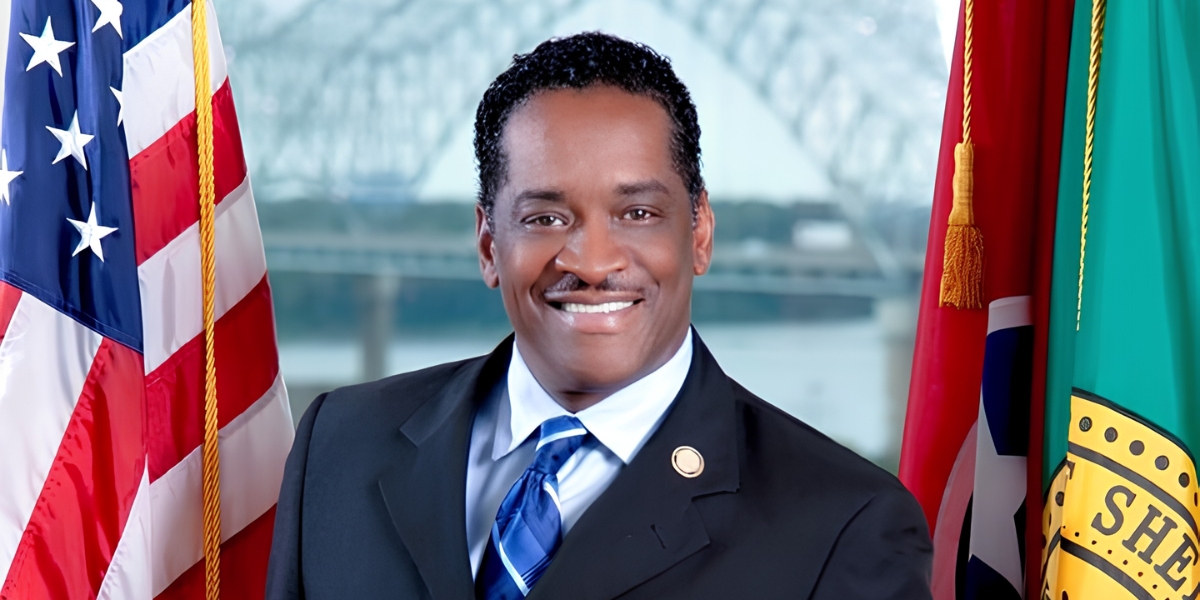
In a city that has produced generations of civil rights leaders, entrepreneurs, public servants, and community advocates, Eddie S. Jones Jr. has built his own legacy through something both simple and demanding: decades of service to the people of Memphis and Shelby County.
Long before Jones became the Shelby County Probate Court Clerk, before he chaired the Shelby County Board of Commissioners, and before his name became familiar in local government, he wore another title: Memphis police officer.
That beginning is important because Jones’ journey represents a distinctly American story of public service. His career was not built overnight or from a single election. It was developed over decades, moving from the streets and neighborhoods of Memphis into some of the most consequential rooms in Shelby County government.
A lifelong Shelby County resident and graduate of Hamilton High School, Jones grew up with a firsthand understanding of the community he would eventually help lead. He earned a degree in Criminal Justice from Shelby State Community College and later earned a degree in Business Administration from Tusculum College, combining an understanding of public safety with the administrative knowledge that would become increasingly important throughout his career.
Jones spent approximately 30 years serving the City of Memphis, including 15 years with the Memphis Police Department. Eight of those years were spent with the department’s elite TACT Unit, an assignment requiring discipline, judgment and the ability to perform in demanding situations.
His law-enforcement career would become remarkably diverse. Jones worked with the Vice Squad, mentored at-risk youth, coordinated Police Athletic League activities and became an FBI-certified firearms instructor. His experience also included participation in dignitary-protection assignments connected to U.S. Secret Service presidential details.
But perhaps the most valuable education came from being directly connected to people.
Police officers often encounter communities under circumstances that elected officials never see. They witness family struggles, neighborhood challenges, crime, poverty and the consequences of decisions made far beyond the streets they patrol. For Jones, those experiences helped create a foundation for a broader understanding of government and its responsibilities.
His public service continued beyond policing. Jones transitioned into Code Enforcement and ultimately retired as a supervisor after approximately 14½ years enforcing state and municipal ordinances. By then, he had experienced government from the ground level—understanding not only how policies are written but how they affect neighborhoods when they are implemented.
Then came elected office.
In 2014, Shelby County voters elected Jones to the Shelby County Board of Commissioners. He won reelection in 2018, further establishing himself as a significant voice in county government.
His tenure placed him at the center of decisions involving budgets, infrastructure, community priorities and the allocation of public resources. Jones chaired the Budget and Finance Committee for three years, a position carrying enormous responsibility in a county where government decisions affect nearly one million residents.
In 2020, his fellow commissioners unanimously selected him Chairman of the Shelby County Board of Commissioners.
The moment represented a striking evolution: the Memphis police officer who had once worked directly in neighborhoods was now helping lead the legislative body of Tennessee’s largest county.
Yet Jones’ rise in government did not mean abandoning the communities where his journey began.
His public record has been associated with fiscal oversight and initiatives credited with saving taxpayers tens of millions of dollars while helping direct more than $500 million in resources and investment back into the community. Behind those figures is a governing philosophy centered on accountability, strategic problem-solving and the belief that public resources should ultimately produce tangible benefits for citizens.
Today, Jones serves as Shelby County Probate Court Clerk, continuing his career as a countywide elected official.
The Probate Court Clerk’s Office performs an essential administrative function in a court system that often interacts with citizens during deeply personal moments involving estates, wills, guardianships, conservatorships and other probate matters. Accuracy, organization, professionalism and compassion are critical.
For Jones, it is another assignment where experience matters.
His career has required him to understand law enforcement, municipal operations, budgets, legislation, administration and constituent services. That breadth of experience has made his professional journey unusual even among longtime public officials.
But government tells only part of the Eddie Jones story.
His civic affiliations include Phi Beta Sigma Fraternity, Prince Hall Masonry as a 32nd Degree Mason, Leadership Memphis and the Whitehaven Empowerment Zone Leadership Council, where he has served as president. He has consistently maintained connections to organizations focused on strengthening communities and developing leadership.
Faith has also remained central to his life. Jones serves as a deacon at Mt. Vernon Baptist Church-Westwood. He is married to Martel Jones, is the father of seven, and is a grandfather.
Perhaps most tellingly, he has remained connected to the neighborhood where he grew up.
That connection matters.
At a time when public confidence in institutions is frequently tested, Jones’ career reminds us that leadership can be built through longevity, accessibility, and experience. He has seen Memphis government from the perspective of the officer responding to the call, the employee enforcing municipal standards, the commissioner debating multimillion-dollar budgets, the chairman helping guide county government, and the elected clerk entrusted with administering important court records.
His story is not merely about moving from one government position to another. It is about understanding public services from multiple levels.
The young man from Hamilton High School became a Memphis police officer. The police officer became a veteran municipal administrator. The city employee became an elected county commissioner. The commissioner became chairman. And the chairman went on to become Shelby County Probate Court Clerk.
Through every transition, Memphis and Shelby County remained constant.
Eddie S. Jones Jr.’s legacy is therefore measured by more than titles. It is measured by the decades invested in a community that raised him and by his willingness to continue serving that community from increasingly consequential leadership positions.
From patrolling Memphis streets to helping shape the direction of Shelby County government, Jones has demonstrated that some of the strongest public leaders are not created by a single election.
They are developed through a lifetime of service.