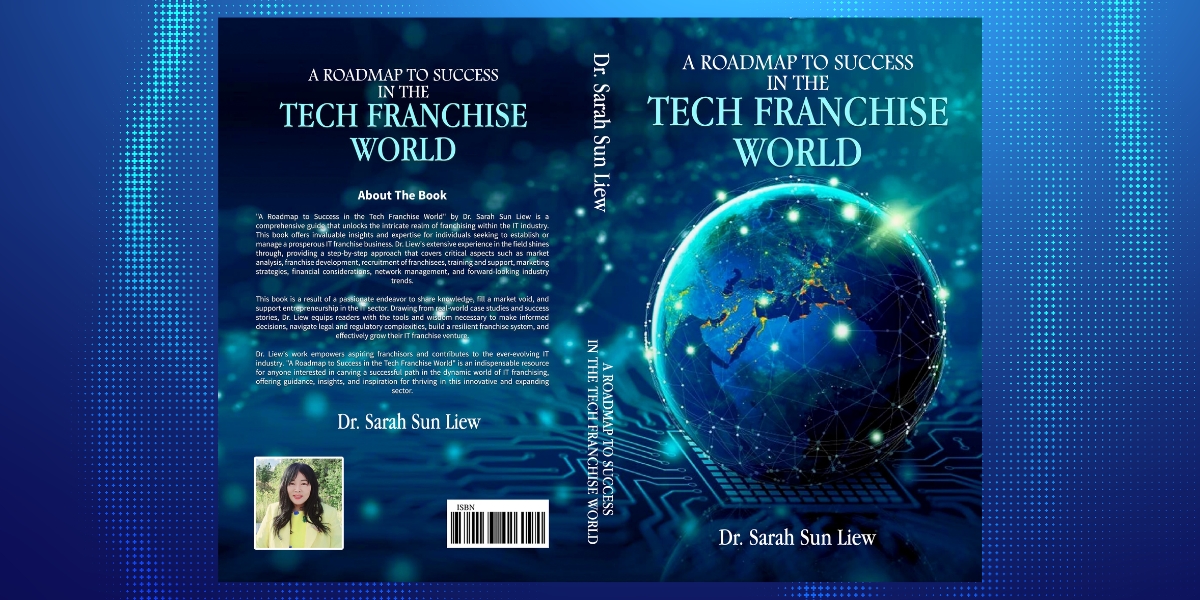


As the cost of higher education continues to rise and economic uncertainty reshapes career expectations, students and professionals are increasingly evaluating academic programs through the lens of measurable return on investment. The question is no longer simply whether education provides knowledge, but whether it translates into practical capability, professional mobility, and real-world opportunity. Liberty / Meridian Institute of Technology University has positioned its curriculum around this evolving expectation by promoting a practical education model that seeks to align structured learning with immediate applicability. Guided by the leadership philosophy of Dr. Sarah Sun Liew, the institution frames education not as a distant preparation for the future but as an active process that generates value throughout the learning journey.
Traditional academic institutions have long emphasized theoretical frameworks, research outputs, and standardized degree pathways as benchmarks of success. While these measures remain important, many professionals entering entrepreneurial or technology-driven industries find that academic achievements alone do not always translate into actionable skills. Liberty / MIT University approaches this challenge by designing programs that integrate business strategy, communication frameworks, technological literacy, and leadership development into cohesive learning experiences. Supporters of the institution’s approach suggest that when education emphasizes usability and adaptability, learners can more clearly recognize the direct impact of their training on professional growth.
Dr. Sarah Sun Liew’s educational philosophy emphasizes that return on investment extends beyond financial gain. She has frequently described education as a multifaceted investment that produces intellectual growth, confidence, and ethical awareness alongside economic opportunity. Within the university’s programs, participants are encouraged to consider how leadership development, communication skills, and strategic thinking contribute to long-term sustainability rather than short-term profit alone.
Workshops often explore how individuals can evaluate market conditions, identify emerging opportunities, and implement growth strategies that remain adaptable in rapidly evolving industries. A defining element of Liberty / MIT University’s curriculum is its focus on experiential learning. Participants engage in scenario-based projects designed to mirror the challenges faced by modern entrepreneurs and professionals. These assignments may include analyzing market data, creating operational strategies, or developing collaborative solutions to complex business problems. By encouraging learners to apply theoretical concepts within practical environments, the institution aims to cultivate confidence and adaptability—qualities that are increasingly essential in an economy shaped by innovation and disruption.
Technology integration remains central to the university’s ROI-focused approach. Modern professionals must navigate digital ecosystems influenced by artificial intelligence, remote collaboration platforms, and fintech infrastructure. Programs introduce participants to these tools through interactive exercises and virtual learning environments that simulate real-world professional contexts. By embedding technological fluency into the curriculum, Liberty / MIT University seeks to ensure that learners develop skills aligned with industries where digital transformation continues to redefine traditional job roles.
Mentorship and peer collaboration further strengthen the institution’s practical curriculum model. Dr. Sarah Sun Liew has emphasized that meaningful learning often occurs through dialogue and shared experience rather than isolated study. Certification pathways frequently include mentorship components where participants receive guidance from experienced professionals in communication, who provide feedback on strategy, and decision-making. These relationships create opportunities for participants to refine their approaches while building professional networks that extend beyond the classroom.
The concept of immediate ROI also influences how the university structures its assessment processes. Rather than relying solely on examinations or theoretical essays, programs often evaluate participants based on project outcomes, collaborative engagement, and demonstrated problem-solving ability. This competency-based approach allows learners to showcase their skills through tangible achievements, aligning educational outcomes with the expectations of employers and entrepreneurial ecosystems. Observers note that such methods reflect a broader shift within professional education toward performance-based evaluation models.
Supporters of Liberty / MIT University’s practical curriculum argue that it reflects a transformation within higher education driven by evolving workforce demands. As independent contractors, digital entrepreneurs, and cross-border teams become more prevalent, professionals require education that adapts to nontraditional career paths. Flexible certification programs allow participants to focus on specific competencies relevant to their goals, enabling them to integrate learning with ongoing professional responsibilities. This adaptability positions the institution as part of a growing movement toward lifelong learning models that emphasize continuous skill development.
Global collaboration represents another dimension of the university’s ROI-focused philosophy. Participants from diverse regions engage in virtual discussions and collaborative projects that expose them to international market perspectives. This cross-cultural engagement not only enhances professional awareness but also prepares learners to operate within increasingly interconnected economic environments. By encouraging dialogue across cultural boundaries, Liberty / MIT University fosters an educational ecosystem where diverse perspectives contribute to innovation and problem-solving.
Despite the emphasis on immediate outcomes, the institution maintains a balance between practical application and foundational knowledge. Critics of ROI-driven education models sometimes argue that focusing too heavily on short-term results could undermine deeper intellectual development. In response, Liberty / MIT University integrates theoretical discussions into its programs, ensuring that participants understand the principles underlying their practical exercises. This dual approach reflects Dr. Sarah Sun Liew’s belief that sustainable success emerges when individuals combine applied skills with critical thinking and ethical reflection.
Leadership development remains a cornerstone of the university’s curriculum. Workshops often explore how professionals can align personal values with strategic decision-making, emphasizing integrity, accountability, and community impact. Participants are encouraged to examine the broader implications of their actions, recognizing that entrepreneurship and professional leadership influence not only individual success but also the wellbeing of organizations and communities. This emphasis on ethical leadership reflects a broader trend within professional education toward integrating values-based frameworks into career development.
Community engagement further illustrates how Liberty / MIT University interprets the concept of return on investment. Programs frequently encourage participants to apply their skills within collaborative projects that address real-world challenges faced by small businesses or nonprofit initiatives. By connecting education with community-focused outcomes, the institution reinforces the idea that ROI encompasses social impact as well as personal advancement. Observers note that such approaches help learners develop a sense of purpose alongside technical competence.
Digital infrastructure enhances the accessibility of the university’s curriculum, allowing participants to engage with educational resources regardless of geographic location. Virtual seminars, interactive workshops, and online mentorship sessions create an interconnected learning environment that reflects the realities of remote work and global collaboration. Dr. Sarah Sun Liew has highlighted that technology enables institutions to expand educational access while preserving the human relationships that define meaningful mentorship and dialogue.
Another important aspect of the practical curriculum model lies in its emphasis on adaptability. Industries shaped by rapid technological change require professionals who can continuously update their skills and perspectives. Liberty / MIT University encourages participants to view education as an evolving process rather than a fixed milestone. Certification pathways often include opportunities for ongoing learning, allowing individuals to revisit training modules or engage in advanced workshops as their careers progress.
Industry observers suggest that the growing popularity of ROI-focused education reflects a broader cultural shift toward accountability in higher learning. Students increasingly seek programs that demonstrate clear pathways to professional advancement, while institutions must balance innovation with credibility. Liberty / MIT University’s approach illustrates how alternative educational models can respond to these expectations by combining structured learning with measurable outcomes.
The interdisciplinary nature of the curriculum also contributes to its emphasis on practical value. Participants explore how business strategyintersects with technology, legal awareness, and communication frameworks, creating a holistic understanding of modern professional environments. This integrated approach helps learners develop versatile skill sets that remain relevant even as industries evolve, reinforcing the idea that ROI in education involves long-term adaptability rather than immediate financial gain alone.
Critics sometimes question whether practical curriculum models can maintain academic depth while emphasizing professional outcomes. Liberty / MIT University addresses this concern by encouraging reflective discussions and ethical inquiry alongside technical training. Participants engage in dialogues about leadership philosophy, social responsibility, and the role of education in shaping sustainable economies. These conversations help ensure that practical learning remains grounded in intellectual exploration and ethical awareness.
Looking ahead, the concept of education as an investment continues to influence how institutions design programs and evaluate success. Liberty / MIT University’s practical curriculum model reflects an effort to align educational experiences with the realities of modern professional life, where adaptability, collaboration, and technological literacy are essential. By emphasizing experiential learning, mentorship, and global engagement, the institution seeks to create pathways where education generates both immediate and lasting value.
Dr. Sarah Sun Liew’s vision positions the university as a platform forindividuals seeking education that bridges aspiration with execution. Rather than viewing learning as an abstract pursuit disconnected from professional outcomes, the institution frames education as an active partnership between knowledge and opportunity. Through structured certification programs, collaborative networks, and values-driven leadership training, Liberty / MIT University continues to explore how higher education can evolve in response to the changing expectations of students, professionals, and communities navigating an increasingly complex global economy.
Media Features
AP News Press Release
The US Journal Feature
Author Profile
https://wikitia.com/wiki/Dr._Sarah_Sun_Liew
Direct Contact
(424) 343-7025 /
Learn More
Liberty & MIT (Meridian Institute of Technology)
Disclaimer: This article is provided for informational purposes only and reflects general perspectives on education and professional development. It does not constitute academic, financial, career, or legal advice. Readers are encouraged to conduct their own independent research and due diligence before making any educational or professional decisions. Any references to programs, outcomes, or opportunities are not guarantees of individual results.