

Healthcare safety is often discussed in terms of protocols, checklists, and systems. These tools matter, but they aren’t the whole story. True safety is something patients feel: whether they feel heard, respected, understood, and genuinely supported. When safety breaks down, it’s rarely because a checklist was missing. It’s because a person’s needs, concerns, or dignity were overlooked.
From a system-wide perspective, patient safety and person-centered care are not separate goals. They are deeply intertwined. When healthcare organizations prioritize the humanity of the people they serve, safety naturally strengthens. When they don’t, even the best-designed processes can fall short.
This article reflects that truth: real safety starts with people.
Safety Is More Than a Checklist
Healthcare systems have spent decades refining protocols to reduce harm, and these efforts have saved countless lives. But protocols alone can’t create a safe experience. Safety depends on whether healthcare systems are designed around the people who move through them.
Checklists cannot replace compassionate communication. Procedures cannot compensate for environments where patients feel intimidated or rushed. Technology cannot solve for a lack of coordination across teams.
A safety culture, one where both patients and healthcare workers feel protected, emerges from relationships, behaviors, and decisions made moment by moment. It comes from recognizing patients as partners rather than passengers in their own care.
Person-Centered Care: A Foundation for Safety
Person-centered care is often framed as an idealistic add-on, something “nice to have” if time allows. In reality, it creates the conditions for safe care.
When patients are treated with dignity, understand their care plan, and feel comfortable asking questions or speaking up, they become active participants in maintaining their own safety. This is especially important for people who rely on complex care systems or have historically experienced barriers in healthcare.
Person-centered care strengthens safety by ensuring that each patient’s needs, goals, and lived realities inform their care. It is not a soft skill; it is a safety strategy.
Transitions of Care: Where People Are Most Vulnerable
The moments between settings, between hospitals and homes, specialists and primary care, one shift and another, are where safety often falters. These transitions are also where person-centered care is most needed.
Miscommunication, missing information, unclear instructions, and poor coordination can lead to preventable harm long after a patient leaves a facility. A person-centered approach addresses this by ensuring the patient is not simply “handed off” but thoughtfully supported.
This means making sure they understand what to watch for, who to call, how to manage their medications, and what to expect next. It means ensuring caregivers or family members have the information they need. It means designing systems that don’t leave patients feeling lost between steps.
Communication as a Lifeline
Communication is the thread that ties safety and person-centered care together.
When communication breaks down, safety breaks down. Poor communication leads to errors, confusion, missed warning signs, and delays in treatment. But when communication is clear, accessible, and respectful, patients become empowered partners in care.
For many patients, especially those navigating complex conditions or disabilities, this kind of communication is life-changing. It ensures they understand not only the what but also the why, and feel comfortable raising concerns before small issues escalate into risks.
Building a Culture Where Safety Is Felt
A truly safe healthcare environment is one where people feel valued and protected, not just clinically, but emotionally as well.
Safety becomes real when:
- interactions prioritize empathy
- people feel comfortable speaking up
- care teams model respect and collaboration
- systems support—not silence—patient voices
- decisions are made with the individual, not just about them
This is what it looks like when safety becomes a culture instead of a checklist.
When People Come First, Safety Follows
Healthcare systems are at their best when they remember that safety begins with people. Protocols matter, but they are tools, not the foundation. The heart of safety is human connection, trust, dignity, and clear communication.
By embracing person-centered care not as a separate initiative but as the core of safe care, healthcare systems can create environments where patients and providers feel protected, supported, and empowered.
Safety is not a task to complete. It is a commitment to people.
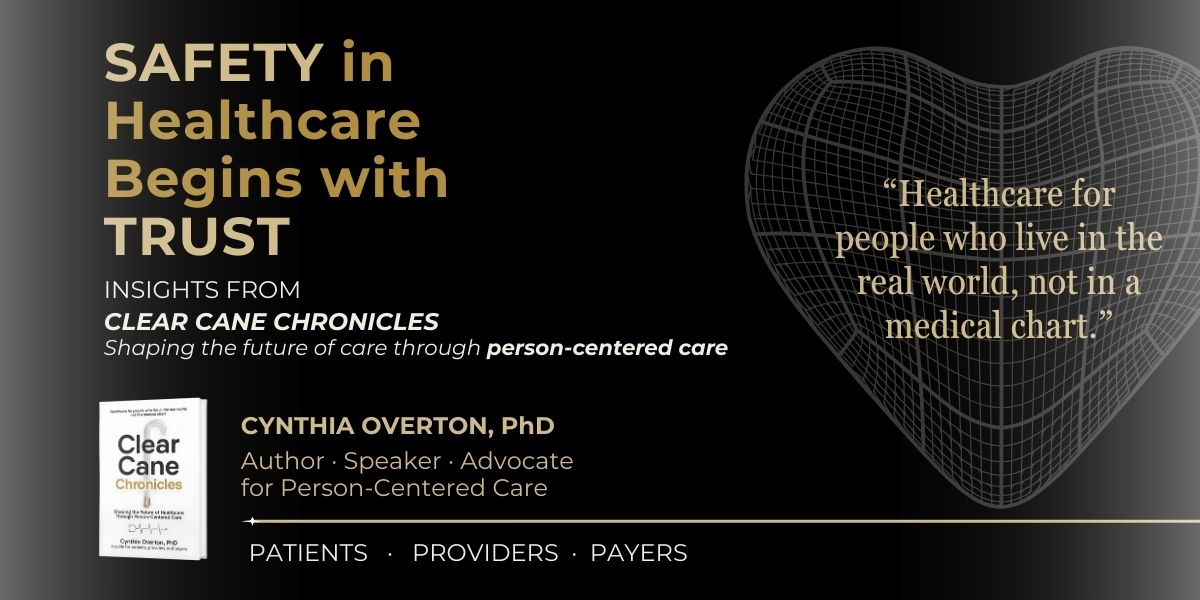
Explore More and Connect with Dr. Cynthia Overton
Learn more about her work, insights, and commitment to advancing equitable, person-centered, and safe healthcare for all.
📘 Clear Cane Chronicles: Shaping the Future of Healthcare through Person-Centered Care
🔗 LinkedIn: https://www.linkedin.com/in/cynthia-overton/
Disclaimer: This content is for informational purposes only and is not intended as medical advice. It does not substitute for professional healthcare expertise or treatment. The concepts discussed, including person-centered care and safety practices, are meant to provide insights into improving healthcare experiences. Always consult with a healthcare professional for personalized advice regarding your care or treatment options.