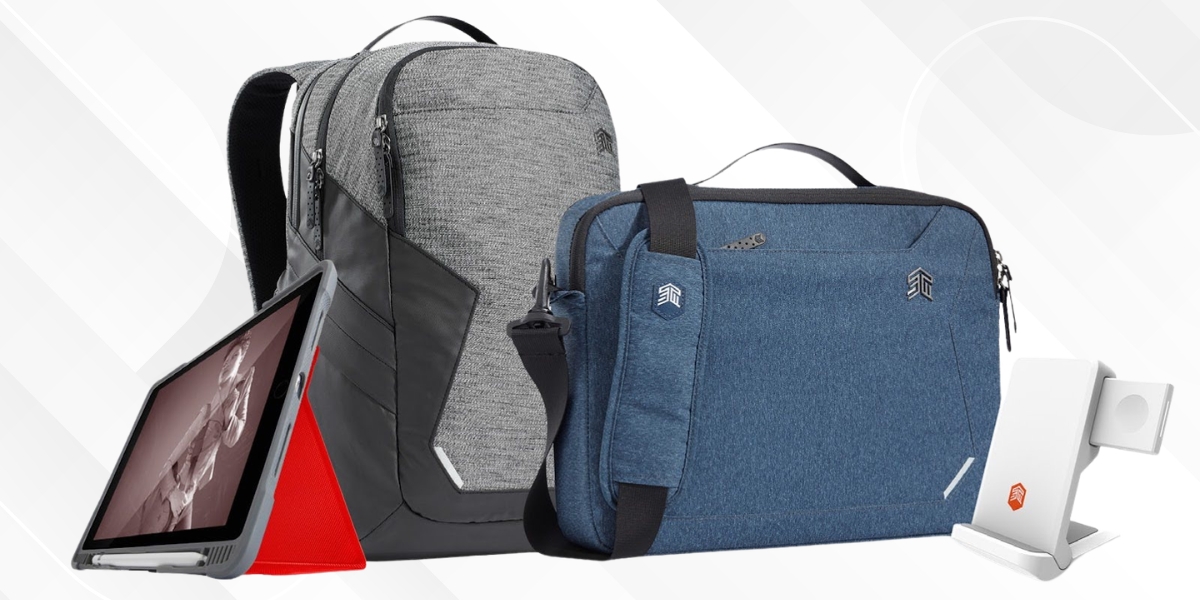


A laptop in a padded postal envelope is not the kind of origin story that usually turns into a 26-year business. But that improvised fix, which preceded STM Good’s founding in Sydney in 1998, still explains the company better than most corporate timelines do. The problem was simple: portable computers were becoming more valuable, more personal and more exposed to damage, while the bags built for them lagged behind. STM’s early idea was to treat protection not as an afterthought, but as part of how people actually moved through work and daily life.
That premise has kept STM relevant as the hardware cycle shifted from laptops to tablets and hybrid work devices. Global tablet shipments rose 9.8 percent in 2025 to 162 million units, according to Omdia, with education demand in emerging markets helping sustain volume even as the market cooled in some developed regions. In the United States, the Consumer Technology Association projected consumer tech retail revenues would rise from $505 billion in 2024 to $527 billion in 2025. For companies that make protective accessories, device growth is only part of the story. The other part is replacement cost: when tablets and laptops become classroom tools, field equipment or core work devices, breakage becomes an operational problem, not just a consumer annoyance.
Protection as a Long-Term Design Problem
STM’s public materials and interviews suggest that durability has never been framed narrowly as surviving a drop. Adina Jacobs, co-founder and director of product, said the company set out to make technical products that are “beautiful, durable and highly functional,” a combination that helps explain why STM did not remain just a laptop-bag label as device habits changed. When iPhones and iPads arrived, she said, “we quickly had to learn how to create molded, fitted cases and this was a steep learning curve for us which taught us to be adaptable and agile.”
That shift matters because accessory makers often trail the device makers they depend on. Their timing is dictated by new form factors, new ports, new keyboard standards and new use cases. STM’s bet has been that a case or bag should have a longer functional life than the typical gadget cycle surrounding it. On its website, product pages for the Dux line emphasize asset tagging, stylus storage, keyboard compatibility and school deployment, not only aesthetics. The signal is clear: the company is designing for fleets of devices and repeated daily handling, where the value of an accessory is measured over years of use rather than the excitement of launch week.
A Smaller Company in a Market Shaped by Scale
The economics of consumer electronics rarely favor smaller players. NIQ projected global Tech and Durables sales would reach $1.29 trillion in 2025, up 2 percent from 2024, with North America and emerging markets helping lift the category. Large brands benefit from shelf space, marketing budgets and broader manufacturing leverage. STM, which describes itself as founder-led, privately owned and debt free, operates on a different scale from competitors such as Belkin and Logitech. That makes product discipline more consequential, because it has less room for failed bets.
Ethan Nyholm has been unusually direct about the risks of staying visible in that environment. During the company’s 2017 rebrand from STM Bags to STM Goods, he said, “We felt that we had lost our voice and that our message wasn’t necessarily resonating with people.” The issue was not only marketing language. It reflected a broader business problem facing mature accessory brands: how to communicate relevance when the product line has widened and the market is moving faster than it did at founding. STM’s answer was to broaden the brand without abandoning the basic promise that its products should make devices more usable, not simply more covered.
Designing Beyond the Product Cycle
Jacobs has also described product making in unusually relational terms. “It’s not enough to make a good product,” she said in one interview. “You have to care about every customer, every salesperson, every factory worker making the products and everyone we interact with.” That comment is notable because it places manufacturing, distribution and customer use in the same frame. It suggests that for STM, product longevity is partly a design question and partly a supply-chain question: materials, tolerances and factory execution all shape whether an accessory outlasts the machine it protects.
That may become more important by the end of the decade. Device markets are maturing, but institutional demand for tablets, keyboards, cases and chargers remains tied to education, mobility and repair economics. Accessories that extend usability, reduce damage and fit into longer refresh cycles may become more valuable as schools and companies scrutinize total device cost more closely. STM’s story is not one of radical reinvention. It is the quieter story of a company betting that in an industry built around the next release, there is still room for products designed to remain useful after the hardware inside has already been replaced.