
By: Nick Davis
There is a part of his story where Christian Marcolli had the potential to become a professional football legend. He had the talent. He had the passion. He had the grit. He was among the best young professional players in the country, with a career trajectory that looked genuinely promising. And then he got into a highly dysfunctional performance environment that didn’t know what to do with any of that, and everything fell apart.
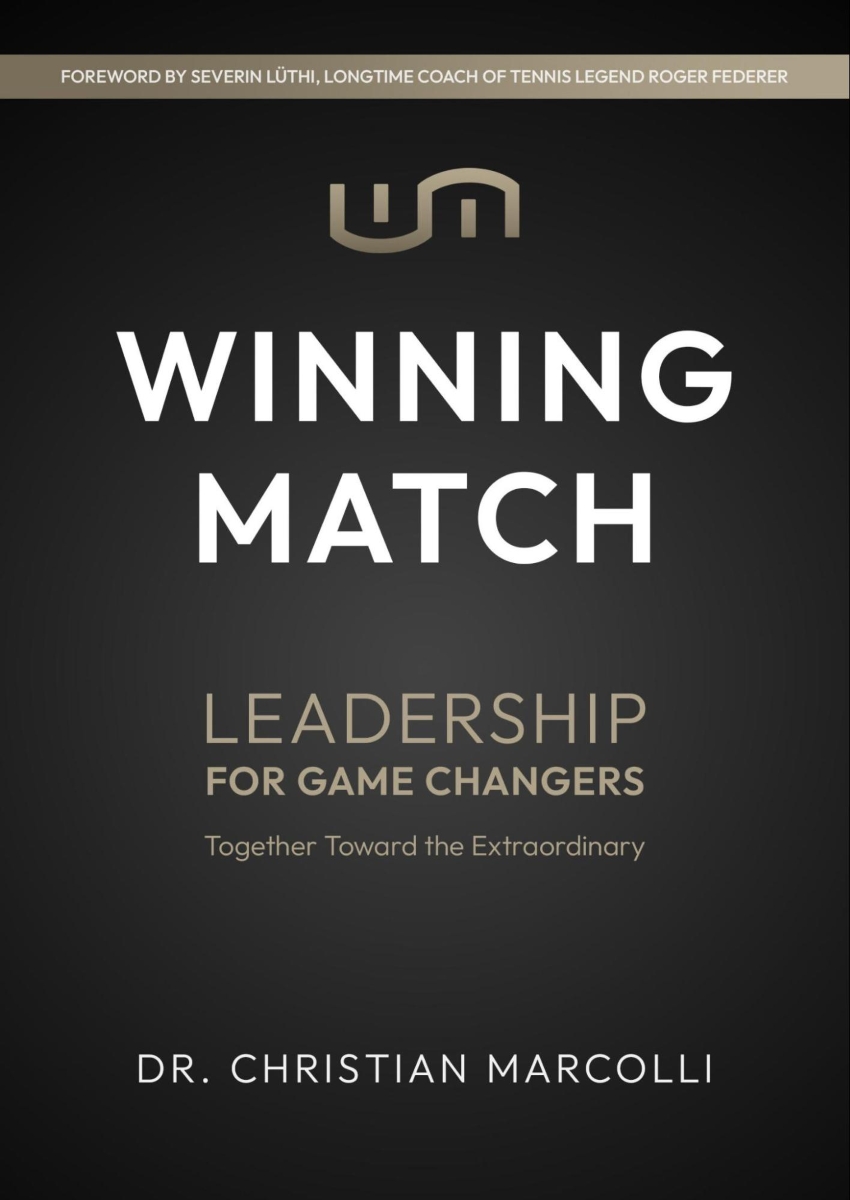
What happened next shaped two decades of work, a globally recognized methodology, and a book that Roger Federer’s longtime coach Severin Lüthi calls “game-changing”. But it started with a toxic locker room, a career-ending injury, and a young man trying to figure out how much of it was his fault.
The Talent Was There. The Environment Was Not.
Christian’s professional football career ended not because he lost his talent, but because the leadership around him failed him completely. His head coach ran a fear-based operation. Nobody challenged him. Nobody spoke up. The culture was corrosive in the quiet, persistent way that wears people down before they even realize it’s happening.
Christian gathered his courage and approached the coach respectfully, asking for constructive feedback and guidance on how to earn more playing time. The response was explosive, dismissive, and humiliating.
What followed was a slow unraveling. Christian tried to cope with this massive additional pressure by standing out and working harder than everyone else. It didn’t pay off at all. He started massively overtraining. He took massive risks on himself that he wouldn’t have taken under different circumstances. He was constantly trying to prove something to someone who had made it clear he had no interest in being proven anything. Eventually, the injuries accumulated, and his playing career was over.
It took time and distance to see it clearly. He was talented, passionate, willing, disciplined, and coachable. What he lacked was a leader capable of developing any of that. And as he concluded later, he wasn’t mentally tough enough yet to deal with such adversity that was systemic, cultural, and entirely preventable. That realization became the foundation of everything he has done since.
What Sports and Business Have in Common
Christian has spent more than two decades working at the intersection of elite sports and organizational leadership, coaching executives at the highest levels of global business while maintaining deep relationships with world-class athletes and their coaches. He worked with Roger Federer early in his career as his mental coach. He has worked with Olympic gold medalists and world champions across multiple disciplines.
What keeps striking him, across all of those environments, is how similar the underlying dynamics are. The best sports coaches and the best business leaders share a specific orientation toward their people. They are genuinely ambitious for them, not just for the team’s results. They are generous with time, energy, and attention. They work actively to identify the individuals with the rarest potential and then pour real resources into helping that potential become something tangible.
The environments look completely different. The logic running underneath them is remarkably consistent.
The Mistakes Most New Leaders Make
When Christian works with leaders who are new to senior roles, he sees the same patterns repeat with striking regularity. The need to prove themselves leads them to push their views too hard, insist on their own way, or micromanage teams that would perform far better with more autonomy and trust.
The second mistake is subtler but equally costly. Many leaders assume that truly exceptional talent will rise on its own. That the best people don’t need active development because their abilities will carry them. In sports, he points out, no serious coach would leave their best players to figure things out alone while focusing all their energy on the weaker members of the squad. The idea would be considered absurd.
Research backs this up. The highest performers consistently want to be challenged, developed, and in ongoing conversation with their leaders. They want active input. They want a strong trust-based relationship that takes their potential seriously. Left to their own devices, they don’t quietly flourish. They disengage, underperform, or leave.
Leadership Sparring and the Championship Mindset
Christian’s proprietary framework introduces two concepts that sit at the center of the book. The first is the Game Changer, the rare individual whose intellect, energy, and ideas have the potential to transform an organization from the inside. The second is the Leadership Champion, the leader who has developed the specific skills needed to identify, partner with, and bring out the best in those people.
The tool that connects them is what Christian calls Strategic Leadership Sparring. It is a constructive, ongoing interaction in which a leader challenges and supports a potential Game Changer to develop the insights and wisdom they need to perform at an extraordinary level. It covers both immediate tactical questions and the big-picture strategic themes that shape long-term direction. It is incremental, flexible, and, according to Christian, genuinely powerful when practiced consistently.
The shift required to get there isn’t always comfortable. Game Changers tend to think outside conventional boundaries. They challenge the status quo. They can be disruptive, and their brilliance and their disruption are often the same thing. Leading them well means being willing to deviate from standard procedures, to make decisions on a case-by-case basis rather than by formula, and to resist the pull of generic development programs that leave exceptional people uninspired.
What He Wants Leaders to Actually Do Differently
Christian’s hope for readers of Winning Match isn’t abstract. He wants leaders to walk away with a new way of seeing the people around them, specifically the capacity to recognize Game Changer potential when it’s in the room and to understand what their role in it actually is.
He spent the early part of his career on the receiving end of leadership that wasted everything it was given. He has spent the rest of it making sure as few people as possible have to go through the same thing.
The book is the most complete version of what he has learned. And it begins, as all the most honest things do, with a story about failure and what it cost.
Today, those lessons form the foundation of Winning Match, one of the most distinctive and thought-provoking leadership books available today. Available worldwide through major online booksellers, including Winning Match on Amazon.