

By: Mae Cornes
For more than a decade, Chiranjeevulu Reddy Kasaram has built a reputation as a technical leader focused on strengthening the reliability of modern software systems while advancing the intelligent use of AI and automation. His influence extends beyond direct engineering contributions. He has authored and peer-reviewed multiple technical research papers and has served on judging panels, where his insight has supported academic rigor and guided emerging research in software engineering and artificial intelligence.
Throughout his career, Kasaram has contributed to the design of data-quality pipeline models, microservice architectures, and event-driven systems that support AI-enabled, agent-driven decision-making platforms. His work has been particularly impactful in complex, regulated environments, where system correctness, security, and transparency are critical to operational trust.
Kasaram’s leadership style emphasizes clarity, mentorship, and responsibility. He is known for elevating engineering discussions through thoughtful analysis, reviewing system designs with a long-term architectural lens, and helping teams strengthen their understanding of distributed systems, automation, and data quality. Colleagues consistently recognize his ability to balance deep technical rigor with practical decision-making, ensuring that systems are designed not only to function, but to endure under scale and scrutiny.
Advancing Automation, Governance, and Risk-Aware Engineering in Financial Technology
In his current role in financial technology, Kasaram focuses on building systems that balance delivery speed with accountability, resilience, and governance. His work centers on architecting automation frameworks that strengthen API reliability, validate complex data flows, and embed governance directly into enterprise platforms, treating quality and compliance as foundational architectural concerns rather than post-deployment checks.
A distinctive aspect of his contribution is the breadth of systems he has automated, including both modern distributed platforms and legacy mainframe environments. By architecting automation solutions for mainframe systems alongside cloud-native and microservice-based applications, Kasaram has helped organizations modernize their operations without disrupting critical financial systems that continue to rely on legacy infrastructure.
He has also played a key role in integrating automation into CI/CD pipelines connected to enterprise data warehouse (EDW) systems. These integrations enable the continuous validation of data integrity, business rules, and downstream dependencies throughout the delivery lifecycle. As a result, regression testing cycles that once took considerable time have been greatly accelerated, reducing time-to-market and boosting confidence in releases.
Kasaram’s automation strategies have contributed to measurable improvements in production stability. By embedding automated validations, risk checks, and regression coverage across application and data layers, he has helped reduce defects reaching production systems and strengthened the early detection of issues before they have a customer or operational impact.
Security and governance are central to his approach. Kasaram has designed automated validation mechanisms on server environments to support regular vulnerability patching and compliance checks. These controls help ensure that security updates are applied consistently and verified systematically, reducing operational risk while supporting regulatory and audit requirements common in financial technology environments.
Beyond implementation, Kasaram actively influences architectural direction. He promotes standardized automation patterns, reusable validation frameworks, and governance models that scale with increasing data volumes and system complexity. His work ensures that financial platforms remain observable, testable, and resilient as they evolve.
Equally important is his role as a mentor and technical leader. Kasaram sets engineering standards, reviews project-level testing strategies, and guides teams in aligning quality engineering practices with both technical and regulatory expectations. Through design reviews and mentorship, he encourages engineers to think beyond immediate implementation details and develop a deeper understanding of risk-aware engineering, system failure modes, and long-term maintainability.
A Research Portfolio Addressing Core Challenges in Modern Computing
Alongside his industry leadership, Kasaram has developed a research portfolio that closely mirrors the technical realities shaping today’s digital systems. Works such as “The Rise of Digital Automation: Streamlining SDLC with Intelligent Workflows” and “Spring Boot and Microservices: Engineering Modular and Scalable Back-End Architectures” reflect his early focus on building resilient, scalable foundations for enterprise software.
Several of his studies examine how organizations can modernize development lifecycles, strengthen software reliability, and scale distributed architectures without sacrificing governance. Research, including “DevSecOps and the Secure SDLC: Automating Compliance in Agile Pipelines” and “Domain-Oriented BDD using Pytest: A Design-Focused Approach to Reusable Behaviour Specifications,” highlights practical approaches to secure delivery, quality engineering, and intelligent automation.
His most recent works have been accepted for publication in IEEE conferences and are currently in the final stages of publication. Among them, he co-authored “A Hybrid Optimization and Deep Learning Framework for Secure Cloud Data Sanitization and Self-Healing Restoration,” which received a Best Paper Award in 2025 for its contribution to cloud security and automated recovery.
Another IEEE-accepted paper, “Adaptive Fraud Detection and Risk Governance in FinTech Using Hybrid Approaches,” explores architectural considerations for machine-learning-driven detection systems and real-time risk controls. The work reflects Kasaram’s continued focus on building intelligent platforms that are both scalable and dependable. As a Senior Member of IEEE, he is recognized not only for professional leadership, but also for advancing research that supports the next generation of secure, reliable, and intelligent software systems
Shaping the Future of Transparent and Governed AI Systems
As digital platforms increasingly incorporate AI, real-time analytics, and autonomous behavior, Kasaram’s focus has shifted toward ensuring these technologies remain transparent, governed, and resilient. His research on “Building Data Engineering Pipelines for Agentic AI in FinTech” emphasizes the importance of low-latency data access, strong governance frameworks, explainability, and robust validation—capabilities that will shape the future of enterprise AI adoption.
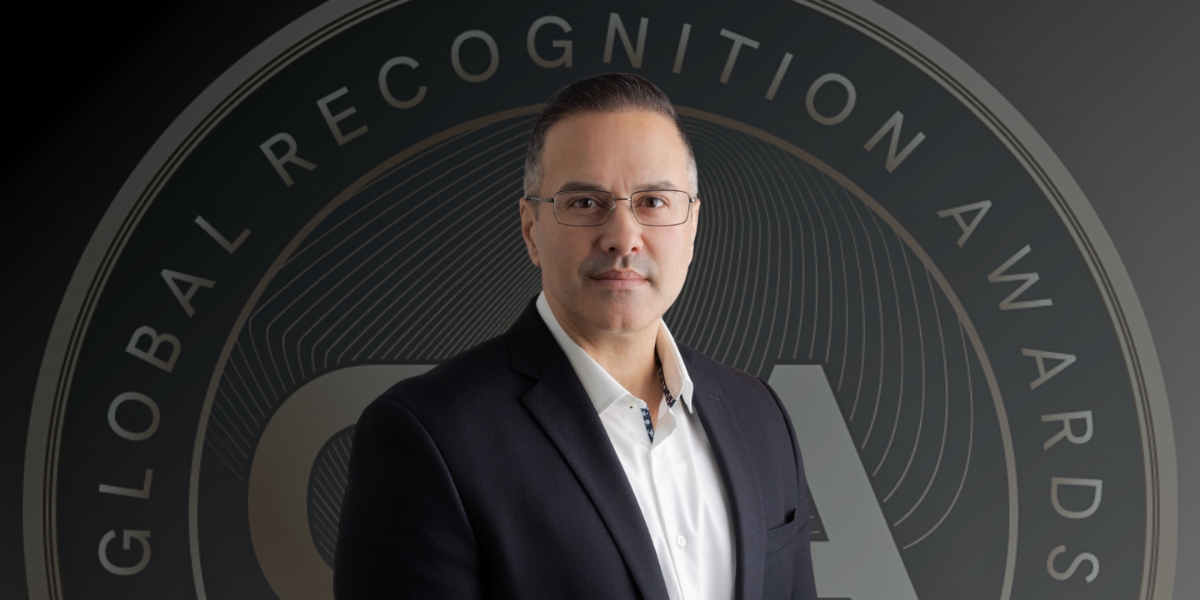
In a field often drawn to speed over stability, Chiranjeevulu Reddy Kasaram, a recipient of the 2025 Global Recognition Award, is distinguished by his disciplined, forward-looking approach to AI and software architecture and engineering. His work continues to influence how teams design, validate, and maintain modern software systems, while his research helps define the roadmap for trustworthy, risk-aware, and resilient AI platforms.
Through his combined industry and research contributions, Kasaram has helped establish best practices for integrating AI and automation into complex enterprise environments, ensuring reliability, security, and governance are not compromised. As emerging technologies continue to evolve, his expertise remains a guiding force for building intelligent systems capable of adapting to future challenges while maintaining the trust on which modern digital ecosystems depend.