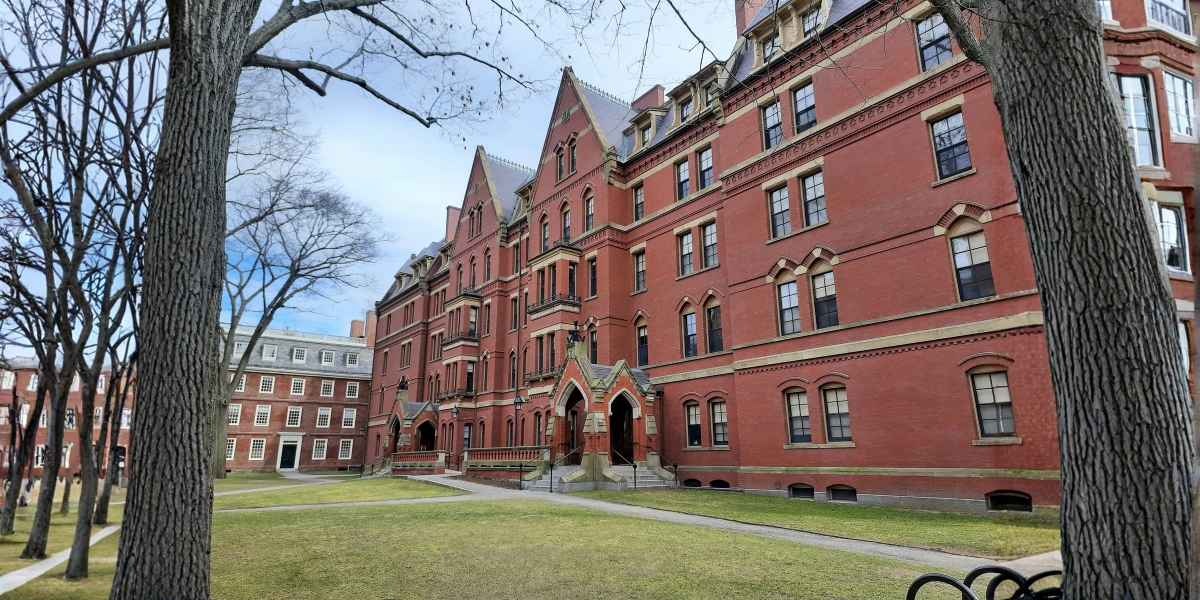

Boston-Cambridge has turned its dense academic-medical cluster into an active testbed for AI in healthcare, helping drive an AI health‑tech boom that punches far above the region’s size. In 2025, Boston captured 8.3% of all US health‑tech venture dollars and 26.2% of biotech funding, underscoring how research‑driven innovation is translating into commercial scale.
Why Boston-Cambridge Is Becoming an AI Health-Tech Hub
The Boston-Cambridge ecosystem brings together several industries that are increasingly dependent on AI.
On one side are institutions such as Massachusetts Institute of Technology and Harvard University, which produce research in artificial intelligence, computer science, biology, medicine, and engineering. On the other are hospitals, pharmaceutical companies, biotechnology firms, medical-device companies, and technology startups that can apply this research to practical problems.
This proximity reduces one of the traditional barriers between research and commercialization. A technical discovery does not necessarily have to remain within an academic environment for years before reaching a company. Bridging that gap is also where specialized partners come in. Agiliway is an AI-augmented software development company that helps healthcare organizations turn research-driven AI concepts into deployable clinical workflows, diagnostic tools, and patient-facing platforms.
The region also has a strong infrastructure for supporting that transition. In August 2026, MassVentures announced $4.5 million in grants for 26 Massachusetts startups working in areas including life sciences, AI, robotics, and quantum computing. The program is specifically designed to help companies turn federally funded research into products, businesses, and jobs.
A Research‑Dense Health System
Massachusetts hosts a dense concentration of research-driven health systems, anchored by networks such as Mass General Brigham, Beth Israel Lahey Health, Dana‑Farber Cancer Institute, and Boston Children’s Hospital. Boston’s major teaching hospitals now act as living laboratories where academic AI ideas are trialed, refined, and scaled. Mass General Brigham has integrated AI into radiology workflows in long‑running collaborations with GE HealthCare and Microsoft/Nuance, deploying algorithms for CT and MRI image analysis, organ segmentation, and radiology report generation directly into radiologists’ reading rooms. At Dana‑Farber, AI‑assisted tumor board documentation and trial‑matching algorithms parse complex eligibility criteria against structured and unstructured patient data, surfacing candidate trials in real time during multidisciplinary cancer reviews.
Academic Engines of Clinical AI
On the academic side, MIT’s Abdul Latif Jameel Clinic for Machine Learning in Health (Jameel Clinic) focuses explicitly on translational clinical AI and AI‑driven drug discovery, built as a joint initiative to move research out of the lab and into hospitals worldwide. Recent projects include deep‑learning models that forecast heart‑failure progression up to a year in advance, generative AI systems that design protein binders for hard‑to‑treat diseases, and tools like VaxSeer that use machine learning to predict virus evolution for more precise vaccine selection. Harvard Medical School, the Harvard-MIT Center for Regulatory Science, and the Wyss Institute add regulatory, engineering, and clinical expertise, creating a multidisciplinary academic engine behind many of the AI devices and algorithms reaching the clinic.
AI‑Powered Access and Trial Matching
AI is also reshaping patient access and clinical research. In September 2025, Mass General Brigham launched Care Connect, now branded “24/7 Virtual Care”, an AI‑powered chatbot built with K Health that interviews patients without a primary care provider, reviews their records, and forwards a synthesized case summary and suggested diagnoses to telehealth physicians; by May 2026, it had already facilitated over 14,000 virtual appointments. Internally, the health system developed RECTIFIER, a retrieval‑augmented generation platform that reads medical records to identify clinical trial‑eligible patients; randomized evidence from nearly 4,500 patients shows enrollment rates nearly double those achieved by manual screening, and by late 2025 the platform had more than 20 active and onboarding use cases across cardiology, oncology, neurology, and other specialties.
Why Boston-Cambridge Is Hard to Copy
What makes Boston-Cambridge distinctive is not just its funding volume but the tight coupling between discovery, regulation, and frontline care. MIT, Harvard, and affiliated institutes generate novel architectures and safety frameworks; teaching hospitals provide massive, diverse clinical datasets and rigorous trial environments; and state programs supply sandboxes, translational grants, and assurance labs that de‑risk adoption. Together, they have turned academic research from a theoretical advantage into a practical flywheel, one that is now visibly accelerating the AI health‑tech boom across the region.
What This Ecosystem Means for AI Health-Tech Builders
Boston-Cambridge’s AI health-tech growth is being driven by more than the presence of prestigious universities. Its real strength lies in the connection between research, healthcare institutions, startups, investors, and technology talent.
MIT and Harvard provide a steady pipeline of research and founders, while programs such as MassVentures, Harvard Innovation Labs, and the Massachusetts AI Hub help move ideas toward commercial applications. At the same time, the region’s hospitals, biotech companies, and medical-device businesses provide complex problems for AI and software teams to solve.
The result is an ecosystem where academic research can become a medical device, diagnostic platform, drug-discovery tool, or AI-powered healthcare workflow. For software companies, this creates opportunities to participate in a market where deep technical expertise and healthcare domain knowledge increasingly need to work together.