

By: Mae Cornes
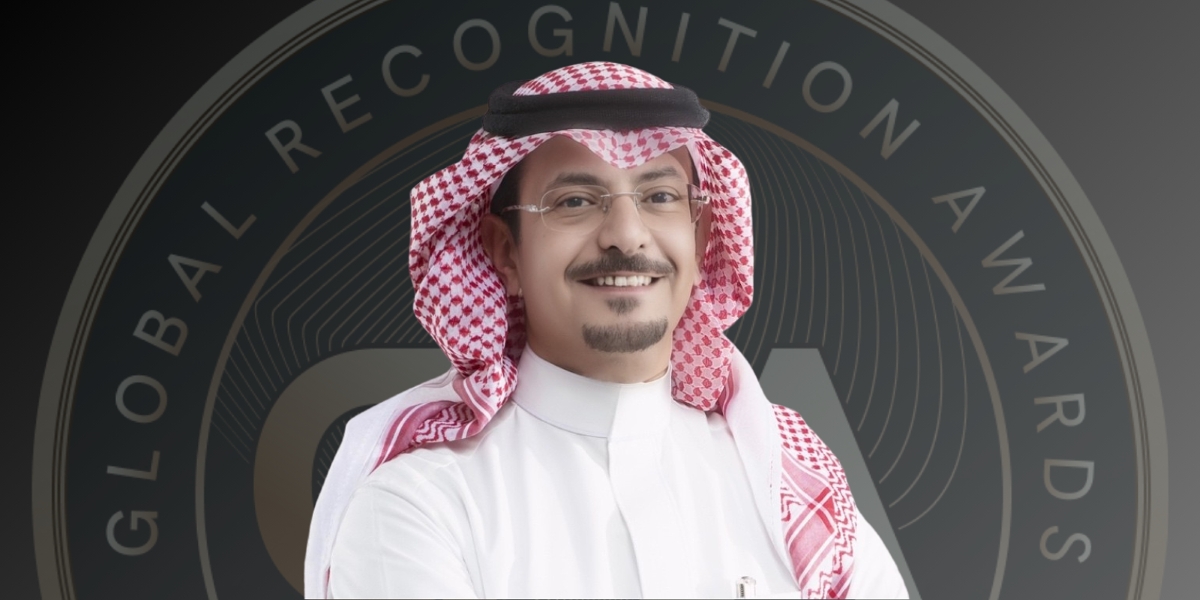
For more than two decades, Bandar AbuAshi has operated in a space most organizations misunderstand: the executive office. While others see it as a scheduling function, he has built it into something closer to an institutional command center, a place where strategic intent meets operational reality. His career, across government agencies, tourism authorities, and hospitality operations, has been defined by a single principle: structure enables speed, and clarity drives performance.
At the Saudi Tourism Authority, where he serves as Senior Vice President of the Executive Office, AbuAshi has shaped the CEO’s office into what he calls a “strategic hub.” The office has earned three ISO certifications, a credential that signals an organization’s governance maturity, central to Saudi Arabia’s Vision 2030 economic diversification plan. But the certifications themselves matter less than what they represent: a systematic approach to turning policy goals into measurable outcomes.
His method is not about control. It is about removing friction. “Executive offices do not exist to manage calendars; they exist to shape national direction,” AbuAshi says. In practice, that means building systems that allow leadership to act quickly without losing institutional alignment.
Building Systems That Scale
AbuAshi’s career has followed a consistent pattern: entering organizations where ambition outpaces execution, then restoring the connective tissue between ambition and execution. At the Ministry of Tourism, he served as General Manager of the Minister’s Office during a period of sector expansion. At the Human Resources Development Fund, he established centers for organizational change and revived stalled initiatives by embedding knowledge management systems that made institutional memory accessible rather than siloed.
Earlier, at the Royal Commission for Jubail and Yanbu, he spent eight years modernizing executive processes: automating workflows, optimizing resource allocation, and creating transparency in decision-making. The work was technical, but the impact was strategic. Leadership could move faster because the underlying systems had been rebuilt to support that speed.
What distinguishes his approach is portability. The frameworks he has developed in the sectors of tourism, government administration, and economic development have proven adaptable to others. That versatility reflects something more profound: an understanding that organizational dysfunction tends to follow similar patterns across industries.
From Hospitality to Governance
AbuAshi’s leadership philosophy was shaped during his years at InterContinental Hotels Group, where he rose from operational roles to the role of Owners’ Representative. The hospitality sector taught him that service excellence is a byproduct of cultural discipline, that financial performance depends on accountability, and that brand integrity is inseparable from stakeholder trust.
“Hospitality taught me that systems fail when discipline weakens. Governance taught me that strategy fails when trust erodes,” he reflects. That insight has become a defining framework for his work: authority provides direction, process offers structure, and trust provides velocity. When any one element is missing, organizations stall.
His academic background complements this operational foundation. An Executive MBA graduate with distinction and holder of a BBA in Management Systems, AbuAshi has studied at Harvard Business School, Cambridge University, Oxford University, and IMD. The exposure to global management thinking has informed his ability to integrate international standards with local institutional realities, a balance that matters for a country undergoing rapid economic shifts.
A Model of Disciplined Modernization
Beyond his institutional roles, AbuAshi has established himself as a voice on executive leadership and governance. Recognized among the top one percent of global LinkedIn voices and recipient of a 2025 Global Recognition Award, he uses these platforms to mentor emerging Saudi professionals. His focus is consistent: strategic thinking, disciplined execution, and institutional accountability.
“Organizations do not fail from lack of effort; they fail from lack of balance,” he says. The observation reflects his broader worldview: that sustainable performance depends not on intensity but on alignment. Systems, people, and objectives must move in the same direction, at the same pace, with the same clarity of purpose.
What AbuAshi represents is less a departure from traditional executive leadership than a refinement of it, one that acknowledges the executive office not as a support function but as a lever of institutional performance. As Saudi Arabia redesigns its economic architecture, his work offers a case study in how organizational modernization happens: methodically, systematically, and with an eye toward what endures beyond the current leadership cycle.