
By: Andrea Rochinno
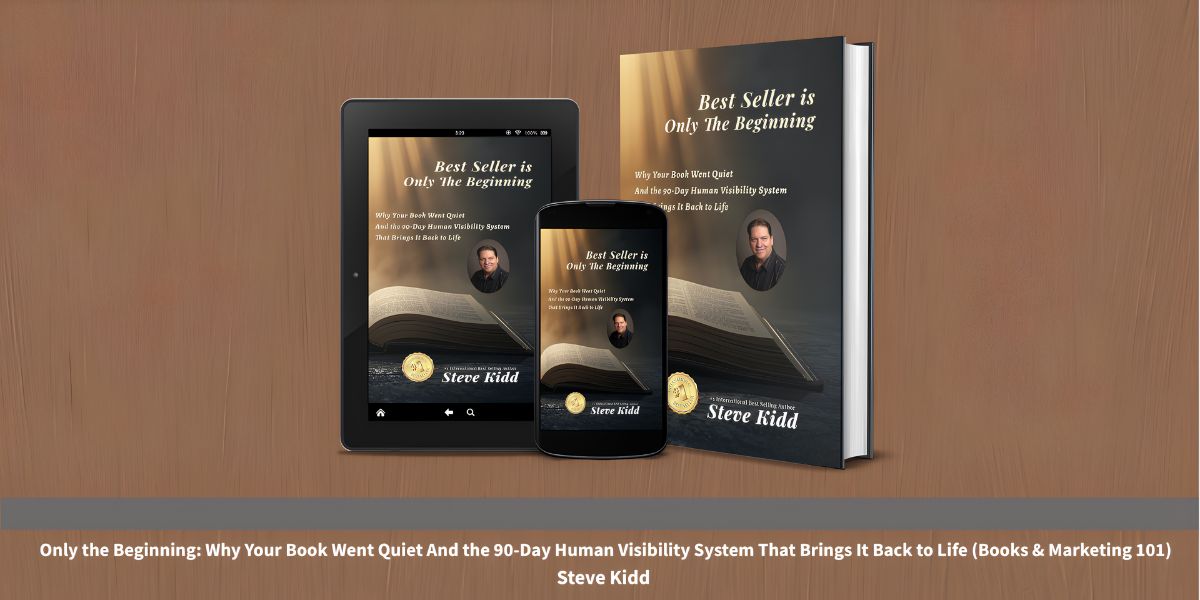
Nobody warns you about the loneliness of a quiet book. They celebrate with you at launch, they share your posts for about a week, and then life moves on for everyone except you, because you are still sitting with this thing you made and wondering what went wrong and whether it was something fundamental about you or your message or your writing that caused the world to collectively decide it could live without knowing your book existed. Steve Kidd wrote this book for that exact person sitting in that exact silence, and he did it with a directness that feels almost startling coming from a genre that usually prefers to keep things comfortable.
What strikes you almost immediately is that Kidd does not have expertise. He is not building a personal brand on these pages or carefully constructing an image of himself as the wise guide who has all the answers wrapped in digestible frameworks. He writes like a person who has genuinely spent decades in the trenches of book marketing and accumulated real scar tissue from watching good books fail for preventable reasons. That scar tissue shows in the writing, and it is exactly what makes the writing worth reading.
There is a chapter early in the book where he essentially dismantles the mythology around sales status and what authors believe it will do for them once they achieve it. Reading it feels a little like being told something you already suspected but needed someone with actual credibility to confirm before you could let yourself believe it. The sales milestone is real, and it matters, and it is also nowhere near the finish line that the publishing world trains authors to treat it as. What comes after it is where authors completely lose the plot, not because they are lazy or uncommitted, but because they were handed a destination and nobody gave them a map for what the territory beyond it actually looked like.
Kidd’s argument for human-led visibility over algorithmic shortcuts is not new as a concept, but the way he builds it is specific enough to feel new. He is not just cheerleading for authenticity in that hollow way that fills half the content on any given social media platform on any given day. He is showing you the actual mechanics of why human presence compounds over time in ways that automated activity simply cannot replicate, and he is doing it with enough concrete detail that you find yourself thinking about your own behavior and your own missed opportunities in ways that are uncomfortable but genuinely clarifying.
The 90 Day Human Visibility System, which he structures the book around, feels less like a productivity hack and more like a philosophy of showing up that happens to have a timeline attached to it. That distinction matters more than it might sound. Timelines without philosophy produce frantic activity. Philosophy without timelines produces beautiful intentions that never leave the notebook. Kidd manages to give you both at once in a combination that feels surprisingly rare.
His prose has a quality that is hard to name precisely but easy to feel. It is the quality of someone talking to you rather than at you. Someone who wants you to actually get this rather than simply feel good about having read it. That intention comes through on every page, and it makes the book land in a way that many of its neighbors on the author marketing shelf simply do not.
Your book is not done. That is the quiet argument running underneath everything Kidd writes here. It is not done, and you are not done, and the silence you have been sitting in was never a verdict; it was just what happens when nobody teaches you what to do next. This book teaches you what to do next, and it does it without making you feel foolish for not having known it sooner.
The book is available on Amazon.