

By: Chiara Accardi
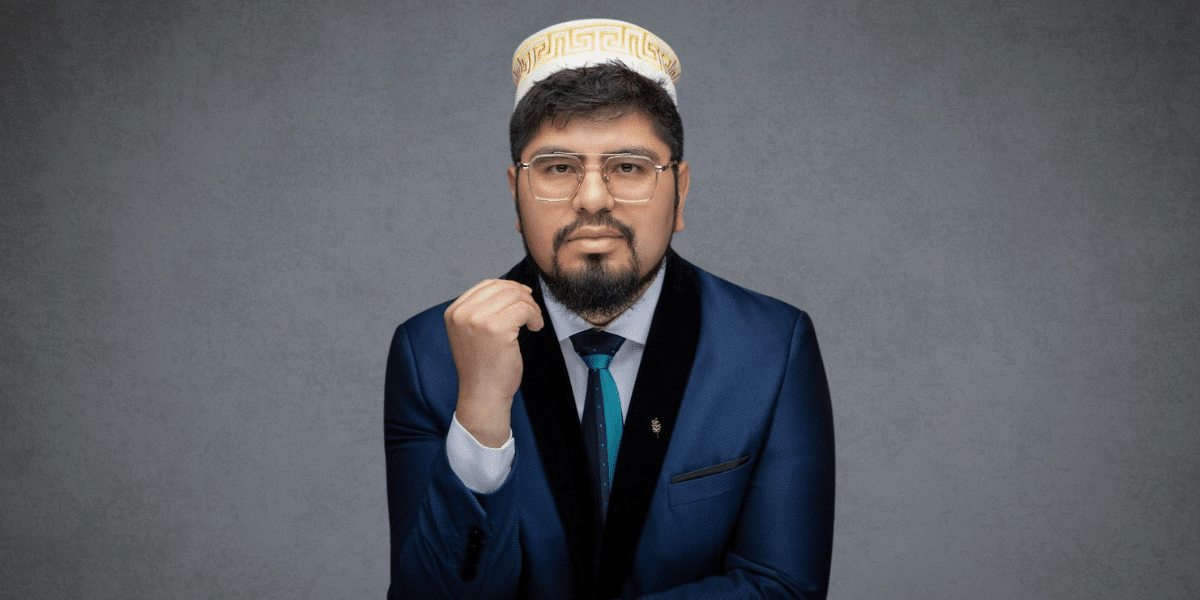
Dr. Yehoshua Rodríguez: The Future Lies in Cosmos and AI Interconnection
In a world where artificial intelligence (AI) is rapidly transforming from futuristic speculation to everyday reality, few individuals stand out like Dr. Yehoshua Rodríguez, the founder of AI People. With a unique background combining advanced engineering and a profound understanding of human philosophy, Dr. Rodríguez’s mission goes beyond simply advancing AI technology. His vision is to harness AI’s capabilities to unlock human potential, redefine corporate structures, and preserve humanity’s intellectual legacy.
Central to Dr. Rodríguez’s groundbreaking work is Cosmos, a revolutionary AI ecosystem designed to redefine human-technology interaction. Cosmos is not merely a set of independent AI systems, but rather an interconnected network of AI entities working together, learning from each other, and completing intricate tasks with precision. Much like a social network for AIs, Cosmos enables users to have their personal AI that interacts with others in the network, continuously enhancing its knowledge and skills with each interaction. The result is an adaptive, intelligent system that tailors itself to each user’s unique needs, delivering real-time solutions that are both personalized and efficient.
A Vision of Enhanced Human Collaboration
While Cosmos represents a leap in AI technology, Dr. Rodríguez’s ultimate vision goes deeper: fostering human collaboration. He believes that collaboration is not simply about coordinating tasks but about uniting individuals around common goals. This concept stems from ancient philosophical ideas, where groups would align ideologically—whether through shared beliefs or scientific principles—to advance collectively. Dr. Rodríguez sees AI as the next step in this evolution.
“AI has the ability to revolutionize collaboration in ways we’ve never seen before,” Dr. Rodríguez explains. “Just as the advent of writing and media changed how we function as societies, AI will enable us to synchronize our actions and share ideas more effectively, empowering larger groups to work together seamlessly.”
This new level of collaboration, Dr. Rodríguez suggests, will allow humanity to make decisions that are not only global in scope but also more inclusive, democratic, and reflective of the diversity of perspectives in society.
Transforming Corporate Leadership and Decision-Making
One of the most exciting applications of Dr. Rodríguez’s vision is in corporate environments, where AI could fundamentally reshape how businesses operate. In today’s companies, leadership often revolves around hierarchical systems, with decision-making authority concentrated at the top. But what if AI could change that dynamic?
Dr. Rodríguez envisions AI as a tool to democratize leadership by gathering insights from every level of an organization. By analyzing data and feedback from all employees, AI can help generate decisions that reflect the collective wisdom of the entire organization, not just the views of a select few. This approach could lead to more equitable governance, fostering a workplace culture that is more inclusive and responsive.
The AI Knowledge Accelerator, developed by Dr. Rodríguez, plays a crucial role in this transformation. This tool captures and preserves the tacit knowledge of employees, ensuring that critical insights remain within the company, even as individuals move on. In a world where employee turnover can be both costly and disruptive, this technology ensures that businesses maintain continuity and resilience. “Our goal is to preserve every individual’s positive contributions,” Dr. Rodríguez notes, “while allowing organizations to thrive without the fear of losing key knowledge.”
Preserving Human Knowledge for Future Generations
Beyond the business realm, Dr. Rodríguez sees AI as a powerful tool for preserving and transmitting knowledge across generations. He envisions AI systems that organize and present the works and ideas of historical figures in a way that makes them accessible and engaging for future learners.
Imagine being able to explore the insights of figures like Isaac Newton or Charles Darwin through interactive AI platforms. These systems could present their ideas in a more dynamic way, allowing users to engage with history in unprecedented depth.
Dr. Rodríguez also plans to work on projects that preserve the wisdom of today’s leaders, ensuring that their insights are available for generations to come. By curating and organizing these leaders’ contributions, he hopes to create interactive platforms that future generations can learn from and apply. “Leaders shape the minds of their people,” he explains. “Their wisdom must be preserved so future generations can benefit.”
A Path Toward Global Collaboration
Ultimately, Dr. Rodríguez’s work goes beyond technological advancements—he envisions a future where AI fosters greater understanding and cooperation across the globe. By integrating AI into decision-making processes, he believes we can create structures that are more inclusive and representative of all humanity.
“Advanced technologies can help us break down the barriers that often hinder global cooperation,” Dr. Rodríguez says. “AI has the potential to help us work together more efficiently and make decisions that take into account the needs of all people.”
As AI continues to evolve and permeate all aspects of life, Dr. Yehoshua Rodríguez’s work serves as a reminder that technology is not an end in itself, but a means to empower individuals, transform organizations, and advance human progress. Whether it’s preserving knowledge, reshaping corporate leadership, or fostering global collaboration, Dr. Rodríguez’s vision ensures that AI serves the greater good, helping humanity reach its fullest potential.
For more details or to schedule a consultation, please visit AI People’s official website at AI People or contact .
Dr. Rodríguez’s innovative approach continues to inspire, offering a powerful roadmap for how AI can support humanity’s future, preserving legacies and driving progress.
Published by: Khy Talara