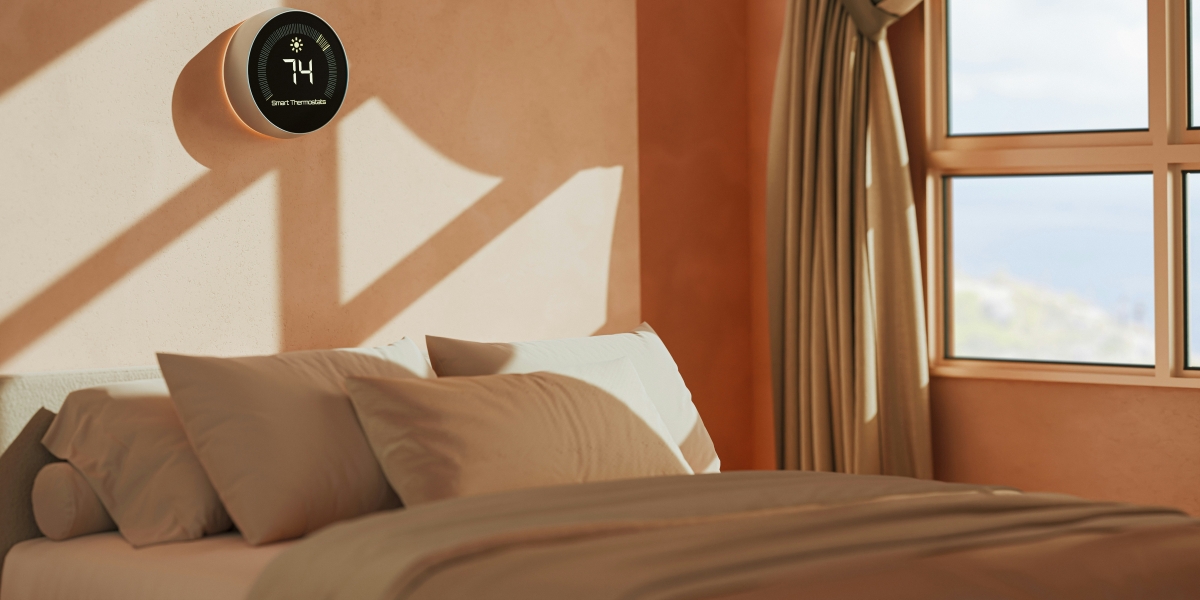

Your sleep tracker’s temperature data can tell you more about your bed than most people realize. Rings, watches, and bands now log skin temperature all night. Most people glance at the number and move on. Used well, it can hint at whether your bedding helps your body cool down or holds heat in. This guide covers what the readings mean, what they can’t tell you, and what to change when the pattern looks off.
What Your Tracker Is Actually Measuring
Before reading the graph, it helps to know what the sensor sees.
Skin Temperature, Not Core Temperature
Most wearables measure skin temperature at the finger or wrist. That is not the same as core body temperature. A PMC study on skin temperature tracking examined how wearable biometrics capture skin temperature shifts and heat loss from the hands and feet during sleep. It also found that bedding with high thermal conductivity helps hold the microclimate steady through the night. Your tracker reflects both your body and the environment around it.
Why Trends Matter More Than Single Numbers
Consumer devices aren’t medical tools. Absolute readings can drift between brands and even between nights. Look at your own pattern over two or three weeks instead of one night. A consistent shift tells you more than any single spike.
Where the Sensor Sits Changes the Reading
A ring on a finger reads differently than a watch on a wrist. Fingers lose heat quickly, so they swing more. A loose band can read cooler than a snug one. Wear the device the same way every night so your comparisons stay fair.
The Temperature Pattern a Healthy Night Shows
Your body follows a rhythm, and your data should roughly reflect it.
The Natural Cooldown
Core temperature drops as you fall asleep and bottoms out in the early morning. Your hands and feet release heat to help that happen. Sleep Foundation research explains that bedroom temperature and bedding both affect this process, and it points to a room around 65°F to 68°F for most adults.
The Bed Microclimate
A PMC thermoregulation study describes a target skin microclimate of about 31°C to 35°C under the covers. When trapped heat pushes past that range, the body responds with surges in blood flow to the skin, and those can trigger waking. Your tracker may show this as restless periods or temperature spikes.
Why Your Number Won’t Match the Target
The 31°C to 35°C range describes the air and fabric layer under your covers. Your tracker reads your skin, and skin at the finger or wrist can sit lower. Don’t expect the two numbers to match. Use the target as background, and use your tracker to watch the direction your own readings move.
Reading the Warning Signs
Certain patterns point toward a bed that holds too much heat. Treat these as clues, not diagnoses.
- A high, flat line through the night: Skin temperature never settles, which can mean heat has nowhere to go
- Spikes near your wake-ups: Heat buildup may be pulling you out of deeper sleep
- Higher readings on warm nights only: Your bedding may not release heat well when the room warms up
- Poor deep sleep scores with high readings: Heat may be cutting into restorative stages
Other things affect these numbers too. Alcohol, late meals, illness, stress, and hard workouts all raise nighttime temperature. A single odd night usually isn’t about the bed.
When Your Data Looks Fine, but You Feel Hot
Sometimes the graph looks normal, and you still wake up damp. Skin temperature doesn’t capture moisture. Sweat trapped in the sheets can feel clammy even when the number looks steady. If that sounds like you, focus on breathable fabric that lets moisture move through, not only heat.
What Your Bed Contributes
If the pattern repeats, the bed is a reasonable place to look.
Sheets and Fabric
Dense or synthetic sheets can hold heat and moisture against your skin. Long-staple cotton in an open weave lets heat and moisture vapor move through. Thread count between 200 and 400 usually breathes better than very high counts. Silver-treated cooling sheets from Miracle Made® use breathable 100% cotton with a DPI weave for airflow, and the silver helps reduce up to 99.7% of odor-causing bacteria. The silver keeps them fresh. The weave handles airflow.
The Top Layer
The comforter often matters most. A thick, high-loft layer seals heat against your body. The Cooling Comforter has a jersey-knit shell that feels up to 4°F cooler on contact and a lightweight fill. For the full cooling effect, skip the duvet cover and let the shell work directly against your skin.
The Mattress and Pillow
Foam can absorb and hold heat. A breathable mattress protector adds a buffer. A pillow with a cool-to-the-touch side or breathable fill helps at the head, where heat also escapes.
How to Run a Simple Bed Experiment
You can use your tracker to test changes without guessing.
- Record two weeks of baseline data without changing anything
- Change one thing, such as the comforter or the sheets
- Keep room temperature and bedtime consistent
- Compare two more weeks against the baseline
- Look at skin temperature trends, restlessness, and deep sleep together
Changing several things at once makes the results impossible to read. Go one step at a time.
What a Good Result Looks Like
After a helpful change, you may see a smoother line with fewer spikes. You may also notice fewer restless periods and steadier deep sleep. Small gains count. If nothing moves after two weeks, the bed probably wasn’t the main cause. Look at habits like late caffeine, alcohol, or stress next.
Room Settings Still Count
Bedding works inside a room, so set the room up well first.
- Keep the bedroom near 65°F to 68°F
- Use a fan for moving air
- Keep humidity moderate
- Avoid heavy meals and alcohol close to bedtime
Fresh towels after a warm evening shower also support the cooldown. The shower raises skin temperature briefly, then your body sheds heat after you step out.
Use the Data Without Overthinking It
Your tracker is a useful clue, not a verdict. If skin temperature runs high and restless every warm night, look at your fabrics and top layer. If the numbers look normal, don’t chase them. Sleep that feels good matters more than a perfect graph. Obsessing over each number can raise stress, and stress itself disrupts sleep. A better-matched bedding setup is a simple change you can test.
Miracle Made builds its sleep products around breathable cotton and silver-treated freshness, so your bed supports your body’s cooldown instead of fighting it.