


carhirelewes.co.uk is advising people planning trips around Lewes and the wider East Sussex area to treat passengers and bulky items as two separate requirements. When one vehicle is asked to do both, the result is often a car that is too small for the load or a van that leaves passengers without seats.
One Trip, Two Different Needs
A typical example is a weekend that combines a family visit with collecting a piece of furniture, or a move where several people need to travel alongside boxes and a bed frame. The passengers need seats, seatbelts and room for bags. The furniture needs load length, a flat floor and often a second pair of hands. Those needs rarely point to the same vehicle.
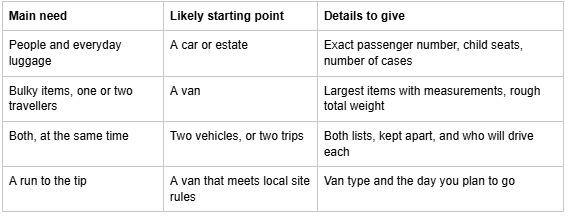
Most panel vans seat only the people in the cab, and nobody should ride in a load area. Cars and estates carry people well but run out of space quickly with anything long or heavy. Deciding which need is the main one, and whether the other can be handled separately, makes the enquiry much simpler.
A Quick Decision Table
The Passenger Side
For the people part of a journey, the website’s page for car hire in Lewes lists cars ranging from small hatchbacks to estates and larger automatics. An enquiry goes faster with the exact number of passengers, any child seats needed, the amount of luggage and the collection and return times.
The Load Side
Van enquiries for the nearby Hailsham area go through a separate website, vanrentalhailsham.co.uk, which uses the same enquiry format and covers van hire in Hailsham. The useful details there are different: the longest and heaviest items, whether a tail lift would help, and the access at both ends of the journey.
Weight needs a careful look. A “3.5-tonne” van is usually described by its maximum authorised mass, which includes the van itself, so it will carry considerably less than 3.5 tonnes of goods. For heavy items, it is worth asking for the payload of the specific vehicle.
If the Van Is Going to the Tip
Clear-outs often end at a household waste recycling site, and East Sussex County Council’s rules affect which van is suitable. According to the council’s vehicle restrictions, vans, including hired vans, may use its sites only on Tuesdays, Thursdays and Saturdays, and visits must be booked in advance. Vans of 3,500kg gross vehicle weight or more are not accepted, nor are Luton, flatbed, tipper, cage or box-style vehicles. Drivers of hired vans can choose “hire vehicle” when booking if they do not know the registration yet, and should bring photo ID, a second document showing their home address and a copy of the hire agreement. The council also sets height-barrier access rules; check these for the intended site and visiting day before hiring.
In practice, a box van that suits a house move may be the wrong choice for a tip run afterward. Mentioning the tip visit at the enquiry stage avoids that problem.
Keep the Two Timings Visible
If passengers and goods travel separately, write down where the journeys meet. The person carrying the equipment may also have the house keys or need help from someone arriving in the car. Agree who waits, who unloads and how each person gets home. Check the return journey too, especially if passengers want to leave before the equipment is ready to move.
Before Confirming
Both websites ask for similar details: the preferred vehicle, hire start and end dates, collection and drop-off locations and the driver’s details. Whichever vehicle is chosen, carhirelewes.co.uk recommends asking for the deposit, fuel arrangement and cover to be confirmed in writing before the booking is agreed.
About Carhirelewes.co.uk
carhirelewes.co.uk is a website for car hire enquiries in Lewes, with further pages covering van, minibus and truck hire. Enquiries can be made through the website’s contact page.