
By: Natalie Johnson
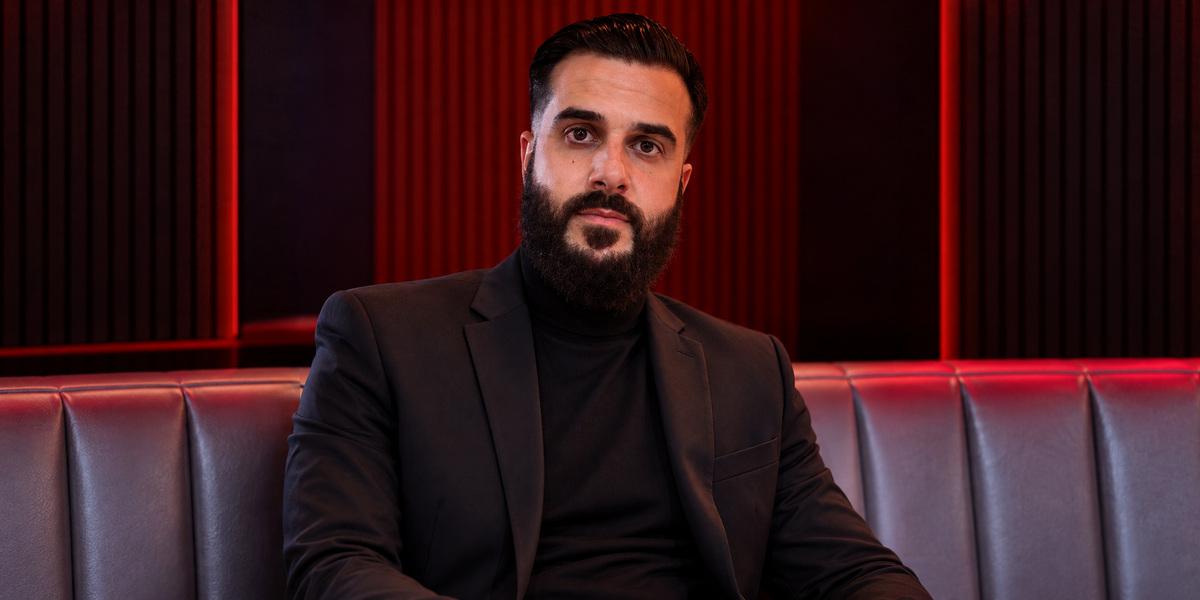
Every large company says it wants to think like an early-stage company. Few desire what that requires: people who take responsibility for outcomes they were never formally assigned, decisions made before the committee has blessed them, and leaders who treat a failed test as information rather than a personnel matter. The gap between the aspiration and the behavior is where most innovation budgets go to die. David Partain, who spent more than a decade at Northern Trust, including as Global Chief Marketing Officer of FlexShares, and now works with Capital-FORCE through NextWave Capital Marketing, has lived on both sides of that gap. He has built companies with no brand and no budget cushion, and he has grown investment products inside one of the most heavily governed industries in the economy. His argument is that the entrepreneurial mindset has little to do with founding anything, and that leaders who confuse the two end up importing the wrong half of the early-stage playbook.
Ownership Is The Variable, Not Speed
The founder cliché is urgency. Partain locates the real difference somewhere less glamorous. “An entrepreneurial mindset isn’t about being a founder. It’s about acting like an owner of the outcome, whatever your title or the size of the organization,” he says. That distinction matters because speed is the easiest thing to fake inside a large firm and the hardest thing to sustain. Ownership is what holds when a project stalls, and its absence is the quiet failure mode that Partain sees most often. “When a project crosses departments, everyone supports it in principle, but no one owns the result.”
Underneath that sits a question nobody puts on the agenda. “If this fails, who gets blamed?” Partain names it directly, and it explains behavior that otherwise looks like obstruction. He saw the pattern leading the brand integration after Northern Trust acquired a wealth management firm, and again at FlexShares when his team tried to bring in smaller, nimbler vendors. “Nobody was against innovation. They were worried about regulatory exposure and about changing workflows that already worked.” That is a rational position, and treating it as resistance to be overcome, rather than risk to be addressed, is how most internal change efforts lose the room. His framing of the leader’s job is deliberately two-sided. “The founder’s instinct is to move fast and break things, and that costs you the organization. The institutional instinct is to protect what exists, and that costs you the future.”
Compliance As Co-Author
The most useful operational idea in Partain’s approach is also the one most likely to be ignored, because it slows the first week in order to save the next three months. He brings legal and compliance in before the idea is finished. “If they see the idea only when it’s finished, they can only say ‘no,’ but if they help shape it, they become co-authors.” In an environment overseen by the Financial Industry Regulatory Authority (FINRA) and the Securities and Exchange Commission (SEC), that is not diplomacy. It is the difference between a pilot that ships and a deck that gets rewritten four times.
The method around it is deliberately modest: make the change small, safe, and specific; define the pilot; bring the skeptics in at the start; and agree in advance on how success gets measured. That reframes the whole negotiation. “That changes the conversation from ‘Should we change?’ to ‘Let’s test this and see.’” Partain adds a third habit that costs nothing and is routinely skipped: give the credit away. “Resistance fades when people feel the win belongs to them as much as it does to you.” The underlying political read is sharper than it first appears. “If people believe you’re protecting the organization while changing it, they’ll follow you. If they think you’re going around them, they’ll quietly stop you.” The word doing the work there is quietly. Organizations rarely kill initiatives openly. They let them starve.
Momentum Is Stacked, Not Announced
Partain spent years helping grow assets at FlexShares, and that trajectory invites a tidy narrative, which he refuses to supply. “The numbers look like a straight line from the outside. They never feel that way from the inside.” What produced it was accumulation: knowing the customer well enough to stop guessing, arming the distribution engine so wholesalers and advisors could explain the product in 30 seconds, keeping the story simple and the proof visible. “Momentum is built, not announced,” he says, and in a large organization it comes from stacking small, visible wins until the system starts to believe.
The clearest illustration is a project nobody branded as innovation. “The Flexible Advisor” began during COVID as a short daily webinar that turned into a podcast because advisors needed timely, trusted information while everything was uncertain. No program, no launch logo. It grew to more than 100 episodes in three years, increased traffic to the Insights content, and reached thousands of downloads. “The Model Maker” tool followed the same logic, built as a practical answer to a real advisor need, and the advisor-only section of the site grew behind it. This is why Partain insists intrapreneurship has to be a practice rather than a program. “Programs usually sit off to the side of the real work,” while a practice “shows up in how decisions get made on an ordinary Tuesday.” His warning to leaders waiting for clarity on AI applies the same test. The firms that suffer “won’t be the ones that made a bad bet. They’ll be the ones that spent two years forming a committee to decide whether to bet at all.”
Partain shares more of his thinking on intrapreneurship, marketing leadership, and growth inside regulated organizations on LinkedIn.